In the early hours of 20 November 2026, Russian forces launched a sustained missile campaign that struck critical infrastructure and civilian areas across Ukraine, marking the most intensive wave of attacks recorded this month. The most consequential strike hit Kyiv's CHP-5 power and heating station, where two Russian Iskander ballistic missiles caused widespread power outages throughout the capital. According to BellumActaNews, the attack resulted in immediate loss of electricity and heating services, compounding the humanitarian impact of the broader offensive (BellumActaNews, 2026-11-20T05:01:57).
Key Infrastructure Targets in Kyiv
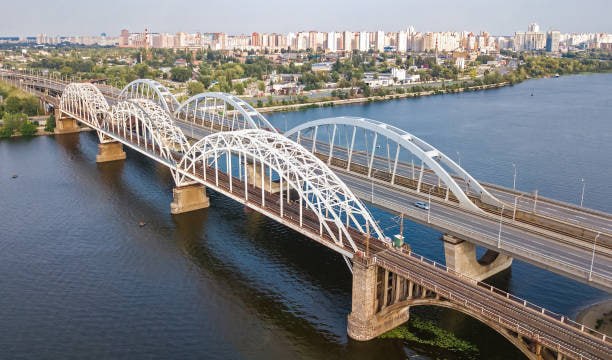
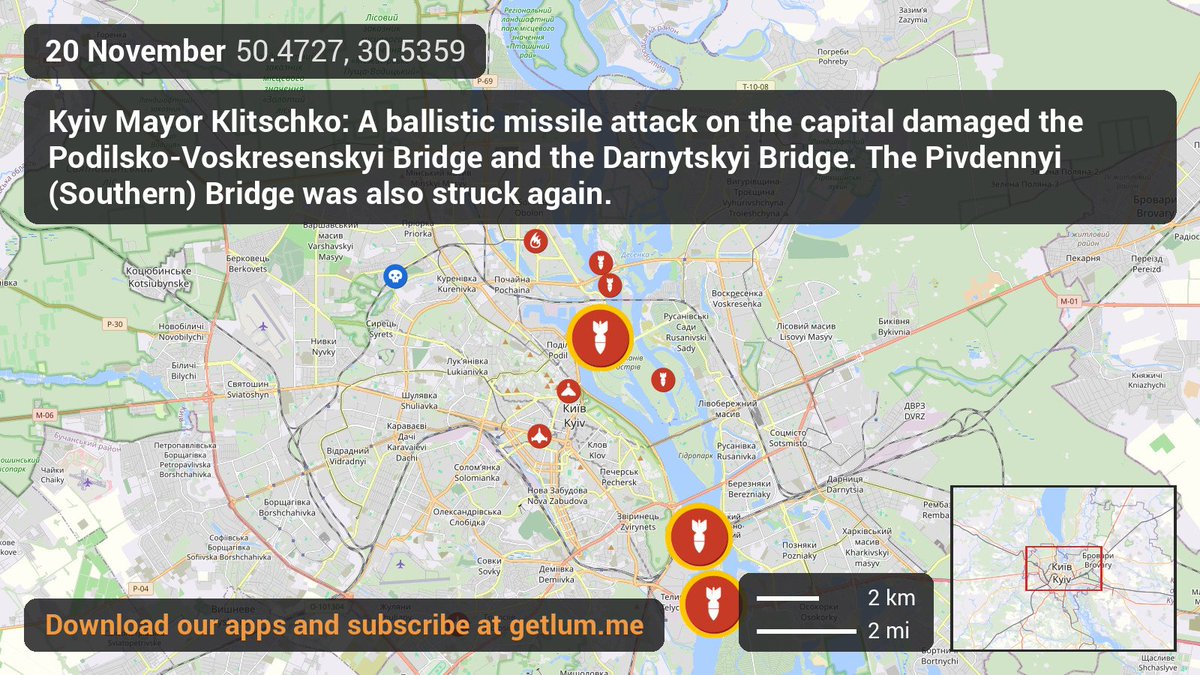
Following the CHP-5 strike, a series of coordinated attacks targeted Kyiv's transport network. Rockets damaged the Darnytskyi Bridge, the Podilsko‑Voskresenskyi Bridge, and the Southern (Pivdennyi) Bridge, as reported by monitor_the_situation (2026-11-20T04:43:44). Photographic evidence showed structural damage to the bridge spans, confirming the effectiveness of the ballistic missiles in disrupting river crossings essential for civilian movement and logistics.
At 05:05:59, additional rockets further impaired the Darnytskyi, Podilsko‑Voskresensky, and Southern bridges, according to BellumActaNews (2026-11-20T05:05:59). The cumulative effect of these strikes forced Kyiv residents to limit movement, seek shelter in bomb shelters, and rely on alternative routes that are already congested.
Transport and logistics infrastructure also came under fire at 05:03:05, prompting city officials to advise residents to stay indoors and avoid non‑essential travel (BellumActaNews, 2026-11-20T05:03:05). The repeated targeting of bridges and power facilities underscores a strategic intent to cripple urban mobility and essential services.
Western Ukraine Under Assault
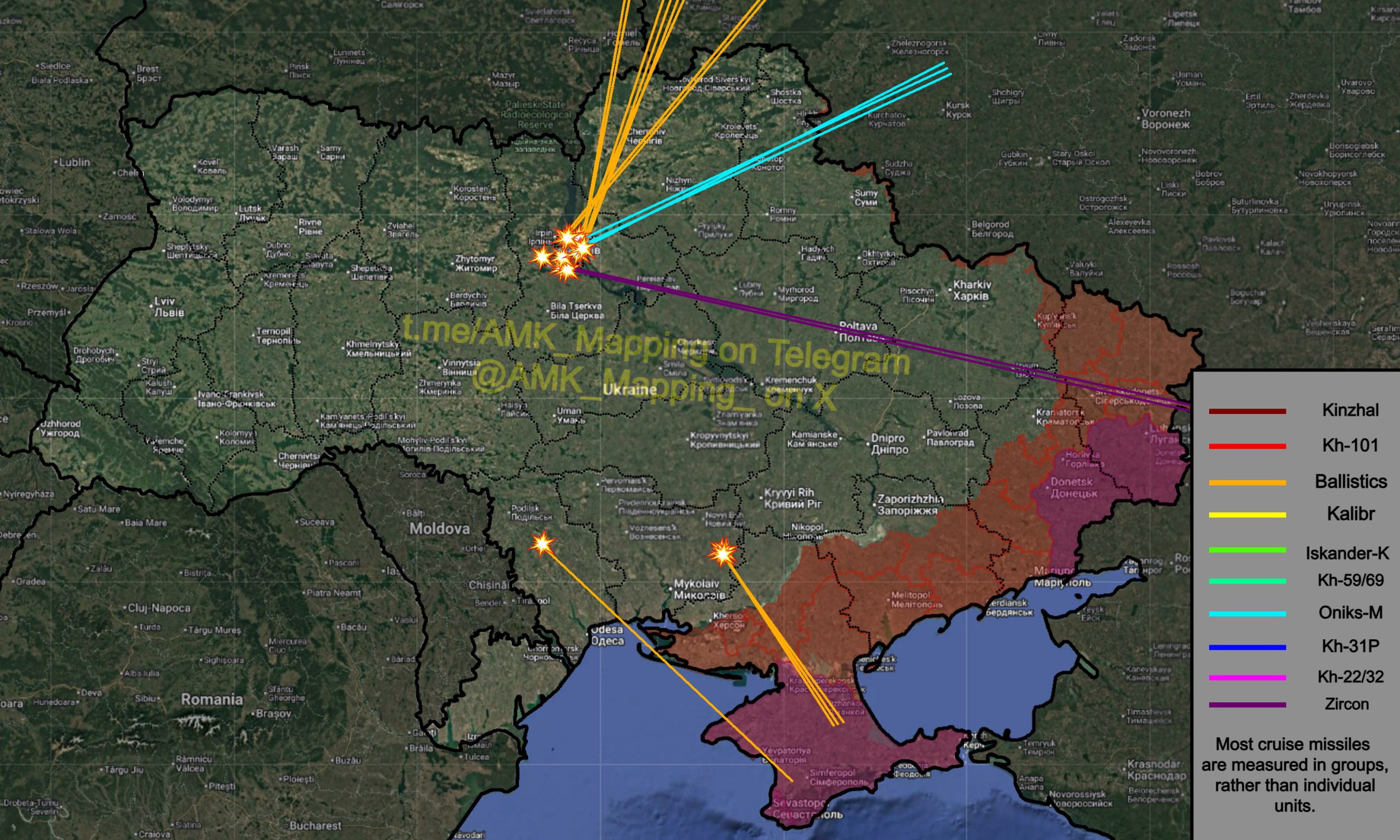
Simultaneously, western Ukrainian cities faced a barrage of cruise missiles. At 05:09:05, Russian Tu‑95 bombers launched an estimated swarm of 40 cruise missiles toward western Ukraine, with Ukrainian media confirming the trajectory and scale of the attack (BellumActaNews, 2026-11-20T05:09:05). The same morning, explosions were reported in Lviv and Ivano‑Frankivsk, indicating that the missile wave reached multiple urban centers (monitor_the_situation, 2026-11-20T05:05:51).
Earlier, at 04:19:24, sixteen Kalibr cruise missiles were fired from the Black Sea by the Russian Navy, entering Ukrainian airspace and striking undisclosed targets (BellumActaNews, 2026-11-20T04:19:24). The deployment of Kalibr missiles from naval platforms demonstrates the multi‑domain nature of the campaign, combining air, sea, and land launch vectors.
Strategic Bomber Deployments and Missile Types
Russia employed a diverse arsenal of delivery systems. At 00:20:31, Tu‑160 strategic bombers launched a mass missile attack on Kyiv, producing a series of explosions that lit up the night sky (monitor_the_situation, 2026-11-20T00:20:31). Later, at 04:18:15, a combined sortie of four Tu‑160 and seven Tu‑95 strategic bombers released additional cruise missiles across Ukrainian territory (BellumActaNews, 2026-11-20T04:18:15). These coordinated bomber missions indicate a high‑level command decision to saturate Ukrainian air defenses.
Ballistic missile threats were also evident. At 04:43:44, ballistic missiles struck three Kyiv bridges, while at 00:05:59, multiple ballistic missiles—including Kn‑23, Oniks‑M, and Zircon—were launched from Voronezh and Kursk toward the capital (monitor_the_situation, 2026-11-20T00:05:59). The use of hypersonic Zircon missiles, if confirmed, would represent an escalation in strike velocity and penetration capability.
Civilian Casualties and Humanitarian Impact
The deadliest single incident recorded on 20 November involved three fatalities at a Kyiv water utility facility. BellumActaNews reported that the victims were likely employees of Kyivvodokanal, the municipal water supply and wastewater service, and that approximately 15 additional individuals sustained injuries (BellumActaNews, 2026-11-20T05:38:11). The loss of water‑service personnel highlights the broader risk to essential civilian services.
In addition to the Kyivvodokanal casualties, a residential building in Zhovti Vody, Dnipropetrovsk Oblast, caught fire following a strike, resulting in further fatalities and injuries (intelslava, 2026-11-20T03:27:19). While the exact weapon type was not identified, the incident adds to the tally of civilian harm caused by the campaign.
Cross‑Border Incidents and Wider Regional Dynamics
Russia's missile activity extended beyond Ukrainian borders. At 05:29:29, a Russian cruise missile entered Polish airspace, prompting immediate alerts from Polish defense authorities (BellumActaNews, 2026-11-20T05:29:29). Although no casualties were reported, the incursion raises concerns about NATO's eastern flank and the potential for inadvertent escalation.
Concurrently, a large‑scale combined missile and drone attack was reported across multiple Ukrainian cities, with estimates of over one hundred missiles and hundreds of drones launched (GeoPWatch, 2026-11-20T00:45:58). While specific damage assessments are pending, the sheer volume of ordnance underscores the intensity of the Russian offensive.
Ukrainian Defensive Response
Ukrainian air defenses engaged several missile formations throughout the day. At 04:55:18, Ukrainian fighter jets intercepted missile groups moving north toward Cherkasy and Kyiv, while new missile streams entered Kherson Oblast (BellumActaNews, 2026-11-20T04:55:18). Earlier, at 01:10:50, an Iskander‑M missile was intercepted over Kyiv, though a second missile impacted east of the Southern Bridge (BellumActaNews, 2026-11-20T01:10:50). These interceptions demonstrate the resilience of Ukraine's air defense network, albeit under severe strain.
"The coordinated nature of today's attacks reflects a deliberate strategy to degrade Ukraine's critical infrastructure and civilian morale," noted a Kyiv municipal spokesperson in a briefing released after the bridge strikes.
Overall, the 20 November missile campaign represents a coordinated, multi‑domain effort by Russian forces to inflict maximum disruption on Ukraine's energy, transport, and civilian sectors. The breadth of weapon systems employed—ranging from cruise missiles launched by strategic bombers to hypersonic ballistic missiles—highlights a significant escalation in both scale and sophistication.