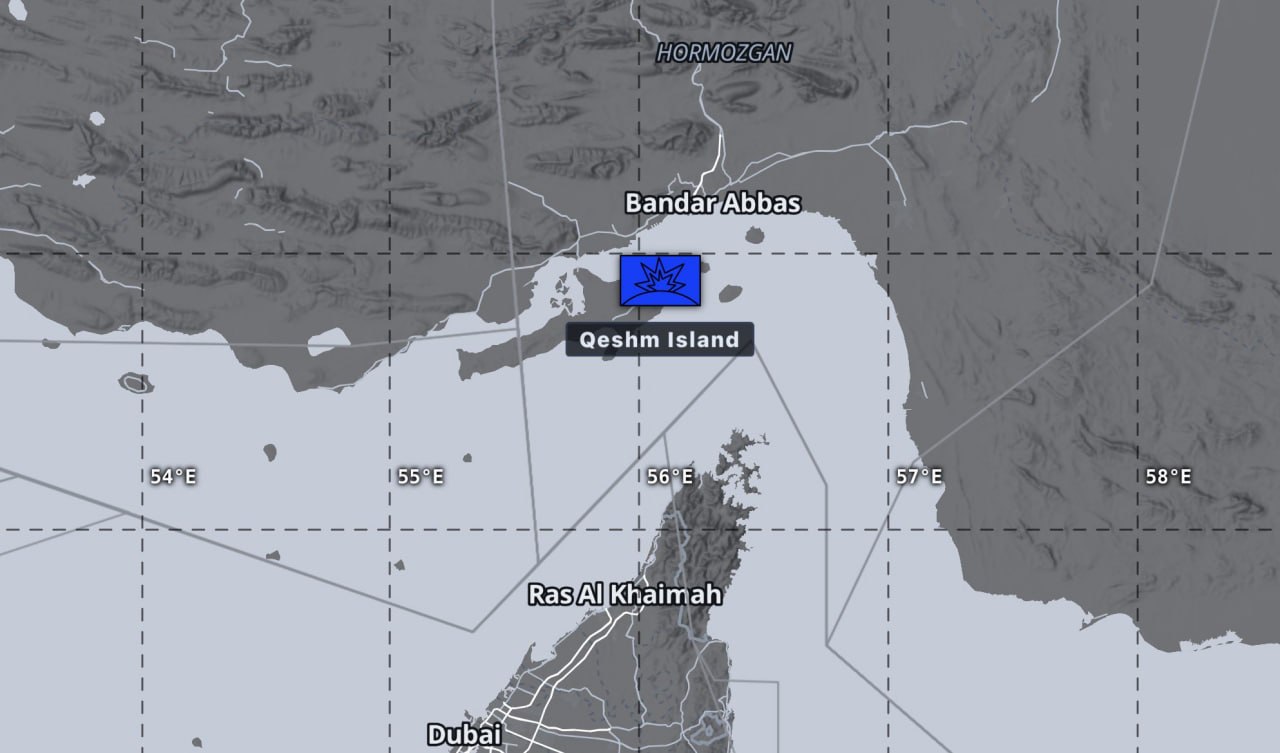
On 20 November 2026, observers in Qeshm City on Qeshm Island reported a coordinated airstrike on an Iranian air‑defence installation. Explosions were heard across the city at 15:39:55 local time, and preliminary accounts indicate that the target was the Nariman Air Defence Site, which had earlier engaged a U.S. aircraft. While casualty figures remain unconfirmed, the incident marks the most significant kinetic event in Iran on this date and reflects a sharp escalation in the ongoing Iran‑U.S. confrontation.
Details of the Qeshm Airstrike
The strike was first reported by BellumActaNews via its Telegram channel (source https://t.me/BellumActaNews/178728). According to the outlet, the air‑defence site was hit by an unidentified aircraft, and subsequent reports claim that a U.S. aircraft may have been shot down in the same engagement. No weapons were explicitly identified in the initial report, and no organization claimed responsibility beyond the implication of U.S. involvement.
"Explosions were heard on Qeshm City, Qeshm Island, southern Iran. According to preliminary reports, an airstrike targeted an air defence site, perhaps the one that earlier fired towards a US aircraft. Additionally, other reports claim that an aircraft was shot down." – BellumActaNews
While the exact weapon system remains unclear, the presence of an air‑defence site suggests that surface‑to‑air missiles or precision‑guided munitions could have been employed. The lack of confirmed casualties or damage assessments limits the ability to gauge the strike’s immediate human impact.
Follow‑up Missile Strikes and UAV Interceptions
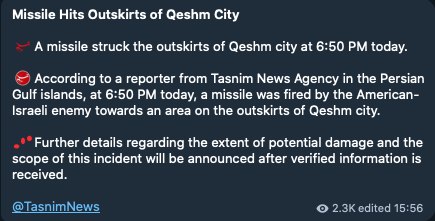
Within the same afternoon, multiple missile‑related incidents were reported on Qeshm Island. At 16:04:21, monitor_the_situation confirmed that a U.S. missile struck the outskirts of the island, citing Iranian state media Tasnim News Agency as the source (https://t.me/monitor_the_situation/44377). The weapon is described simply as a "missile," with no further technical details disclosed.
Shortly thereafter, at 16:58:58, GeoPWatch relayed local accounts that the same Nariman Air Defence Site was hit by a U.S. strike (https://t.me/GeoPWatch/41943). This second report reinforces the hypothesis that the air‑defence installation is a focal point of U.S. kinetic action.
At 16:09:52, intelslava posted video evidence of a hostile aerial target—identified as a UAV—being shot down over Qeshm Island (https://t.me/intelslava/98353). The post references the downing of an MQ‑9 or MQ‑1 unmanned combat aerial vehicle (UCAV), suggesting that U.S. drone operations were active in the area and encountered Iranian air‑defence fire. The source attributes the interception to CENTCOM forces, indicating a direct U.S. military response.
"If another MQ‑9 or MQ‑1 has been shot down, we're witnessing the terrorist CENTCOM commanders sacrificing approximately one UCAV per strike." – intelslava
Earlier in the day, at 12:33:44, locals reported hearing a missile launch and observing a fighter jet overhead, with an unconfirmed surface‑to‑air missile (SAM) launch (https://t.me/GeoPWatch/41928). This incident, also reported by GeoPWatch, underscores a pattern of aerial engagements over Qeshm Island throughout the day.
Naval Activity in the Strait of Hormuz
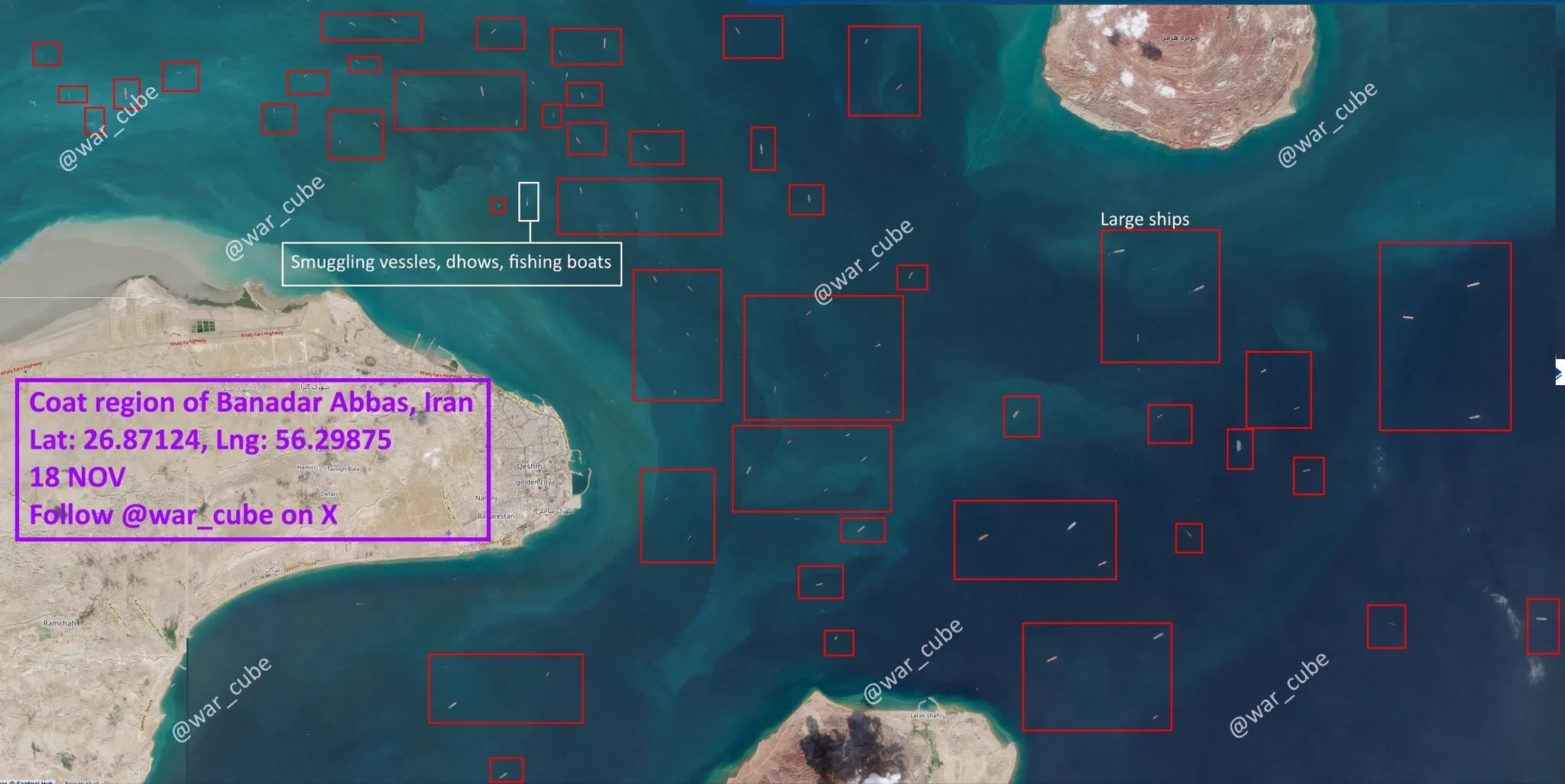
Parallel to the aerial events, Iran intensified naval maneuvers in the strategically vital Strait of Hormuz. At 14:19:45, the Islamic Revolutionary Guard Corps (IRGC) announced a convoy of more than 50 vessels—comprising large tankers, fishing boats, dhows, and smuggling craft—intended to breach what Tehran describes as a U.S. naval blockade (https://t.me/CIG_telegram/87440). The IRGC warned that any attack on the convoy would trigger retaliatory strikes against Gulf Cooperation Council (GCC) infrastructure.
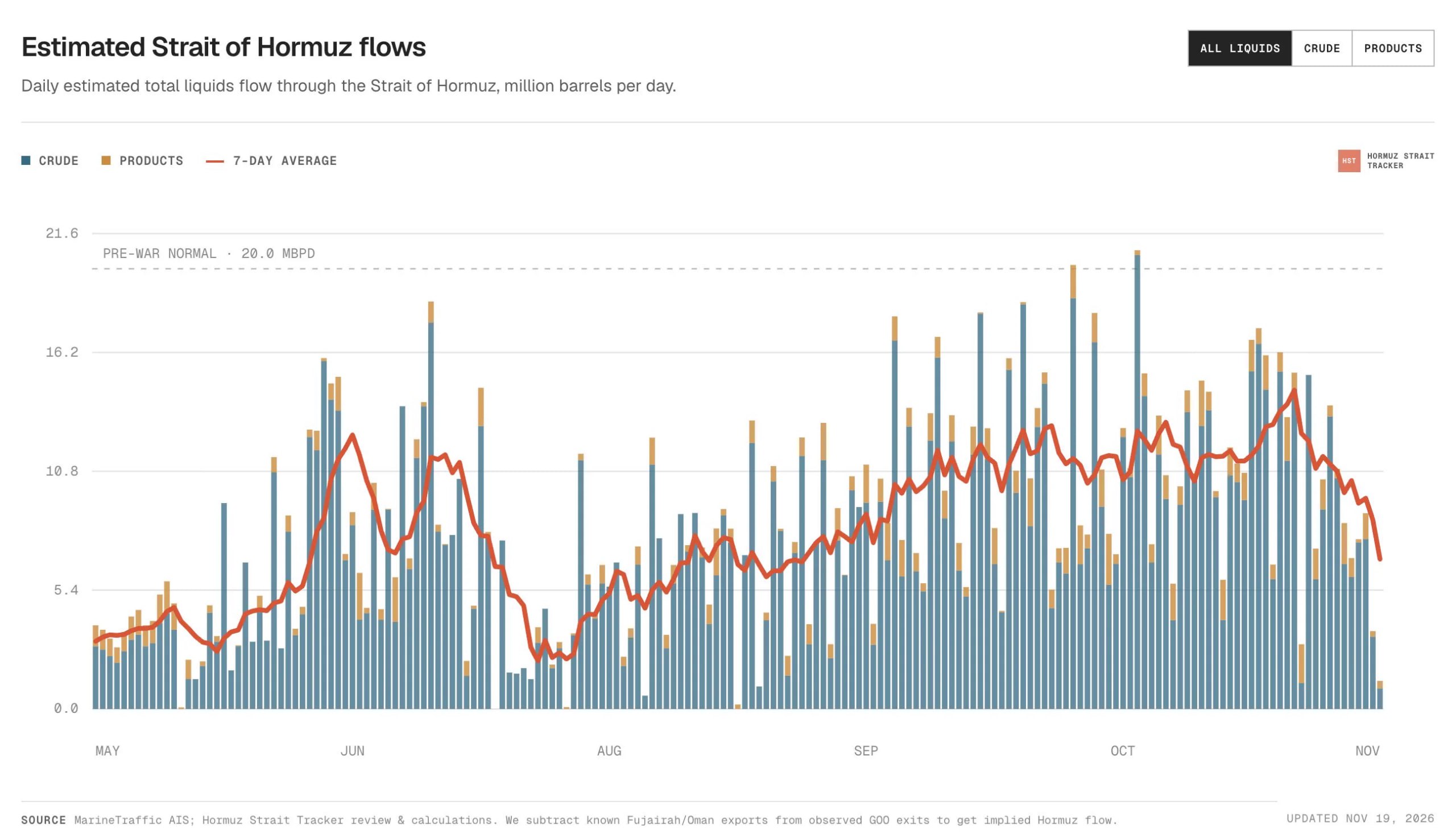
Earlier, at 14:07:39, the IRGC Navy reported successful attacks on six oil tankers, significantly reducing oil flow through the strait (https://t.me/CIG_telegram/87439). No casualty figures were released, but the disruption to global oil markets is evident.
At 13:44:30, Iranian oil tankers loading at Kharg Island signaled their intent to challenge the U.S. blockade, warning that any interference would provoke attacks on oil facilities in the United Arab Emirates, Saudi Arabia, and Qatar (https://t.me/CIG_telegram/87435). These statements reflect a coordinated Iranian strategy to leverage maritime assets as a bargaining chip in the broader geopolitical dispute.
Isfahan Province Anti‑Aircraft Activity
In central Iran, at 06:56:36, BellumActaNews reported anti‑aircraft gunfire in Baharestan, Isfahan Province (https://t.me/BellumActaNews/178722). While the source did not specify the origin of the fire, the incident demonstrates that kinetic engagements are not confined to the southern coastal region.
Assessment of the Day’s Kinetic Landscape
The series of events on 20 November 2026 illustrates a multi‑domain escalation between Iran and the United States. The airstrike on Qeshm’s Nariman Air Defence Site, coupled with subsequent missile impacts and UAV interceptions, indicates a sustained U.S. effort to degrade Iranian air‑defence capabilities. Conversely, Iran’s aggressive naval posture—highlighted by the convoy attempt and tanker attacks—signals a willingness to contest U.S. maritime dominance in the Strait of Hormuz.
While casualty numbers remain low or unreported, the strategic implications are significant. The repeated targeting of air‑defence infrastructure could impair Iran’s ability to monitor and respond to aerial incursions, while the naval confrontations threaten the free flow of oil, a critical component of the global energy market.
All reported incidents are sourced from open‑source intelligence channels, including Telegram feeds of BellumActaNews, GeoPWatch, intelslava, monitor_the_situation, and CIG_telegram. No independent verification from third‑party agencies has been published as of the time of writing.