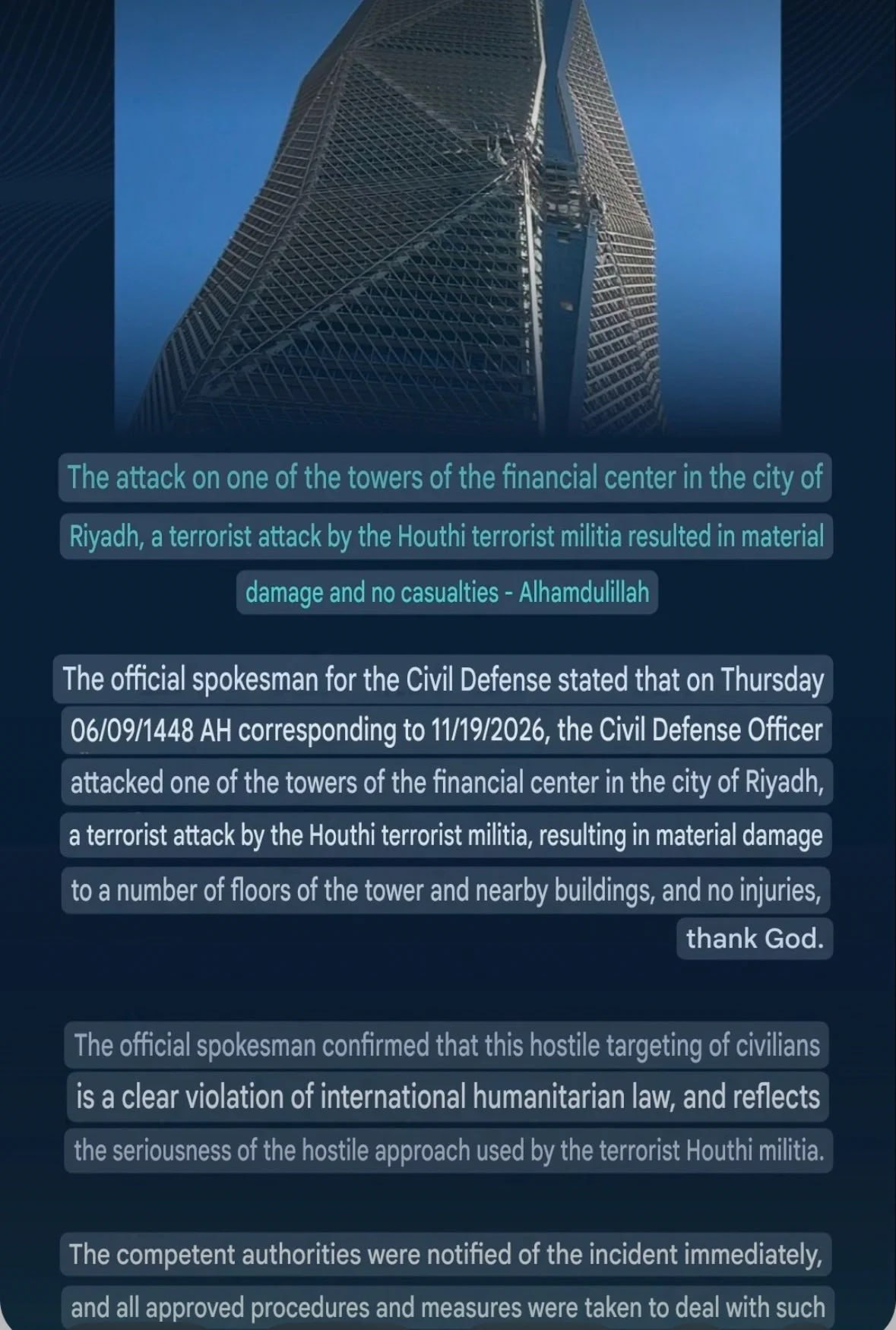
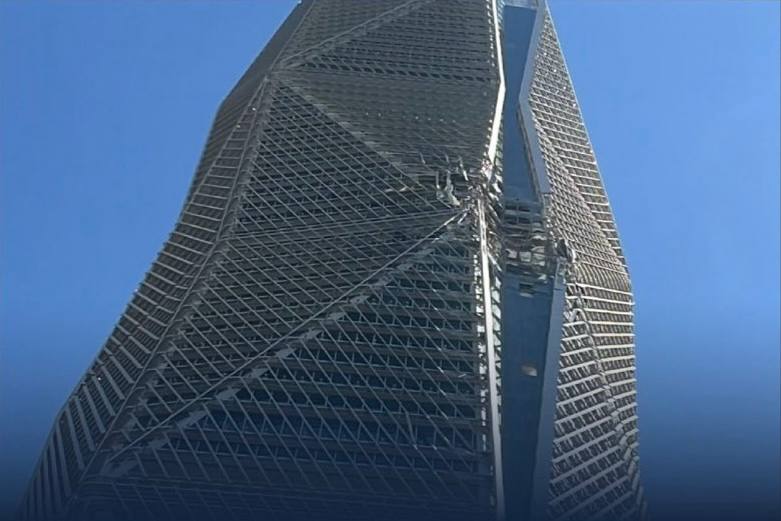
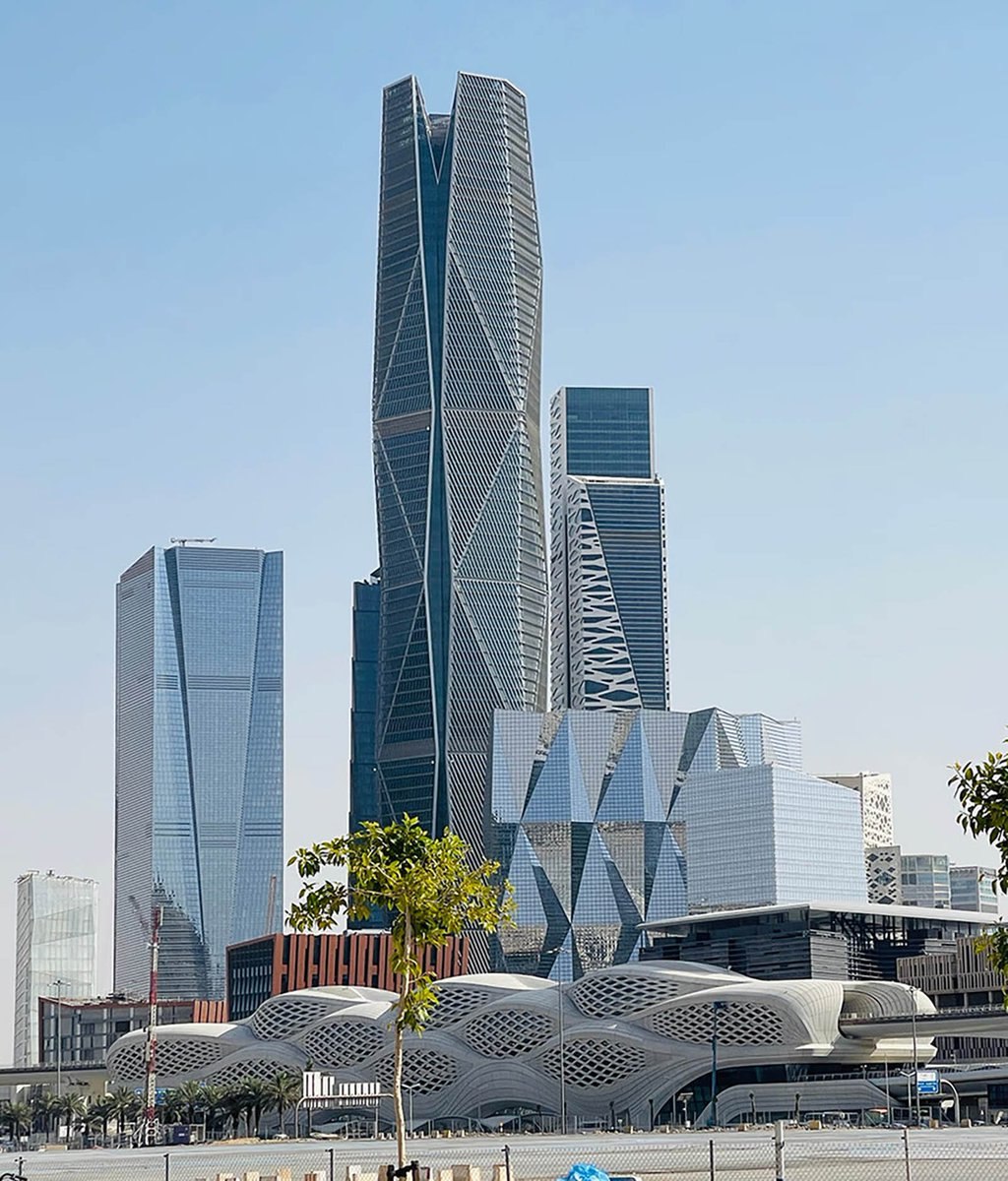
On 19 November 2026, Saudi Arabia’s capital experienced a series of kinetic attacks targeting the Public Investment Fund (PIF) Tower in Riyadh’s King Abdullah Financial District. The most consequential incident occurred at 15:48:15 local time when a ballistic missile launched by Yemen’s Ansarullah group struck the high‑rise, causing structural damage to the building’s façade.
Chronology of the day’s kinetic events
15:48 – Ballistic missile impact on PIF Tower. According to a report posted by the open‑source intelligence channel rnintel, a ballistic missile fired from Yemen hit the PIF Tower, damaging one side of the skyscraper. The source provided a photograph of the impact and linked to the original Telegram post (https://t.me/rnintel/69245). No casualties were reported in the immediate aftermath.
15:03 – UAV‑style attack on the same structure. The Telegram channel intelslava released video footage showing a strike on the PIF Tower that it attributed to the Houthis (also known as Ansar Allah). The channel described the target as “Saudi Public Investment Fund headquarters” and confirmed damage to the building’s exterior (https://t.me/intelslava/98306).
06:36 – Earlier missile strike. A separate Telegram feed, monitor_the_situation, reported that a missile launched from Yemen struck the PIF Tower earlier in the morning, corroborating the later ballistic‑missile claim. The post referenced Reuters and local sources, and included a photo of the damaged façade (https://t.me/monitor_the_situation/44051).
17:36 – Additional missile impacts. The channel CIG_telegram posted three items—photos and video—showing a second missile hitting a construction site a few blocks from the PIF Tower, and a third missile causing “light damage” to another side of the tower. The report did not attribute the launch to a specific organization (https://t.me/CIG_telegram/87417).
17:10 – Interception of projectiles in southern districts. The Israeli newspaper JPost published an explainer noting that Saudi authorities issued missile‑alert warnings and reported successful interceptions of projectiles launched by Iran‑backed Houthi forces targeting southern Saudi provinces (https://www.jpost.com/middle-east/article-915515).
08:19 – Coalition air defence response. Al Jazeera reported that the Saudi‑led coalition shot down Houthi missiles aimed at Riyadh and southern Saudi Arabia, with falling debris causing material damage but no reported injuries (https://www.aljazeera.com/news/2026/11/19/saudi-led-coalition-intercepts-houthi-missiles-targeting-riyadh-and-south).
Weapons and delivery systems
The incidents involved a mix of ballistic missiles, conventional missiles, and unidentified projectiles. The ballistic missile reported by rnintel suggests a capability to reach deep‑strike ranges from Yemeni territory into central Saudi Arabia. Conventional missile launches documented by monitor_the_situation and CIG_telegram indicate the use of short‑ to medium‑range systems, likely supplied or adapted by Houthi forces with Iranian assistance. The lack of explicit casualty figures across all reports points to either limited lethality of the strikes or effective evacuation protocols within the high‑security financial district.
Defensive measures and interception success
Saudi Arabia’s integrated air‑defence network, supported by the Saudi‑led coalition, demonstrated operational readiness by intercepting multiple inbound threats. The coalition’s reported shoot‑downs at 08:19 and the Saudi authorities’ alerts in the southern districts at 17:10 illustrate a layered defence that includes early‑warning radar, surface‑to‑air missiles, and command‑and‑control coordination with allied forces. However, the successful impact on the PIF Tower indicates that at least one missile evaded detection or interception, highlighting potential gaps in coverage or the challenges posed by high‑speed ballistic trajectories.
Strategic context
The concentration of attacks on the PIF Tower underscores a deliberate targeting of Saudi Arabia’s sovereign wealth fund infrastructure, a symbol of the kingdom’s economic diversification under Vision 2030. By striking a flagship financial asset, the Houthis aim to project power beyond the conventional battlefield in Yemen and to exert political pressure on Saudi leadership. The timing—coinciding with heightened regional tensions and ongoing diplomatic negotiations over the Yemen conflict—suggests an intent to leverage kinetic actions as bargaining chips.
“Missile From Yemen Damages PIF Tower in Riyadh.” – monitor_the_situation, 19 Nov 2026.
Implications for regional security
These events reaffirm the vulnerability of high‑value urban targets within Saudi Arabia to cross‑border missile attacks. The pattern of repeated strikes on the same structure within a single day indicates a sustained campaign rather than isolated incidents. While Saudi air‑defence assets have successfully neutralised several projectiles, the breach that resulted in damage to the PIF Tower may prompt a reassessment of defensive postures around critical economic sites, potentially leading to the deployment of additional missile‑defence batteries or the integration of directed‑energy systems.
For policymakers and analysts, the key considerations include the need to monitor the evolving missile capabilities of Houthi forces, the extent of Iranian logistical support, and the effectiveness of coalition‑wide interception protocols. Continued open‑source verification of strike locations, weapon types, and impact assessments will be essential for calibrating both diplomatic responses and security investments.