On 18 November 2026, the most lethal kinetic event recorded was an Israeli airstrike targeting the southwestern suburbs of Gaza City and the entrance to the Deir al‑Balah police station. According to the Telegram channel monitor_the_situation, the strikes killed at least five Palestinians and wounded several others. The operation, carried out at 06:38 UTC, marks the deadliest single‑day loss of civilian life in Gaza since the ceasefire of 2025.
Source: https://t.me/monitor_the_situation/43840
The strike employed precision‑guided munitions, although the channel did not specify the exact weapon type. The location of the attack—densely populated residential blocks adjacent to a police facility—raised concerns about the proportionality of force under international humanitarian law. The casualties included two adult males, a teenage boy, and two women, all of whom were non‑combatants according to local medical reports.
Subsequent Air and Drone Operations in Central Gaza
Later in the day, at 12:01 UTC, another Israeli airstrike hit an undisclosed site in the central Gaza Strip, killing one person and injuring several others. The incident was reported by the same monitoring channel and corroborated by Al Jazeera footage released on its Telegram feed. While the exact target was not identified, the strike appears to be part of a broader aerial campaign aimed at disrupting Hamas command‑and‑control nodes.
Source: https://t.me/monitor_the_situation/43900
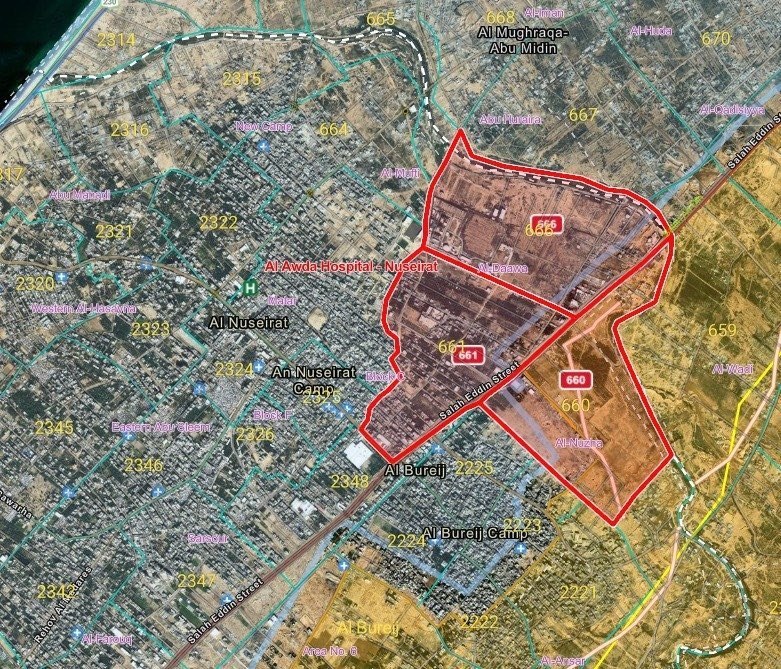
At 13:22 UTC, Israeli forces expanded their kinetic footprint with a coordinated ground movement into the Nuseirat and Al‑Bureij areas of central Gaza. The operation involved the deployment of drones, artillery, and infantry units, and resulted in the closure of the strategic Salah Al‑Din Highway. According to monitor_the_situation, at least three drone strikes and heavy shelling were recorded, prompting the forced evacuation of residents from multiple residential blocks beyond the Yellow Line.
Source: https://t.me/monitor_the_situation/43915
The use of artillery and drone assets in densely populated neighborhoods underscores a shift toward combined‑arms tactics. The evacuation orders, issued without prior warning, have compounded civilian vulnerability, limiting access to medical facilities and humanitarian aid.
Ground Advances in Gaza: First Tank Deployment Since 2025 Ceasefire
At 16:46 UTC, the Israeli Defense Forces (IDF) moved armored tanks into Hamas‑controlled sectors of the Gaza Strip for the first time since the 2025 ceasefire. The JPost reported that the tanks were positioned to target Hamas infrastructure located outside the areas currently under Israeli control. While the IDF described the operation as a “targeted removal of threats,” the presence of heavy armor in civilian‑dense zones raises the risk of collateral damage.
Source: https://www.jpost.com/israel-news/defense-news/article-915349
No immediate casualty figures were released for the tank deployment, but the maneuver signals a potential escalation in ground‑based kinetic activity, which could precede a broader offensive.
West Bank Enforcement Actions
Parallel to the Gaza operations, Israeli authorities conducted a series of demolition and clearance activities in Area C of the West Bank, near Hebron. At 16:51 UTC, the JPost documented the removal of dozens of structures deemed illegal by Israeli civil authorities, as well as the clearing of hundreds of olive trees and saplings. The operation was carried out by the IDF in coordination with the Coordinator of Government Activities in the Territories (COGAT).
Source: https://www.jpost.com/israel-news/defense-news/article-915339
While the West Bank actions did not involve direct kinetic combat, they represent a significant escalation in settlement‑related enforcement, affecting the livelihoods of Palestinian residents and contributing to heightened tensions.
Analytical Assessment
The sequence of events on 18 November demonstrates a multi‑theater approach by Israeli forces, combining aerial strikes, drone and artillery bombardments, and limited armored incursions. The concentration of kinetic activity in Gaza’s civilian‑dense zones, particularly the early morning airstrike in Gaza City’s southwestern suburbs, resulted in the highest civilian death toll of the day. The subsequent ground movement and highway closure disrupted critical supply routes, further constraining humanitarian access.
From a strategic perspective, the deployment of tanks for the first time since 2025 suggests an intent to apply pressure on Hamas infrastructure while testing the operational limits of Israeli ground forces under the current ceasefire framework. However, the lack of publicly disclosed target details and casualty assessments hampers independent verification of compliance with the principles of distinction and proportionality.
In the West Bank, the demolition of structures and removal of olive trees aligns with a broader pattern of settlement enforcement that, while not kinetic in the combat sense, contributes to the overall volatility of the Israeli‑Palestinian conflict. The coordination between the IDF and COGAT indicates an integrated civil‑military approach to territorial control.
Overall, the day's kinetic events underscore a heightened intensity of Israeli military activity across both Gaza and the West Bank, with significant humanitarian implications. Continued monitoring of casualty figures, displacement patterns, and the evolution of ground operations will be essential for assessing the trajectory of the conflict.