Iranian Dirty Bomb and Chemical Weapon Threat to Washington
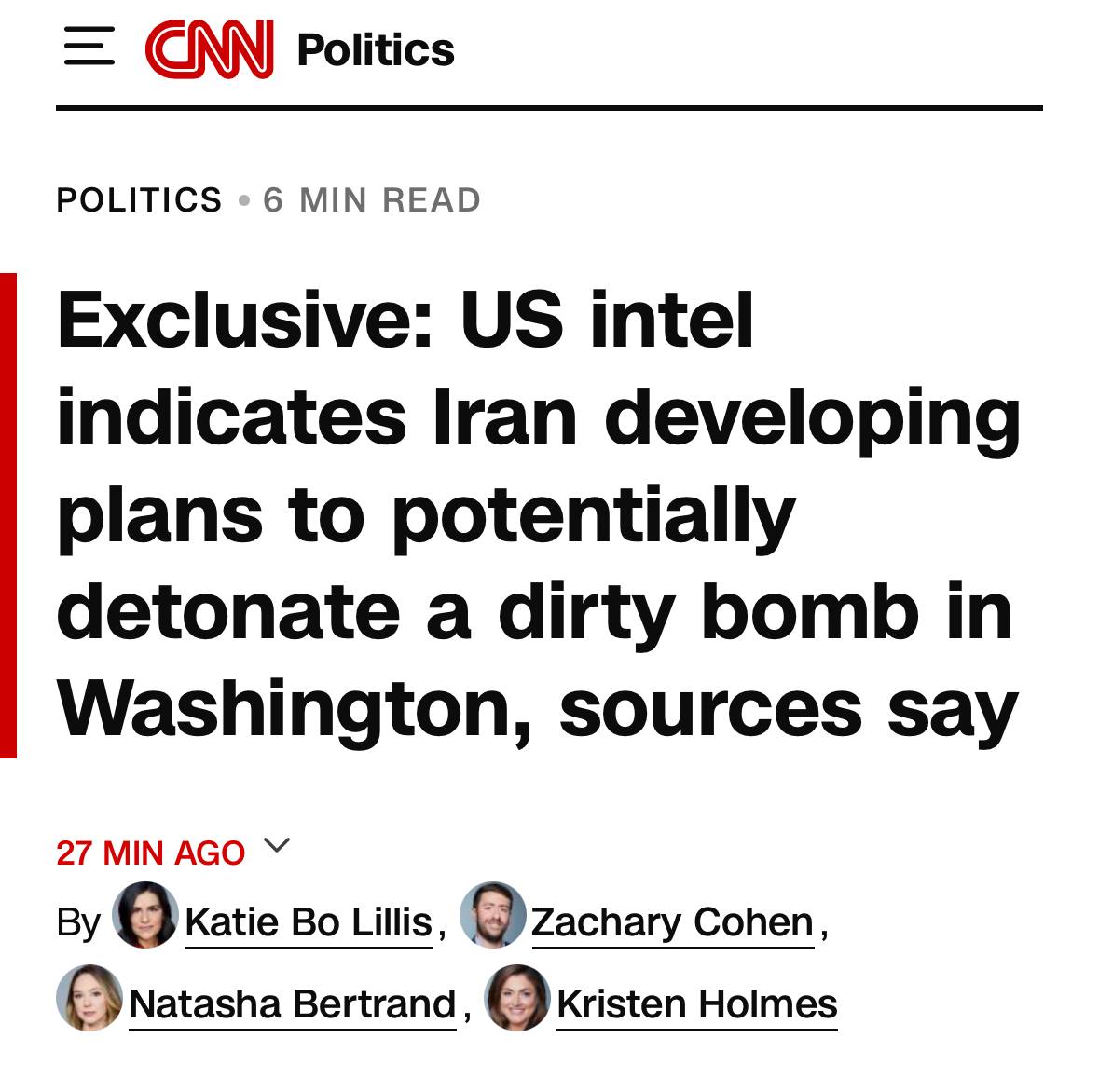
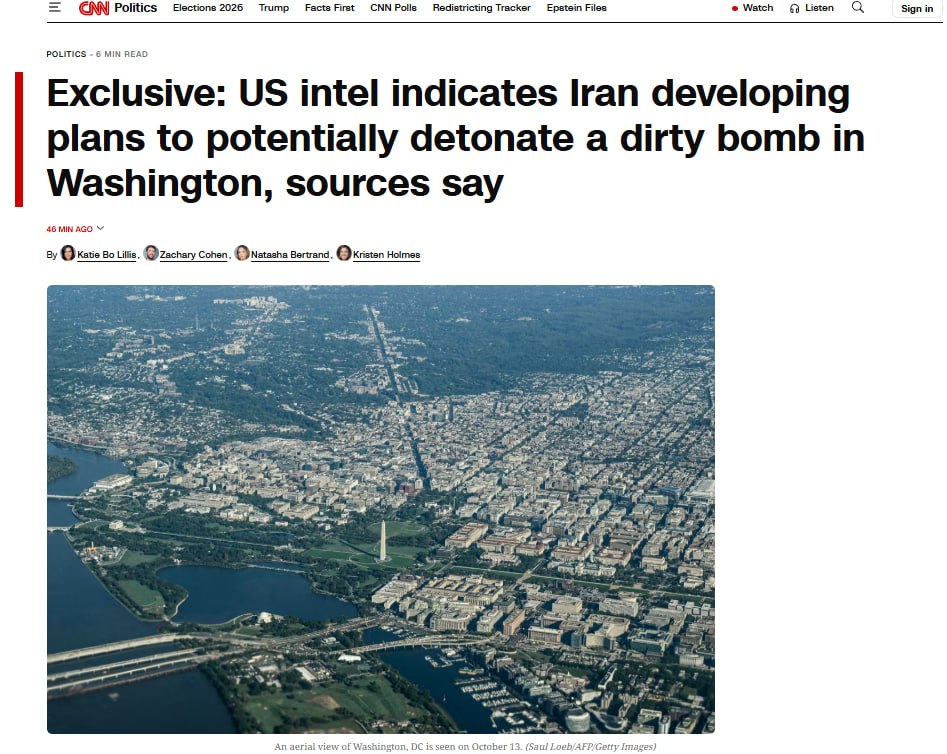
U.S. intelligence agencies have disclosed a coordinated set of assessments indicating that the Islamic Republic of Iran is developing a plan to employ a radiological dispersal device—commonly referred to as a dirty bomb—or a chemical weapon against senior officials of the former Trump administration in Washington, D.C. The earliest report, posted by the Telegram channel idkunim_il at 05:30 UTC on 17 November 2026, cites a CNN investigation that describes specific target lists and potential detonation sites within the capital. The channel links to a CNN‑based briefing that notes the plot is in a preparatory stage but includes “specific targets and locations,” prompting immediate emergency planning by U.S. authorities.
"Iran is developing plans to target senior Trump administration officials with a dirty bomb or chemical weapon in Washington, D.C., according to multiple U.S. intelligence sources," CNN reported.
A second Telegram source, intelslava, posted at 01:05 UTC, reiterates the same threat and adds that the contemplated device could contain radioactive material or conventional chemical agents. The message references seven unnamed American officials and emphasizes that the plot remains in an early phase, but that “immediate emergency planning” is underway. The third source, BellumActaNews, posted at 00:28 UTC, echoes the intelligence warning and includes a stylized emoji‑laden summary that the Iranian regime is “developing plans to potentially detonate a dirty bomb in Washington, targeting senior Trump administration officials.” All three sources attribute the underlying information to CNN and to U.S. intelligence assessments, though no official statement from the White House or the Department of Defense has been released as of the time of writing.
While the reports do not provide casualty figures—no attacks have yet occurred—the potential impact of a radiological or chemical explosion in a densely populated political district would be severe. Preparedness measures cited by U.S. officials include heightened security at federal buildings, increased surveillance of known Iranian operatives in the United States, and coordination with local emergency services to develop decontamination protocols. The convergence of three independent open‑source channels reporting the same intelligence suggests a high degree of confidence in the underlying assessment, though the exact timeline of any planned execution remains undefined.
Iranian Rocket Strikes on Bahrain Prompt U.S. Condemnation
In a separate development, the Israeli newspaper JPost reported at 01:41 UTC that U.S. Secretary of State Marco Rubio publicly condemned a series of Iranian rocket strikes against Bahrain. During a telephone conversation with Bahraini Foreign Minister Abdullatif bin Rashid Al Zayani, Rubio reaffirmed the United States’ “long‑standing partnership” with Bahrain and denounced the attacks as violations of international law. The strikes, described as “multiple” in the JPost article, targeted undisclosed locations on the island nation; no casualty figures or damage assessments were provided in the source material.
The incident underscores a broader pattern of Iranian proxy activity in the Gulf region, where missile and rocket launches have been used to exert pressure on neighboring states aligned with the United States. While the JPost report does not identify the specific weapons systems employed, the term “rocket” suggests short‑range, unguided projectiles typical of the Iranian Revolutionary Guard Corps’ (IRGC) arsenal. The diplomatic exchange between Rubio and Al Zayani reflects ongoing U.S. engagement aimed at deterring further Iranian aggression and preserving the security of the strategic Strait of Hormuz.
Russia Claims Largest Nighttime Drone Interception Against Ukraine
On the eastern front, the Russian Defense Ministry announced at 05:40 UTC that its air‑defense network successfully intercepted 1,441 Ukrainian drones during what it described as “the largest nighttime drone attack to date.” The claim, posted by the Telegram channel BellumActaNews, attributes the drone swarm to the Ukrainian Armed Forces and frames the interception as a defensive victory for Russia. No casualties or material damage were reported in the source, and the statement did not provide verification from independent observers.
The sheer volume of drones—over one thousand—suggests a coordinated effort by Ukraine to overwhelm Russian air‑defense systems, potentially employing commercially available quadcopters modified for reconnaissance or limited payload delivery. Russian officials emphasized the effectiveness of their integrated air‑defense architecture, which includes surface‑to‑air missile batteries, electronic warfare assets, and radar networks capable of tracking low‑observable targets. While the claim remains uncorroborated by third‑party monitoring groups, it aligns with a pattern of escalating drone usage observed throughout the conflict since 2022.
Analytical Summary
The three events reported on 17 November 2026 illustrate a multi‑theater escalation of kinetic and non‑kinetic threats involving Iran, the United States, Bahrain, Russia, and Ukraine. The most consequential development is the Iranian dirty‑bomb and chemical‑weapon plot targeting senior U.S. officials in Washington, D.C. The convergence of multiple open‑source intelligence (OSINT) channels—each referencing CNN and U.S. intelligence—provides a robust evidentiary base for policymakers to prioritize counter‑terrorism and counter‑proliferation measures. Simultaneously, Iran’s rocket strikes on Bahrain demonstrate a willingness to employ conventional kinetic force against regional adversaries, prompting diplomatic rebuke from the United States.
In the European theater, Russia’s claim of intercepting a massive Ukrainian drone swarm highlights the evolving role of unmanned aerial systems (UAS) as a primary tool for attrition warfare. The reported interception figure, if accurate, would represent a record‑setting defensive effort and may influence future Ukrainian operational planning, potentially shifting emphasis toward higher‑altitude or longer‑range UAV platforms.
Collectively, these incidents underscore the importance of real‑time intelligence sharing, robust air‑defense capabilities, and diplomatic channels to mitigate the risk of escalation across disparate conflict zones.