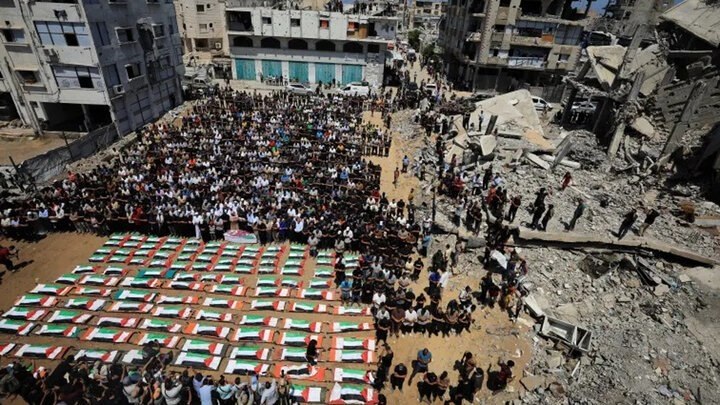
Since the October 2025 cease‑fire, the Gaza Strip has endured a mounting humanitarian crisis, with the latest reports confirming four additional deaths and a cumulative toll that now exceeds 1,640 killed and nearly 6,000 injured. The figures, released by the monitoring group GeoPWatch, underscore the sustained intensity of Israeli Defense Forces (IDF) and Israeli Air Force (IAF) operations across the enclave.
"More than 1,640 Gazans have been killed by the IDF/IAF since the start of the October 2025 \"ceasefire\". At least four people were killed today. An additional 5,969 Palestinians have been injured and 850 bodies were recovered in the same time period." – GeoPWatch, 2026‑11‑16T04:19:33
The latest casualties were recorded in the northern Gaza city of Jabalia, where an airstrike targeted a residential block that housed multiple families. Local health officials, citing the Ministry of Health in Gaza, reported that the strike resulted in the deaths of two adults and two children, all of whom were non‑combatants. The same strike contributed to the broader injury count, with dozens more requiring urgent medical attention amid a strained health infrastructure.
International humanitarian agencies have repeatedly warned that the cumulative death toll and the high number of injured persons are pushing Gaza's medical facilities beyond capacity. The World Health Organization (WHO) has highlighted shortages of essential supplies, including blood products and surgical equipment, while the United Nations Office for the Coordination of Humanitarian Affairs (OCHA) has called for an immediate cease‑fire to allow safe passage for aid convoys.
Pakistan: Taliban Ambush Claims Ten Police Lives in Kohat
In the early hours of 16 November, a coordinated ambush by the Pakistani Taliban (Tehrik‑i‑Taliban Pakistan, TTP) struck a police convoy in Kohat, Khyber Pakhtunkhwa. According to the Telegram channel monitor_the_situation, the attack resulted in the deaths of at least ten police officers, including two senior officials, while police forces reported killing 18 militants in the ensuing gunbattle.
"Reported: Pakistani Taliban Ambush Kills 10 Police in Kohat. Militants attacked police in Kohat, northwest Pakistan, killing at least 10 officers including two senior ones; police say 18 militants died in the ensuing gunbattle." – monitor_the_situation, 2026‑11‑16T01:55:04
The assault began with an improvised explosive device (IED) detonated along a main thoroughfare, followed by small‑arms fire from multiple concealed positions. Police reinforcements engaged the militants in close‑quarter combat, eventually regaining control of the area after several hours. The incident marks one of the deadliest attacks on security forces in the region since the TTP’s resurgence earlier this year.
Local authorities have launched a comprehensive investigation, emphasizing the need to strengthen intelligence sharing and border security to prevent further infiltrations. The Khyber Pakhtunkhwa provincial government has also announced a three‑day period of mourning and pledged additional resources to the families of the fallen officers.
Iran‑Iraq Border: IRGC Clashes with Kurdish PJAK Fighters
Later on 16 November, a border skirmish unfolded between Iran’s Islamic Revolutionary Guard Corps (IRGC) and Kurdish dissident fighters from the Kurdistan Free Life Party (PJAK) near the Iran‑Iraq frontier. The encounter, reported by monitor_the_situation, resulted in the death of one PJAK combatant; Iranian forces reported no casualties.
"IRGC and PJAK Clash Near Iran‑Iraq Border. Both sides confirm an engagement between Iran's Islamic Revolutionary Guard Corps and Kurdish dissident group PJAK near the border with Iraq. PJAK reports one fighter killed; no Iranian casualties confirmed." – monitor_the_situation, 2026‑11‑16T00:52:47
The clash occurred in a mountainous sector that has historically served as a conduit for cross‑border insurgent activity. According to IRGC statements, the operation was part of a broader “counter‑terrorism” campaign aimed at neutralizing armed groups that threaten Iran’s territorial integrity. PJAK, which seeks greater autonomy for Kurdish populations in Iran, has periodically launched guerrilla attacks from Iraqi Kurdistan, prompting recurrent IRGC incursions.
While the immediate tactical outcome appears limited, the incident reflects the persistent volatility along the Iran‑Iraq border, where overlapping ethnic, political, and security dynamics create a fragile environment. Regional analysts note that any escalation could draw in neighboring actors, potentially complicating broader Middle‑East security calculations.
Regional Implications
The simultaneous emergence of high‑intensity violence in three distinct theaters underscores a broader pattern of instability that transcends national borders. In Gaza, the sustained air campaign continues to generate a humanitarian emergency, while in Pakistan, the Taliban’s capacity to execute coordinated attacks against state security forces signals an enduring insurgent threat. Meanwhile, the IRGC‑PJAK clash illustrates the lingering volatility of Iran’s western frontier, where Kurdish militancy remains a persistent challenge.
Collectively, these events highlight the importance of coordinated intelligence, robust humanitarian response mechanisms, and diplomatic engagement to mitigate further civilian harm and prevent the diffusion of conflict across adjacent regions.