On 11 November 2026, Russian‑operated Geran‑4 jet‑drones intensified their campaign against Ukrainian civilian and critical infrastructure, striking a shopping centre in Kropyvnytskyi and targeting two major thermal power plants. The attacks occurred alongside a reported Russian interception of 146 drones over the Leningrad region and a Ukrainian drone offensive that set fire to port facilities near Saint Petersburg.
Kropyvnytskyi Shopping Centre Hit by Geran‑4 Drone
At 05:09 UTC, a Russian Geran‑4 jet‑drone struck a shopping centre in Kropyvnytskyi, Kirovohrad Oblast. Video footage released by the monitoring channel monitor_the_situation shows extensive damage to the building’s façade and interior, with smoke and debris visible in the aftermath. No casualties were reported in the initial assessment, but the incident underscores the expanding use of armed drones against civilian commercial sites.
Footage shows the aftermath of yesterday's Russian Geran‑4 jet‑drone strikes on a shopping centre in Kropyvnytskyi, Kirovohrad Oblast.
Source: monitor_the_situation
Thermal Power Plants Targeted in Vinnytsia and Kyiv Oblasts
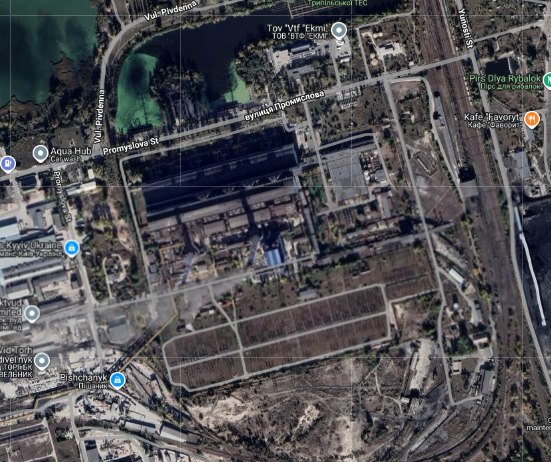
Earlier, at 04:20 UTC, Geran‑4 jet‑drones attacked the Ladyzhyn Thermal Power Plant in Vinnytsia Oblast and the Trypillya Thermal Power Plant in Kyiv Oblast. Photographs posted by the same monitoring channel depict smoke plumes rising from both facilities. While the plants remained operational, the strikes caused temporary shutdowns of auxiliary generators and prompted emergency repairs.
Source: monitor_the_situation
Substation Assault in Kryvyi Rih
At 01:41 UTC, sixteen Geran‑2 drones were deployed against the Pivdenna and Hirnycha 330 kV substations, as well as several 154 kV substations in Kryvyi Rih, Dnipropetrovsk Oblast. Video evidence shows the drones striking transformer yards, producing bright flashes and triggering localized power outages across the city. No injuries were reported, but the disruption affected thousands of households and industrial customers.
At least 16 Geran‑2 drones hit the Pivdenna and Hirnycha 330 kV substations and several 154 kV substations in Kryvyi Rih, causing power flashes and outages.
Source: monitor_the_situation
Russia Claims Interception of 146 Drones Over Leningrad Region
At 04:34 UTC, Russian defence officials announced the downing of 146 drones over the Leningrad region, describing the operation as a successful air defence response. The statement, reported by Al Jazeera, also noted concurrent drone activity in the Russian‑occupied Donbas area of Ukraine. No independent verification of the interception count is available, but the claim reflects heightened aerial activity on both sides of the front.
Source: Al Jazeera
Ukrainian Drone Strikes on Russian Port Facilities
At 00:05 UTC, Ukrainian drones set fire to multiple port facilities around Saint Petersburg, including the commercial seaport at Ust‑Luga in Leningrad Oblast. Video posted by BellumActaNews shows flames engulfing storage warehouses and cargo handling areas. The attacks represent a reciprocal escalation, targeting Russian logistics hubs that support military supply chains.
Multiple port facilities are seen burning in around Saint Petersburg, Leningrad Oblast, including at the commercial seaport in Ust‑Luga.
Source: BellumActaNews
Operational Context and Emerging Patterns
The coordinated use of Geran‑4 and Geran‑2 drones against civilian and energy infrastructure indicates a strategic shift toward precision‑strike capabilities that can be launched from relatively low‑altitude platforms. The attacks on power generation and distribution assets aim to degrade Ukraine’s energy resilience, especially as winter approaches. Simultaneously, Ukrainian drone operations against Russian ports demonstrate an expanding offensive envelope that targets logistical nodes beyond the immediate front line.
Both sides report high drone activity, yet independent verification remains limited. The Russian claim of intercepting 146 drones suggests a substantial increase in aerial threats, while Ukrainian sources have not disclosed the number of drones employed in the Saint Petersburg raid.
Implications for Civilian Safety and Infrastructure Resilience
While casualty figures remain low in the reported incidents, the repeated targeting of public spaces and essential services raises concerns about cumulative humanitarian impact. Disruptions to power supply in Kryvyi Rih and potential damage to thermal power plants could affect heating and industrial production, exacerbating civilian hardship.
Continued monitoring of drone deployments, interception claims, and on‑the‑ground damage assessments will be essential for evaluating the evolving threat landscape and informing protective measures for civilian populations.