On November 2, 2026, a Russian aerial bomb struck an underground school shelter in the town of Komyshuvakha, Kharkiv Oblast, killing at least 55 civilians and wounding dozens more. The incident, captured on police body‑camera footage released by CNN, represents the deadliest single kinetic event in Ukraine this year and underscores the intensifying use of high‑explosive ordnance against civilian infrastructure.
Bombing of the Komyshuvakha Shelter
The strike occurred at approximately 02:30 local time when families had taken refuge in the shelter during an ongoing artillery barrage. The bomb, identified as a 500‑kilogram high‑explosive device, detonated directly above the shelter’s entrance, collapsing the concrete ceiling and causing secondary explosions of stored school supplies. First‑responders reported that the majority of the casualties were children and elderly relatives who were sheltering together.
"The footage shows a clear blast wave followed by a cloud of dust and debris. Survivors describe a deafening roar and a sudden loss of light," CNN reported in its investigative release.
Source: Telegram channel monitor_the_situation
Russian forces have not claimed responsibility, but the weapon type and delivery method align with documented tactics of the Russian Aerospace Forces (VKS) in previous attacks on civilian shelters.
Missile Strikes in Kharkiv and Odesa
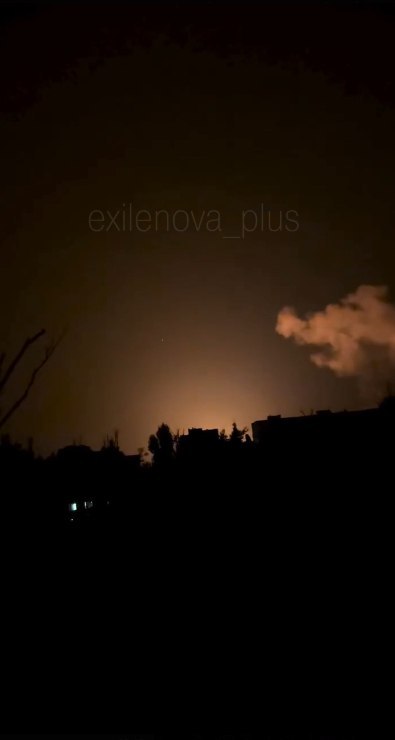
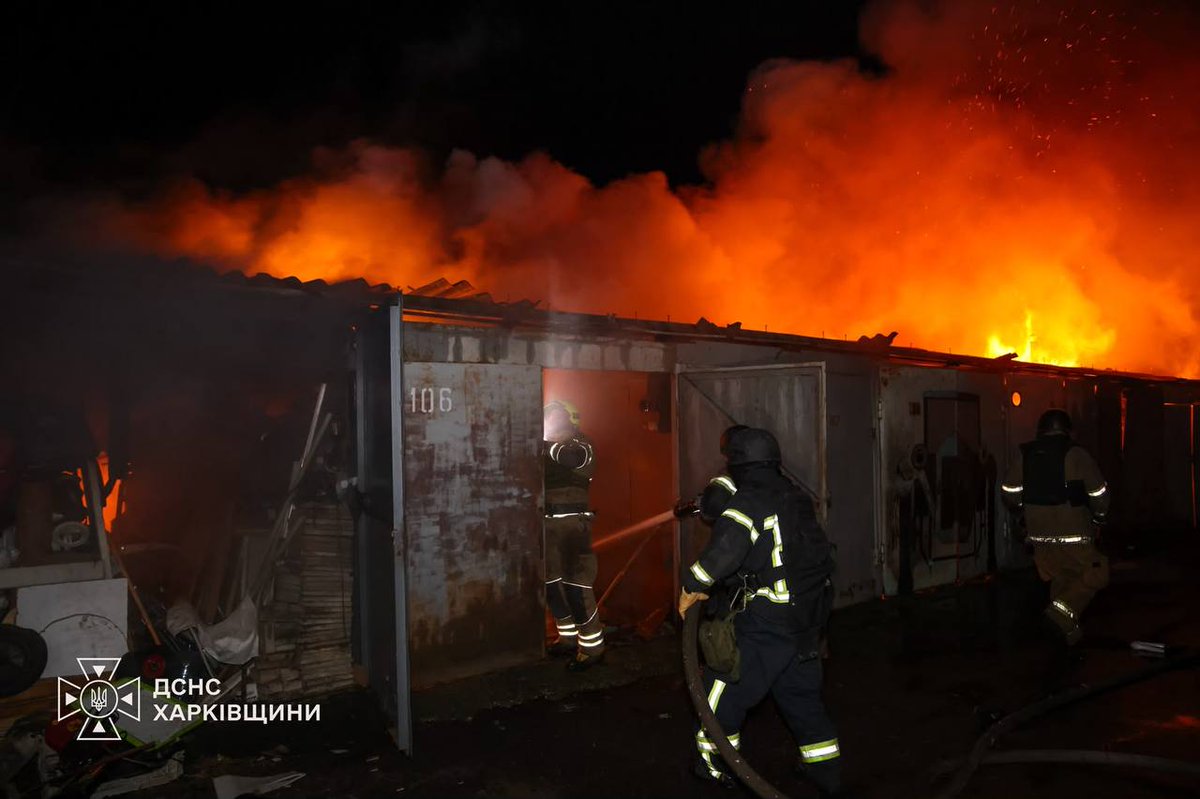
On the same day, a Russian S8000 Banderol cruise missile struck a garage complex and a 110 kV substation in Kharkiv, causing extensive structural damage and temporary power outages. The missile, launched from a mobile launch platform, traveled a distance of roughly 600 km before impact, demonstrating Russia’s continued reliance on long‑range precision weapons to disrupt critical infrastructure.
Earlier, at 12:53 UTC, a Russian strike on a market in Chornomorsk, Odesa Oblast, killed three civilians and injured eleven. The attack, reported by the monitor_the_situation channel, employed unguided rockets that hit the central trading area, igniting multiple stalls and prompting a rapid evacuation of nearby residents.
Aerial Bombardments in Zaporizhzhia
Russian Aerospace Forces intensified their bombing campaign in Zaporizhzhia Oblast on November 11, dropping five FAB‑500 guided aerial bombs on a deployment point of the 128th Separate Mountain Assault Brigade near Kushuhum. An additional FAB‑3000 bomb struck an embankment near Studenok in Kharkiv Oblast. The FAB‑500 bombs, each weighing 500 kg, are designed for precision strikes against fortified positions, but their use in populated areas raises significant civilian risk.
"Five FAB‑500 bombs hit a temporary deployment point, causing casualties among Ukrainian troops and collateral damage to nearby civilian structures," IntelSlava noted in its footage compilation.
Source: Telegram channel intelslava
Ukrainian Drone Operations in Donetsk
Ukrainian forces employed FP‑2 drones to attack over 40 Russian drone shelters in Donetsk Oblast. The operation, documented by intelslava, showed multiple drones delivering heavy warheads against launch facilities. While most shelters remained operational, the attacks demonstrated Ukraine’s growing capability to target Russian air‑defense assets deep within occupied territory.
The FP‑2 drones, equipped with 30 kg warheads, are capable of striking hardened structures from a distance of up to 150 km. The footage indicated that only a few hangars sustained significant damage, suggesting that Russian shelter construction remains resilient against current Ukrainian drone payloads.
Russian Drone Attacks in Zhytomyr Oblast
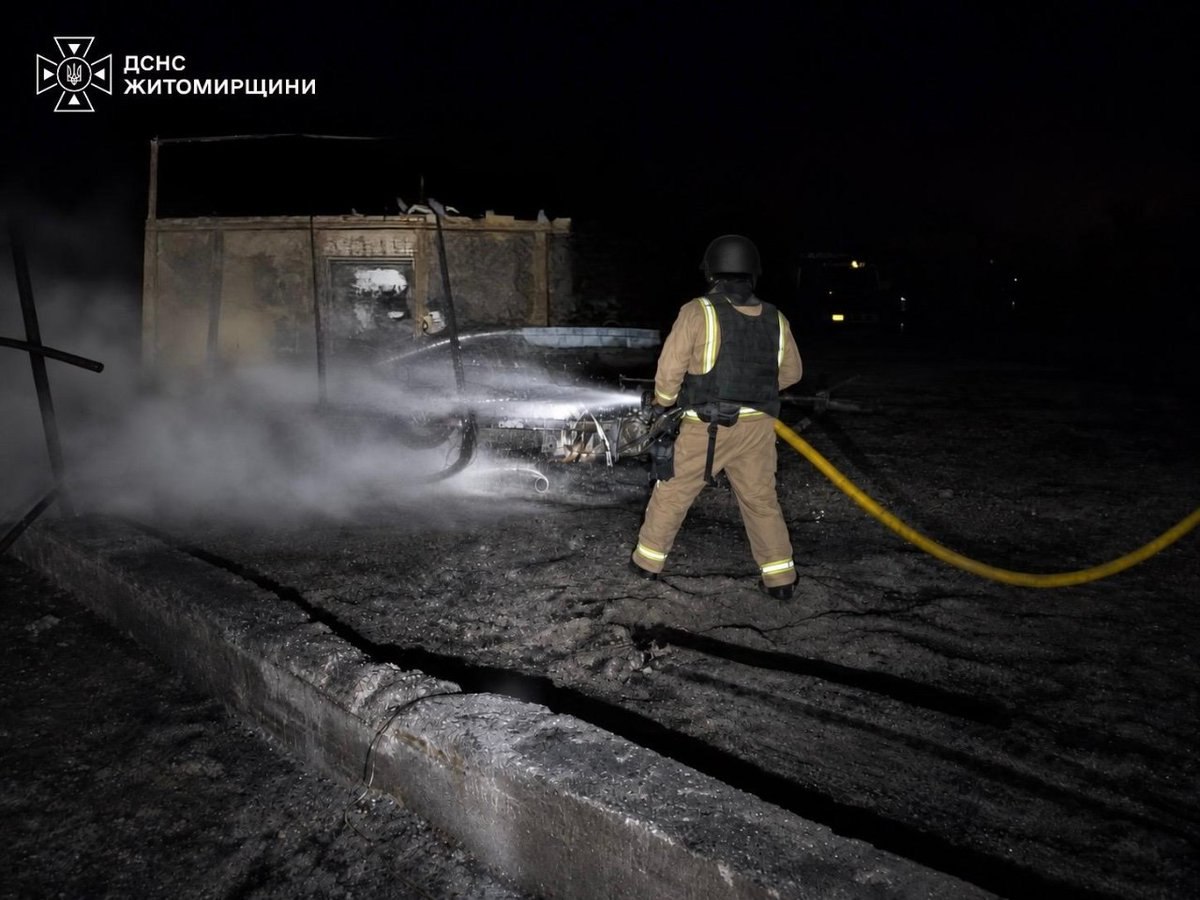
On the night of November 11, Russian Geran‑2 and Geran‑4 drones struck a petrol station in Zhytomyr City and electrical substations near Zviahel and Korosten. The attacks caused localized fires and temporary power disruptions but resulted in no reported fatalities. The Geran‑2/4 series, derived from commercial quadcopter platforms, are commonly used for low‑altitude strikes against soft targets.
"The drones hit a fuel depot and two high‑voltage substations, igniting fuel tanks and causing transformer failures," monitor_the_situation reported.
Source: Telegram channel monitor_the_situation
Casualty Trends and Operational Impact
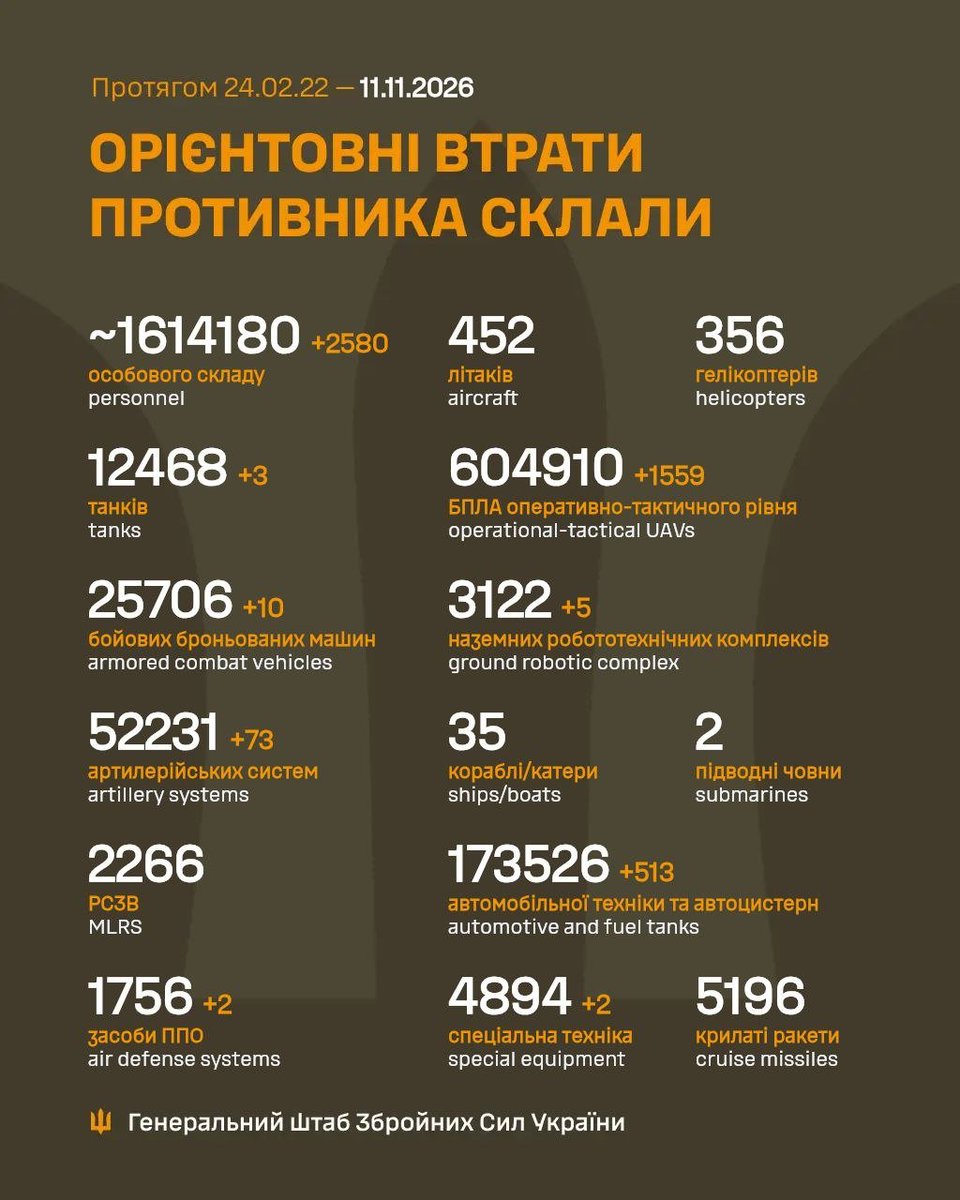
Ukraine’s General Staff released a cumulative casualty report indicating that Russian forces have lost over 1.6 million personnel since the invasion began in 2022, with 2,580 killed in the past 24 hours alone. While the figure reflects the attritional nature of the conflict, the recent spike in high‑casualty events—particularly the Komyshuvakha shelter bombing—suggests a shift toward targeting civilian shelters to undermine morale and create displacement pressures.
Strategic Implications
The pattern of kinetic events this week illustrates several key dynamics:
- Escalation of high‑explosive air strikes: The use of FAB‑500 and FAB‑3000 bombs, as well as large‑scale cruise missiles, indicates a Russian intent to degrade Ukrainian command‑and‑control nodes and critical infrastructure.
- Ukrainian adaptation of drone warfare: FP‑2 attacks on Russian shelters demonstrate a growing proficiency in deep‑strike operations, though the limited damage suggests a need for larger payloads or improved targeting intelligence.
- Civilian vulnerability: Repeated strikes on markets, shelters, and utility facilities increase civilian casualties and strain emergency response capacities across multiple oblasts.
Continued monitoring of these kinetic events will be essential for assessing the evolving balance of firepower and the humanitarian impact on the Ukrainian population.