On 9 November 2026, Iran’s Islamic Revolutionary Guard Corps (IRGC) engaged three commercial tankers in the Strait of Hormuz, igniting a fire on one vessel and marking the most consequential kinetic event recorded in the country’s waters that day. The incident, reported by Al Jazeera, underscores a rapid escalation in Iran’s maritime posture amid broader missile activity on its territory.
IRGC naval strike in the Strait of Hormuz
According to Al Jazeera’s video feed, the IRGC announced that its forces "struck three tankers … over US links." The attack resulted in a blaze on an oil tanker, though no casualties were confirmed among the crew. The strike occurred in the strategically vital Strait of Hormuz, a chokepoint through which roughly a fifth of global oil shipments transit. The IRGC’s involvement signals a direct use of force against commercial shipping, a step beyond previous warnings and diplomatic posturing.
"IRGC strikes three tankers near Hormuz over ‘US links’" – Al Jazeera, 2026-11-09
While the exact weaponry employed was not disclosed, the IRGC’s historical arsenal in the region includes anti‑ship missiles such as the Noor and Qader families. The lack of reported casualties suggests that emergency response teams were able to contain the fire, but the incident nevertheless raises concerns about the safety of maritime traffic and the potential for broader escalation.
Missile launches from Omidiyeh, Khuzestan Province
Earlier that afternoon, GeoPWatch documented the launch of two missiles from Omidiyeh, a town in Iran’s oil‑rich Khuzestan Province near the Iraqi border. The missiles were fired at 17:12 local time and were identified simply as "missiles" in the source report. No organization claimed responsibility, and no immediate damage or casualties were reported in the surrounding area.
The launch coincided with heightened regional tensions involving the United States, which has maintained a naval presence in the Persian Gulf. While the specific type of missile was not disclosed, the proximity to the Iraqi border raises the possibility of cross‑border signaling or testing of short‑range systems.
"2 Missiles were launched just now from Omidiyeh, Khuzestan province, Iran near the Iraqi border." – GeoPWatch, 2026-11-09T17:12:49
Anti‑ship missile activity in Sirik, Hormozgan Province
At 14:46 local time, residents of Sirik, a coastal town in Hormozgan Province, reported loud explosions following an anti‑ship missile launch aimed toward the Strait of Hormuz. GeoPWatch identified the weapon as an AshM (anti‑ship missile), a system typically deployed from naval platforms or coastal batteries.
The explosions were heard across the town, but there were no immediate reports of damage to civilian infrastructure or casualties. The launch aligns with the IRGC’s broader pattern of demonstrating maritime strike capabilities, potentially as a deterrent against perceived foreign naval activity in the Gulf.
"Explosions were heard in Sirik as a result of a AshM launch towards the Strait of Hormuz." – GeoPWatch, 2026-11-09T14:46:54
Ballistic missile test launches in Ahvaz and Yazd
Iran’s missile development program continued with test launches of ballistic missiles from two separate sites: Koy‑e Ramazan near Ahvaz in Khuzestan Province, and Kuhestan Park in Yazd Province. The launches were reported at 14:06 local time by GeoPWatch and were described as "most likely test launches," following an earlier test earlier in the day.
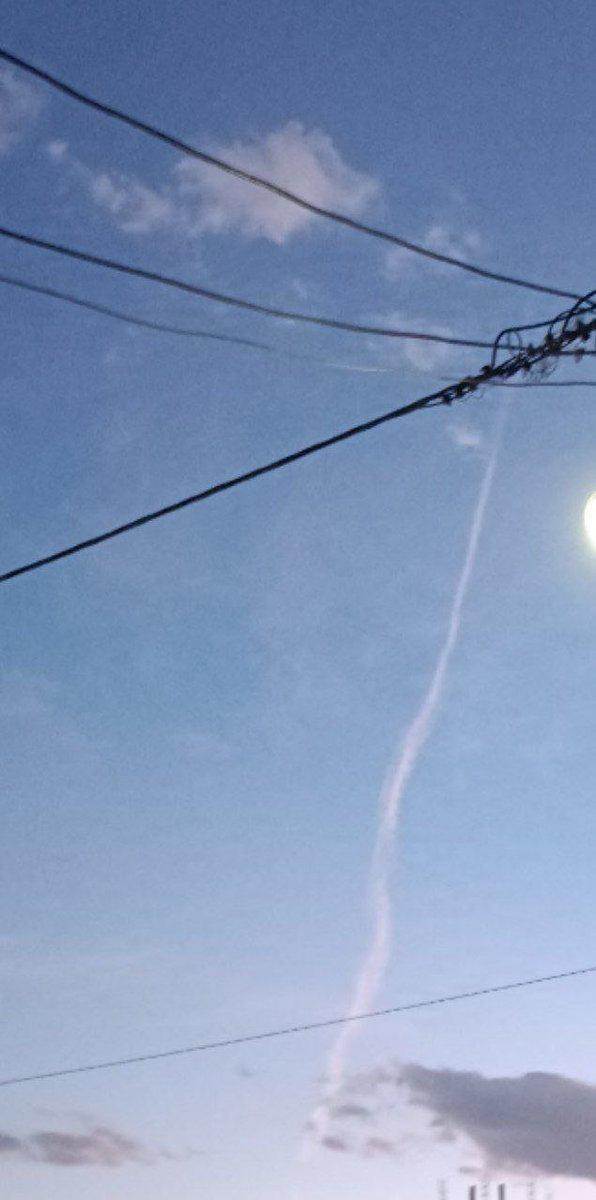
Photographic evidence accompanying the GeoPWatch report shows launch pads and plume signatures consistent with medium‑range ballistic systems. No organization claimed the launches, and there were no reported injuries or property damage. The tests demonstrate Iran’s ongoing efforts to refine its ballistic missile capabilities, which remain a central component of its strategic deterrent.
"BM Launches have been reported from Koy‑e Ramazan, Ahvaz, Khuzestan Province and Kuhestan Park, Yazd, Yazd Province, Iran." – GeoPWatch, 2026-11-09T14:06:49
Analysis of the kinetic pattern
The cluster of kinetic events on 9 November illustrates a coordinated escalation across multiple domains: maritime, coastal, and inland missile activity. While the IRGC’s naval strike represents the most direct threat to international shipping, the simultaneous missile launches from Khuzestan and Yazd suggest a broader demonstration of force, possibly intended to signal readiness to both regional adversaries and domestic audiences.
All incidents were reported without confirmed casualties, indicating that the immediate human cost was limited. However, the potential for escalation remains high, especially given the strategic importance of the Strait of Hormuz and the proximity of missile launches to the Iraqi border. The involvement of both state actors (IRGC) and unidentified launch sites underscores the complexity of attribution in the region.
Monitoring agencies should continue to track the frequency and trajectory of such launches, assess any changes in IRGC operational doctrine, and evaluate the risk to commercial navigation in the Gulf. The convergence of naval aggression and missile testing on a single day may reflect a calibrated posture aimed at reinforcing Iran’s deterrent capabilities while testing the response thresholds of the United States and its allies.