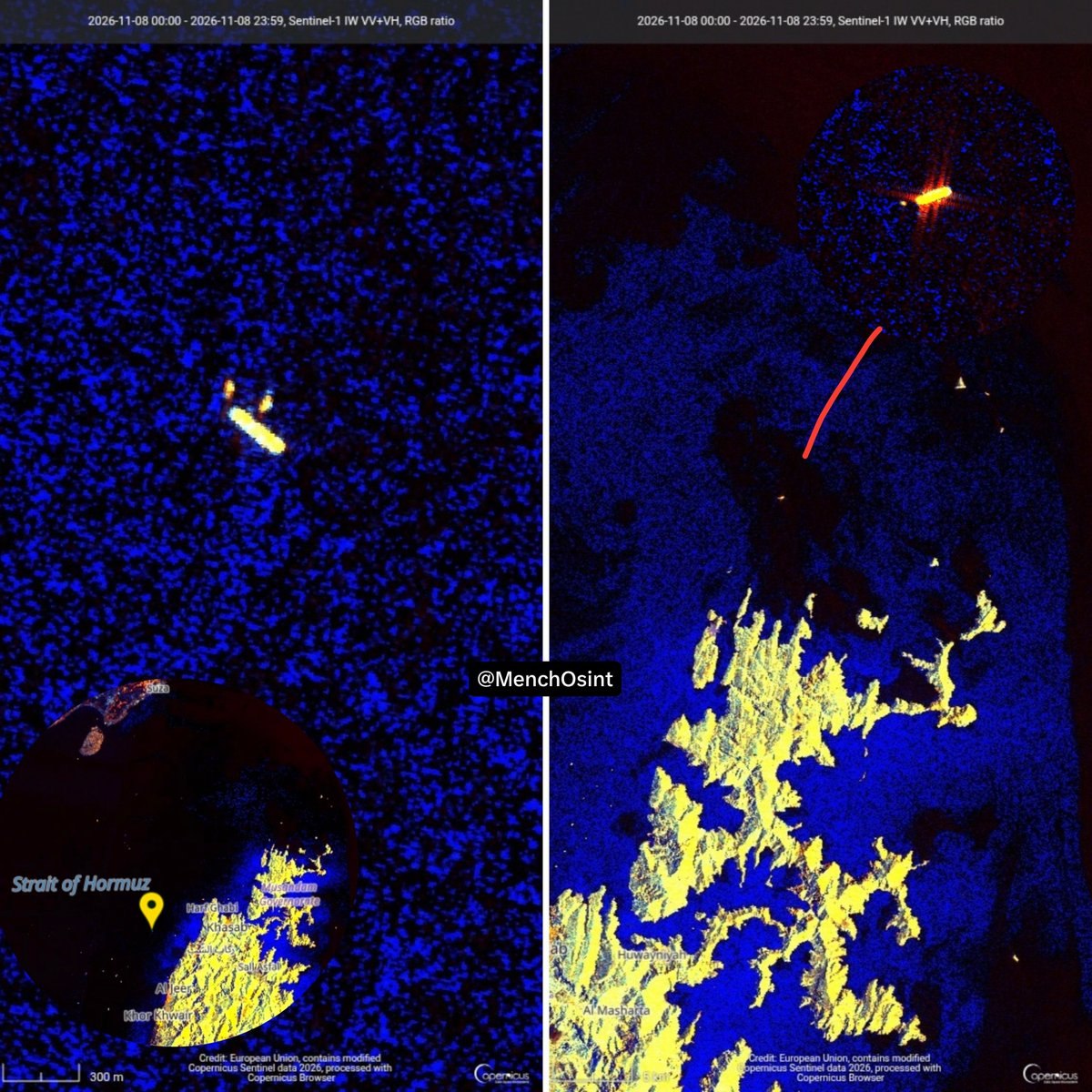
On 8 November 2026 the Islamic Revolutionary Guard Corps (IRGC) Navy announced a coordinated series of attacks on commercial shipping in the Strait of Hormuz, the narrow chokepoint that funnels roughly 20 percent of global oil shipments. The most serious claim, reported by the Telegram channel intelslava at 13:49 UTC, states that three oil tankers were struck and set on fire while attempting an unauthorised transit. The IRGC attributed the operation to U.S. support, a charge that underscores the heightened geopolitical friction surrounding the waterway.
High‑Severity IRGC Claim of Three Tanker Hits
The IRGC Navy’s statement, reproduced in full by intelslava, reads:
"Iran's Islamic Revolutionary Guard Corps (IRGC) Navy announced that three more oil tankers were struck and set ablaze this morning while attempting to transit the Strait of Hormuz along a route not authorized by Iran, with U.S. support."
The announcement did not provide casualty figures, nor did it specify the vessels’ names or flag states. Video footage posted to the same channel shows flames engulfing the decks of three separate ships, confirming the visual evidence of the fires. No weapons were identified in the claim, suggesting either small‑arms fire, incendiary devices, or a coordinated boarding operation, though the IRGC did not elaborate.
Mine‑Triggered Fire on Oil Tanker
At 17:16 UTC, the monitoring channel monitor_the_situation reported that an oil tanker ignited after striking a naval mine in international waters of the Strait. The brief notice, titled “Oil Tanker Struck by Mine in Strait of Hormuz,” confirms the presence of explosive devices in the waterway but offers no details on the vessel’s crew or cargo. The weapon type is identified as a naval mine, a low‑tech yet highly effective means of disrupting maritime traffic.
Missile Strike Ignites Vessel
Earlier, at 16:49 UTC, intelslava released footage of a vessel ablaze after being hit by an IRGC Navy anti‑ship cruise missile. The video shows a missile plume followed by a sudden explosion on the ship’s superstructure, after which flames rapidly spread. The weapon is explicitly identified as an anti‑ship cruise missile, indicating the IRGC’s capability to engage targets at range. No casualties were reported, and the incident underscores the IRGC’s willingness to employ precision strike assets against commercial shipping.
Undersea Cable Mining Concerns
In a separate development, the Jerusalem Post (JPost) reported on 12:01 UTC that vessels linked to Iran were suspected of mapping and laying mines around undersea telecommunications cables in the Strait. The article notes that Iran has repeatedly threatened to target submarine cables and data centres if the United States or Israel pursue further military action. While no direct damage was confirmed on 8 November, the intelligence points to a broader strategy of leveraging maritime infrastructure to exert pressure.
Earlier Tanker Fire and Evacuation
At 09:41 UTC, the channel rnintel documented an incident in which an oil tanker was attacked, resulting in a fire and the evacuation of its crew. The United Kingdom Maritime Trade Operations (UKMTO) confirmed the crew’s removal but did not attribute the attack to any specific weapon system. The lack of an identified perpetrator leaves open the possibility of a covert operation or a misattributed accident.
Satellite‑Verified Dual Tanker Fires
Finally, at 07:38 UTC, monitor_the_situation released satellite imagery showing two tankers ablaze in the eastern part of the Strait, accompanied by two tugboats. The imagery corroborates the IRGC’s earlier claim of setting two tankers on fire, providing independent verification of the visual evidence. The source described the scene as “IRGC Sets Two Tankers Ablaze in Strait of Hormuz,” and the accompanying photo was posted to the channel.
Collectively, these incidents illustrate a pattern of kinetic actions targeting commercial vessels and critical infrastructure in the Strait of Hormuz on a single day. The events span a range of weapon systems—from naval mines and anti‑ship missiles to possible small‑arms or incendiary tactics—demonstrating the IRGC’s multi‑layered approach to maritime coercion. While casualty reports remain limited, the repeated ignition of tankers poses immediate environmental risks, including oil spills and air pollution, and threatens the uninterrupted flow of energy supplies through a globally vital corridor.
All source material is publicly available on the referenced Telegram channels and news outlets, with URLs provided for verification: intelslava (https://t.me/intelslava/97743, https://t.me/intelslava/97757), monitor_the_situation (https://t.me/monitor_the_situation/41983, https://t.me/monitor_the_situation/41917), rnintel (https://t.me/rnintel/68833), and JPost (https://www.jpost.com/middle-east/iran-news/article-914199).