On 6 November 2026, the Ukrainian Air Force conducted a precision strike near Bakhmut, Donetsk Oblast, deploying two JDAM‑ER 500‑pound glide bombs from a Su‑27 Flanker against a cluster of Russian drone operators. The attack, documented by video released on the Monitor The Situation channel, caused no reported casualties but demonstrated Ukraine’s capability to target command‑and‑control elements of Russia’s unmanned aerial system network.
Strike on Russian Drone Operators Near Bakhmut
The Su‑27 sortie occurred at approximately 01:42 UTC. Two JDAM‑ER glide bombs were released onto a site identified as a Russian drone‑operator position. An accompanying FPV drone captured the impact, which was later posted by @Osinttechnical on X. No injuries were confirmed among the operators, and the Russian side has not issued an official statement.
Source: Monitor The Situation, https://t.me/monitor_the_situation/41579
Russian KAB‑500 Glide Bomb Hits Sumy Electrical Substation
At 04:58 UTC, a Russian KAB‑500 glide bomb struck an electrical substation in Sumy Oblast, Ukraine. The impact damaged transformers and disrupted power distribution to surrounding civilian areas. Local authorities reported temporary outages but no civilian casualties. The incident underscores the continued use of high‑explosive glide munitions by Russian forces against critical infrastructure.
Source: Monitor The Situation, https://t.me/monitor_the_situation/41599
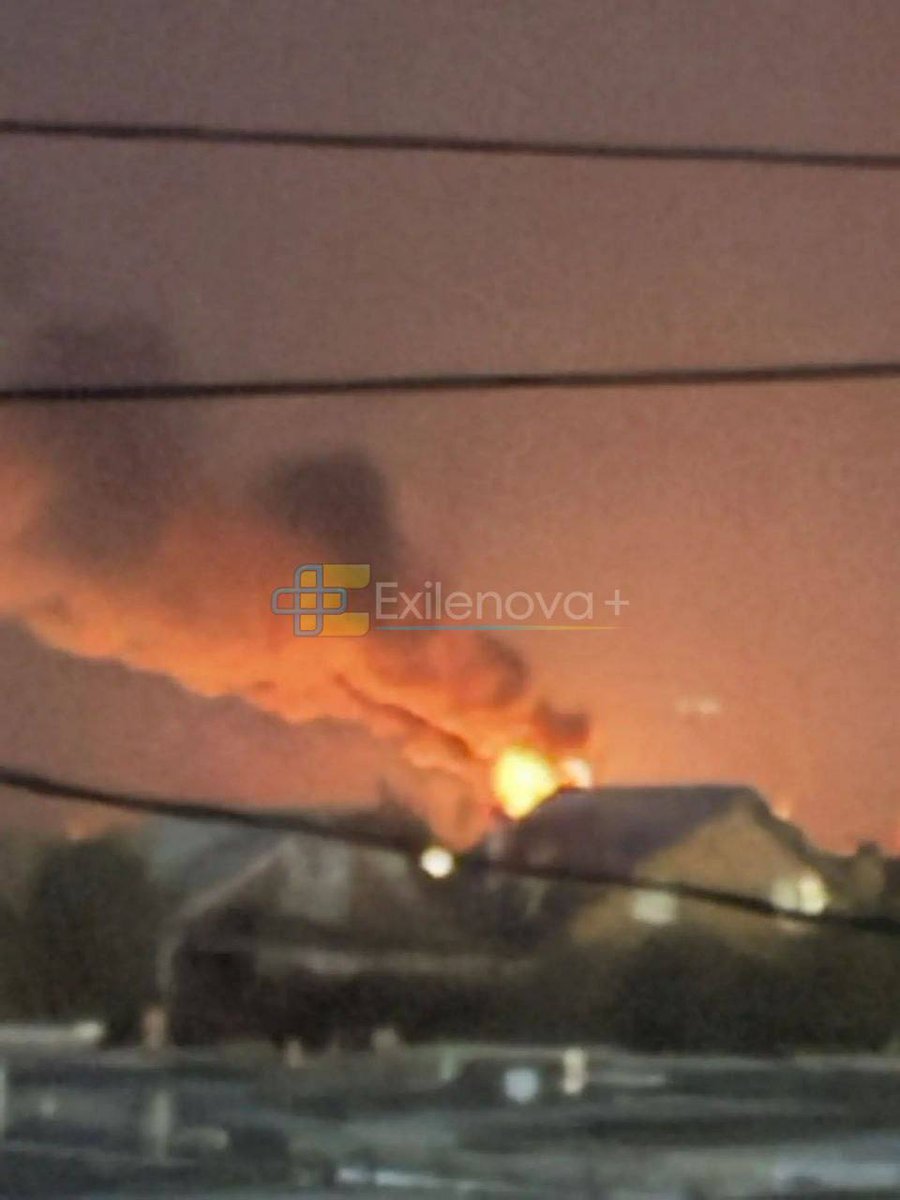
Ukrainian Drones Ignite Fire at Afipsky Oil Refinery
Earlier in the day, at 03:51 UTC, Ukrainian long‑range drones targeted the Afipsky Oil Refinery in Krasnodar Krai, Russia. The drones struck fuel storage tanks, igniting a large fire that required emergency response teams to contain. No injuries were reported, and the refinery’s output was temporarily halted. The attack marks a notable expansion of Ukrainian drone operations beyond the front lines into Russian territory.
Source: Monitor The Situation, https://t.me/monitor_the_situation/41591
The Bakhmut strike aligns with Ukraine’s broader campaign to degrade Russia’s UAV capabilities, which have been increasingly employed for reconnaissance and artillery spotting across the Donbas front. By targeting operators rather than the drones themselves, Kyiv aims to disrupt the command chain, potentially reducing the frequency and effectiveness of Russian aerial surveillance.
Russia’s continued reliance on glide‑bomb munitions, such as the KAB‑500, reflects a tactical shift toward stand‑off weapons that can be launched from beyond the range of Ukrainian air defenses. The Sumy substation attack illustrates how these weapons are being used to pressure civilian infrastructure, a pattern observed throughout the conflict.
International observers have highlighted the cross‑border nature of the Afipsky refinery strike as a possible escalation point. While Ukraine has not officially claimed responsibility, the use of long‑range drones capable of reaching deep into Russian territory raises questions about the evolving rules of engagement and the risk of broader retaliation.
Operational implications include a demonstrated Ukrainian ability to conduct deep‑strike missions against both Russian command nodes and strategic industrial assets, while Russian forces continue to employ glide‑bomb technology against Ukrainian infrastructure. The absence of reported casualties in all three incidents suggests a focus on material damage rather than personnel loss, though the broader humanitarian impact of power outages and refinery disruptions remains a concern.
Analysts note that the coordinated timing of these events may reflect a deliberate Ukrainian strategy to stretch Russian defensive resources across multiple fronts, compelling a reallocation of air defense and emergency response assets.