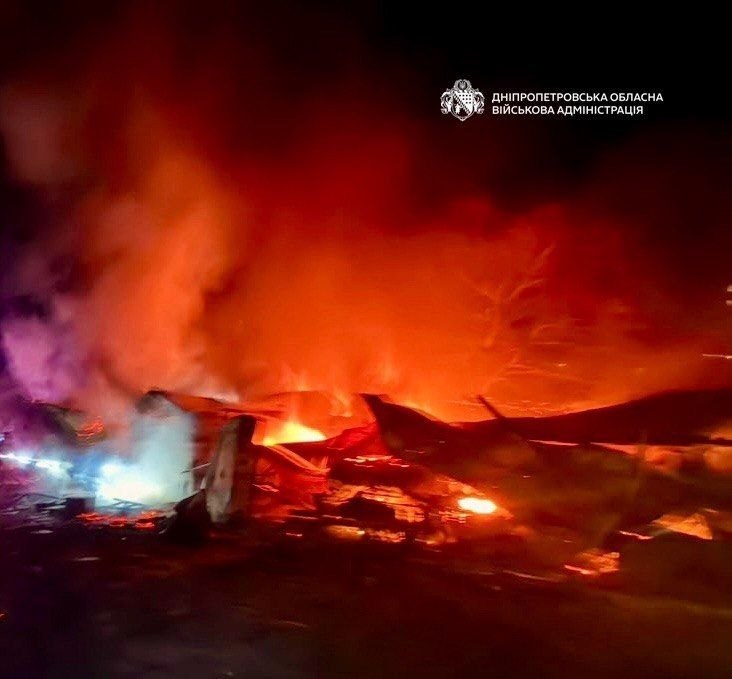
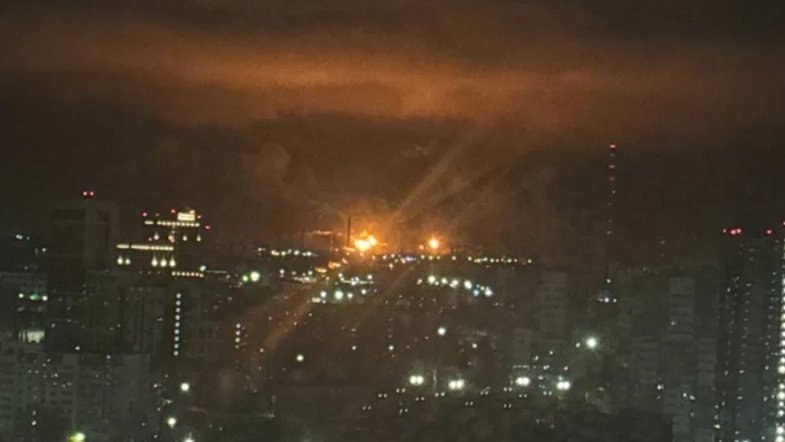
In the early hours of 5 November 2026, Russian forces launched a coordinated drone offensive against critical Ukrainian energy infrastructure, marking the most extensive aerial attack recorded this month. At approximately 03:15 UTC, a swarm of at least twenty‑two Geran‑2 and three Geran‑4 unmanned aerial vehicles (UAVs) struck the Prydniprovsky Thermal Power Plant in Dnipro, Dnipropetrovsk Oblast, igniting a large fire that threatened the plant’s primary generators and auxiliary systems.
"Russia launched a large‑scale Geran‑2/4 drone attack on Dnipro, targeting the Prydniprovsky Thermal Power Plant. At least 22 Geran‑2 and 3 Geran‑4 drones were used, sparking a large fire at the plant." – monitor_the_situation, 2026‑11‑05T03:15:06
The attack was reported by the open‑source monitoring channel monitor_the_situation. No casualties were confirmed in the immediate vicinity, and emergency responders contained the blaze within three hours, preventing a full‑scale outage. The plant, which supplies approximately 12% of Ukraine’s thermal electricity, resumed partial operations by late afternoon.
Secondary Strike on Samar Substation
At 03:55 UTC, a separate Geran‑4 jet‑drone penetrated the perimeter of a 150 kV substation in the village of Samar, also located in Dnipropetrovsk Oblast. The drone impact damaged a transformer unit and triggered an automatic shutdown of the substation’s feeder lines. The incident occurred concurrently with the Dnipro plant attack, suggesting a synchronized effort to degrade both generation and distribution capacities.
"Dnipropetrovsk OVA says a 150 kV substation in Samar was struck by Geran‑4 jet‑drones overnight, amid a larger attack on Dnipro's Prydniprovsky thermal plant that caused a large fire." – monitor_the_situation, 2026‑11‑05T03:55:46
The substation’s outage affected approximately 45,000 residential and industrial customers in the surrounding district. Restoration crews reported no injuries and began repairs within two hours, estimating a full service restoration within 48 hours.
Logistics Centre Fire in Kyiv
At 00:41 UTC, a Geran‑type drone struck a logistics centre in Kyiv, igniting a large fire that engulfed a warehouse storing construction materials and spare parts for the Ukrainian rail network. Video footage released by the channel intelslava showed the fire spreading rapidly before fire‑fighting units contained it.
"Footage shows a large fire at a logistics center in Kiev following a strike by Geran drones." – intelslava, 2026‑11‑05T00:41:05
Local authorities confirmed no civilian casualties, though the loss of stored materials is expected to delay ongoing reconstruction projects in the capital region. The logistics centre is a key node for the distribution of humanitarian aid and repair kits for damaged infrastructure.
Ukrainian Counter‑Strike on Ryazan Oil Refinery
In a reciprocal action, Ukrainian forces deployed multiple drones against the Ryazan Oil Refinery in Ryazan, Russia, at 01:59 UTC. The refinery, a major fuel‑processing facility for the Central Federal District, sustained damage to its oil‑processing units, according to imagery posted by monitor_the_situation. No injuries were reported, and the refinery’s management announced a temporary reduction in output pending safety inspections.
"Multiple drone strikes hit the industrial zone of the Ryazan Oil Refinery in Russia, a key fuel production site." – monitor_the_situation, 2026‑11‑05T01:59:28
The Ukrainian strike illustrates the expanding geographic scope of UAV operations, extending beyond Ukrainian territory to target Russian industrial assets.
Operational Context and Weaponry
The Geran‑2 and Geran‑4 platforms are Russian‑manufactured loitering munitions adapted for high‑speed, low‑altitude penetration of defended airspace. Geran‑2 drones typically carry a 5 kg explosive payload, while Geran‑4 variants can deliver up to 10 kg, enabling them to inflict structural damage on substations, power plants, and logistics facilities. Their deployment in coordinated swarms increases the probability of overwhelming point‑defence systems, a tactic observed in both the Dnipro and Samar attacks.
Ukrainian drone operations, while less technologically advanced, have demonstrated the capacity to strike deep into Russian territory, as evidenced by the Ryazan refinery incident. The use of commercially available quadcopter platforms equipped with improvised explosive devices suggests a diversification of Ukraine’s UAV strategy.
Implications for Energy Security
The simultaneous targeting of generation, transmission, and logistics nodes within a narrow time window reflects a deliberate effort to compound the operational impact on Ukraine’s energy grid. While immediate physical damage was limited to specific assets, the cumulative effect includes temporary power shortages, delayed reconstruction, and increased strain on backup generation resources.
Energy analysts note that the loss of the Prydniprovsky plant’s full capacity could reduce national thermal output by up to 1.2 GW, necessitating greater reliance on imported electricity and alternative generation sources. The Samar substation outage, though localized, underscores the vulnerability of high‑voltage distribution points to UAV attacks.
Response Measures
Ukrainian authorities have activated emergency response protocols across the affected regions. The State Emergency Service coordinated with the Ministry of Energy to prioritize restoration of critical loads, while the National Guard intensified aerial surveillance along known UAV ingress corridors.
In parallel, the Ukrainian Air Force reported increased deployment of electronic warfare (EW) assets designed to jam UAV command‑and‑control frequencies. Preliminary assessments indicate that EW measures disrupted approximately 30% of the incoming drone swarm during the Dnipro attack, though the remaining drones successfully penetrated the defensive envelope.
Conclusion
The events of 5 November 2026 illustrate a marked escalation in the use of unmanned aerial systems as a tool for strategic infrastructure disruption. Russian Geran‑2 and Geran‑4 drones achieved coordinated strikes on high‑value energy and logistics targets, while Ukrainian drone operations extended the conflict’s reach into Russian industrial heartland. Continued monitoring of UAV deployment patterns will be essential for assessing future risks to regional energy security and for informing defensive counter‑UAV strategies.