In the early hours of 3 November 2026, Russian forces unleashed a coordinated missile campaign against Ukraine's energy infrastructure, striking six major power plants and a high‑voltage substation. The attacks, which employed Iskander‑M ballistic missiles, Kn‑23 and Zircon cruise missiles, and up to 70 Kh‑101 cruise missiles, represent the most extensive assault on Ukraine's power grid since the conflict began. The barrage caused widespread outages, damaged critical facilities, and set the stage for a series of retaliatory and defensive actions, including a surge in Ukrainian drone operations targeting Russian territory.
Coordinated missile strikes on power generation
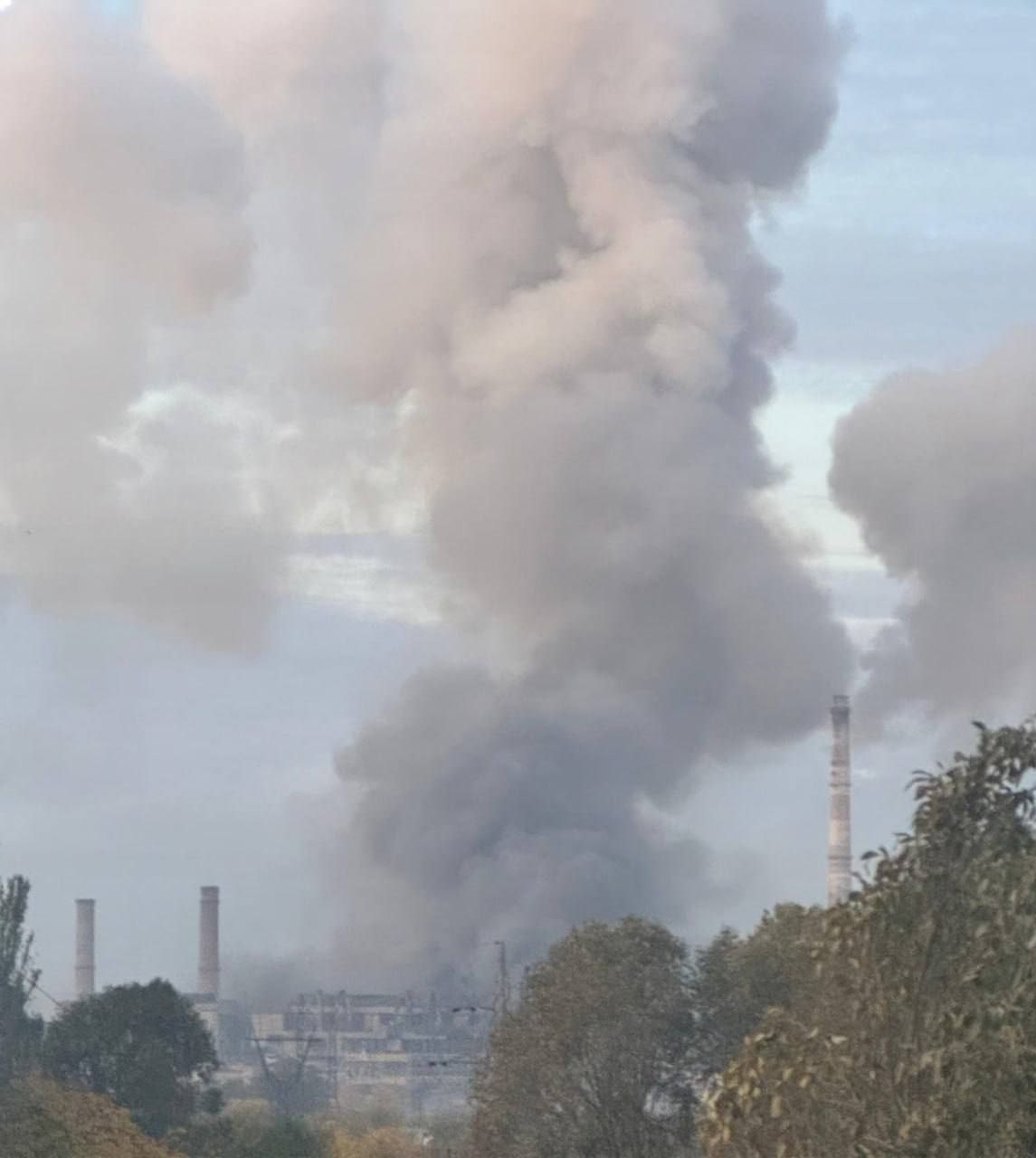
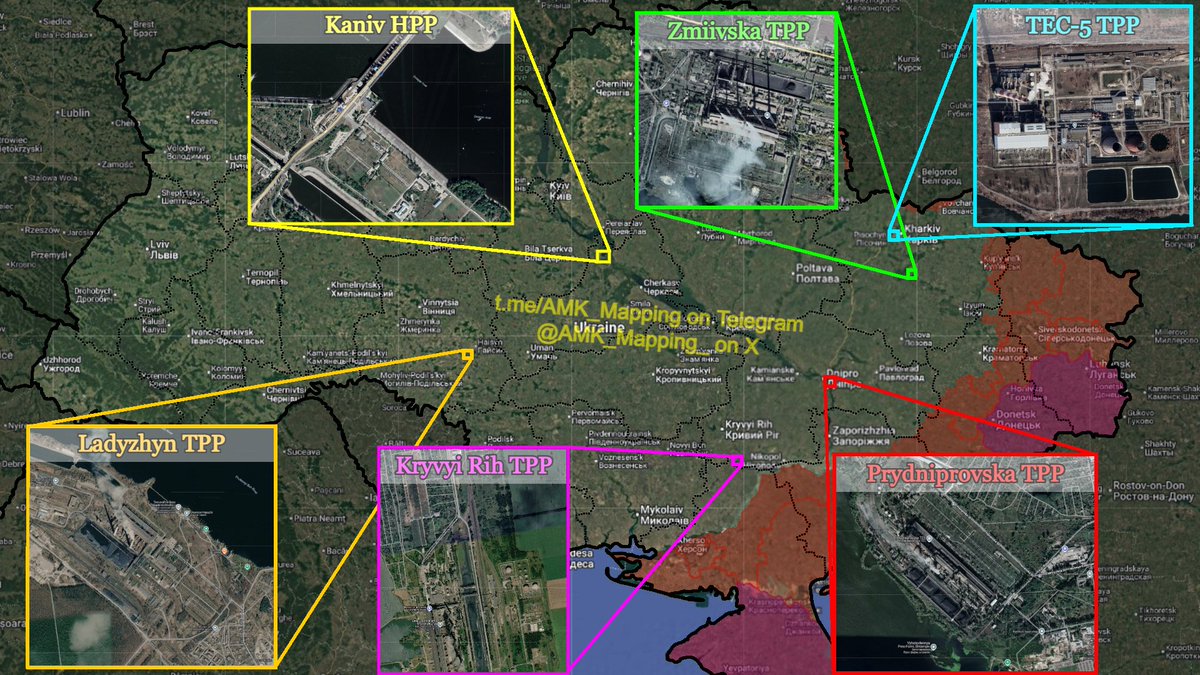
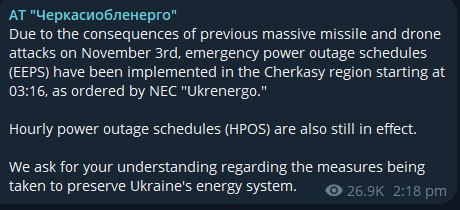
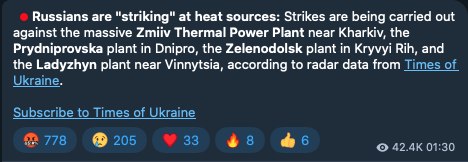
At 03:02 UTC, Russian missiles hit six Ukrainian power plants located in Kaniv (Cherkasy Oblast), Zmiivska (Kharkiv Oblast), Kharkiv, Dnipro (Dnipropetrovsk Oblast), Kryvyi Rih (Kirovohrad Oblast) and Ladyzhyn (Vinnytsia Oblast). The strike package included Iskander‑M ballistic missiles, Kn‑23 and Zircon cruise missiles, and an estimated up to 70 Kh‑101 cruise missiles that were poised to engage additional sites within the next two hours. The attacks triggered emergency power shutdowns across multiple regions, forcing utilities to reroute electricity and activate reserve generators.
"Russian Missiles Strike Six Ukrainian Power Plants" – monitor_the_situation, 03:02 UTC, https://t.me/monitor_the_situation/40803
Additional attacks on energy nodes and civilian sites
Following the initial barrage, Russian forces continued to target energy infrastructure. At 05:58 UTC, a 750 kV substation in the Kiev region sustained damage, while thermal power plants in Ladyzhskaya, Krivorozhskaya, Pridneprovskaya and Zmijevskaya were also hit, according to intel from intelslava. The same morning, a Kh‑101 cruise missile struck a residential building in Dnipro, partially collapsing the structure and potentially trapping civilians. In Kyiv and Dnipropetrovsk oblasts, a massive overnight missile and drone offensive caused emergency power outages, prompting rolling blackouts in the capital city. The Kharkiv medical facility was also hit, injuring 25 patients and staff and forcing the evacuation of approximately 200 individuals.
"Russian Missile Strike Hits Kharkiv Medical Facility, 25 Injured" – monitor_the_situation, 03:52 UTC, https://t.me/monitor_the_situation/40807
Targeting of civilian infrastructure and casualties
Beyond energy sites, Russian attacks struck civilian locations. At 01:17 UTC, a school repurposed as a humanitarian aid centre was bombed, killing at least 26 people, as reported by Al Jazeera. The strike underscores the widening scope of Russian targeting, which now includes facilities providing essential services to displaced populations.
"Multiple Russian strikes kill at least 26 at Ukraine aid centre" – AlJazeera, https://www.aljazeera.com/video/newsfeed/2026/11/3/multiple-russian-strikes-kill-at-least-26-at-ukraine-aid-centre?traffic_source=rss
Ukrainian counter‑drone operations
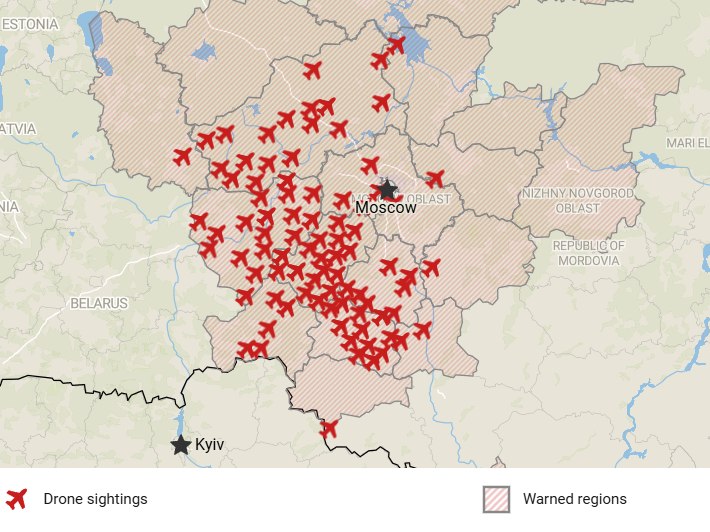
In response to the intensified Russian offensive, Ukraine escalated its own aerial campaign. At 01:03 UTC, Ukrainian sources reported hundreds of drones heading toward targets in western Russia after a series of strikes on Russian oil facilities. The operation reflects a shift toward offensive drone use aimed at disrupting Russian logistics and energy production. Later, Latvia issued a brief warning about Ukrainian drones entering its airspace, prompting NATO jets to be scrambled, highlighting the risk of the conflict spilling over into NATO member states.
"Latvia warned of Ukrainian drones entering its airspace, prompting NATO jets to be activated" – JPost, 00:16 UTC, https://www.jpost.com/international/article-913638
Russian drone attacks on logistics and communications
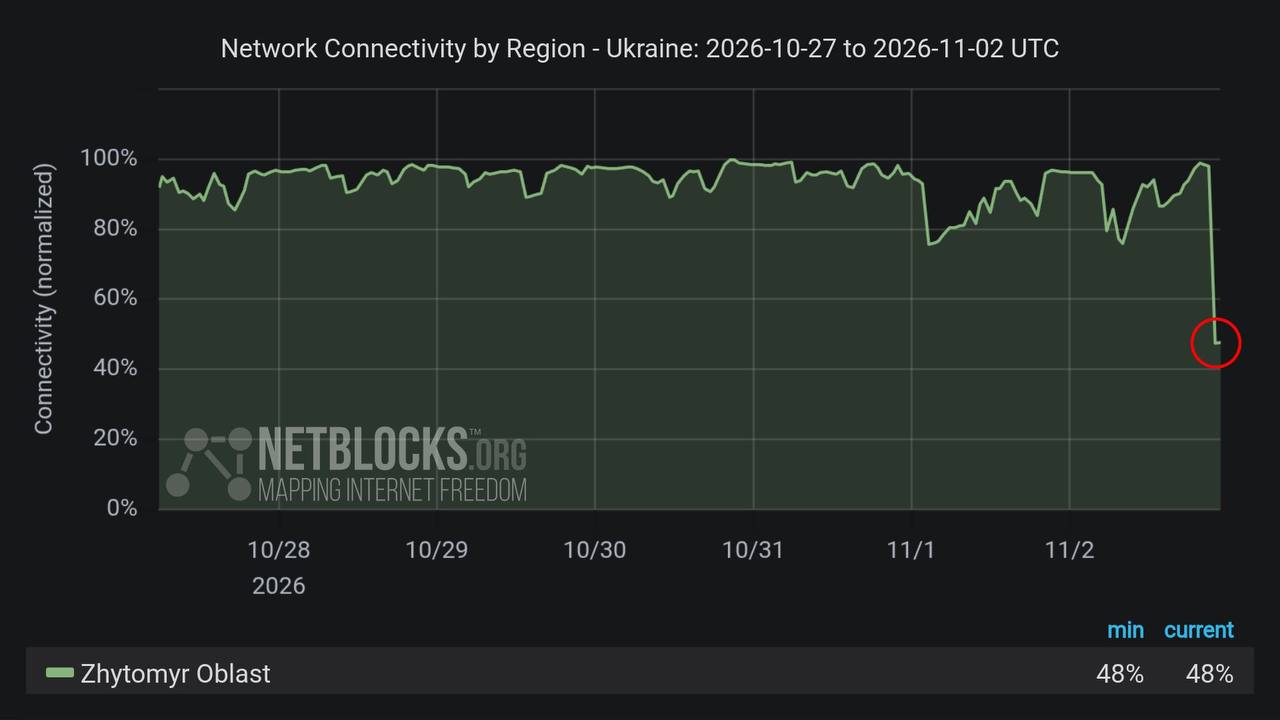
Russian forces also employed Geran commercial‑off‑the‑shelf drones to strike railway assets. At 04:10 UTC, four locomotives across Sumy, Dnipropetrovsk and Kharkiv regions were hit, disrupting freight movements essential for military supply chains. Concurrently, drone attacks on energy infrastructure in Zhytomyr Oblast reduced internet connectivity to 48 % of normal levels, impairing civilian communications and command‑and‑control capabilities.
"Russian forces used Geran drones to strike four locomotives" – BellumActaNews, https://t.me/BellumActaNews/178207
The convergence of high‑precision missile strikes on power generation, targeted attacks on civilian shelters, and an escalating drone war on both sides illustrates a marked intensification of the conflict’s kinetic dimension. While Russia seeks to cripple Ukraine’s energy resilience, Kyiv is leveraging asymmetric aerial tactics to pressure Russian logistics and signal its capacity to project force beyond its borders.