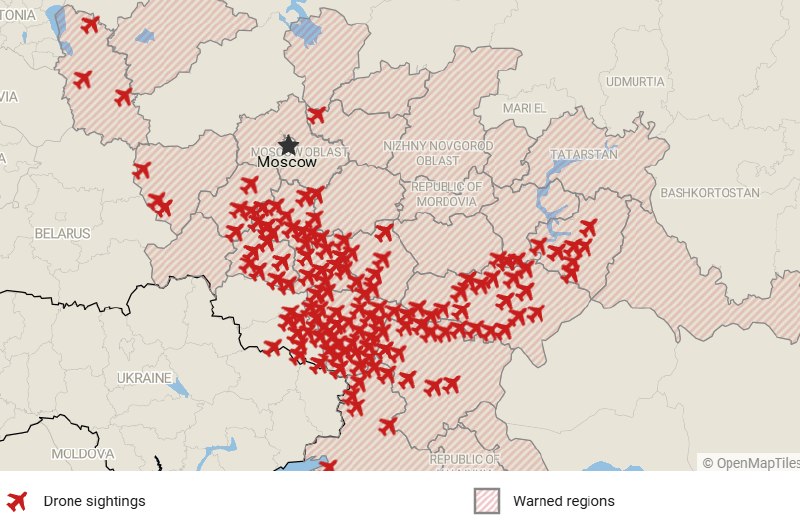
In the early hours of 2 November 2026, Ukrainian‑operated unmanned aerial vehicles (UAVs) carried out a series of attacks on Russian infrastructure, targeting an oil production facility in Prosvet, Samara Oblast, a road‑borne Hornet drone in the Luhansk People’s Republic (LPR), and a broad swarm over the Volga River basin. The incidents, reported by multiple open‑source monitors, illustrate a marked increase in the scale and geographic reach of Ukrainian drone operations.
Oil Production Facility Hit in Prosvet, Samara Oblast
At approximately 05:22 UTC, drones struck the Samara Linear Production and Dispatch Station in the settlement of Prosvet, located about 835 km northeast of Ukraine’s border. The facility, a key node in Russia’s oil‑extraction network, suffered structural damage to its processing units, according to the Kyiv Independent, which cited the Telegram channel monitor_the_situation (source: https://t.me/monitor_the_situation/40581). No casualties were reported in the immediate aftermath, and local emergency services were dispatched to contain potential spills.
"Ukrainian drones reportedly hit the Samara Linear Production and Dispatch Station in Prosvet, about 835 km northeast of Ukraine's border, in an overnight attack," – monitor_the_situation, 05:22 UTC.
The attack employed commercially available quad‑copter platforms modified to carry explosive payloads. While the exact number of UAVs involved was not disclosed, the strike demonstrates the capability to reach deep into Russian territory, challenging previously held assumptions about the operational radius of Ukrainian drone forces.
Hornet Drone Detonation on LPR Roadway
At 04:58 UTC, a separate incident unfolded in the LPR when a road‑borne Hornet drone crashed among civilian vehicles and subsequently detonated. Video evidence shared by the Telegram channel intelslava (source: https://t.me/intelslava/97391) shows the moment of explosion, highlighting the danger posed by unexploded UAVs on public thoroughfares. The Hornet, a Russian‑manufactured loitering munition, is designed for precision strikes but can be repurposed by Ukrainian forces for asymmetric attacks.
"A video shows the moment a road‑borne drone, the Hornet, detonates in a stream of cars that are driving around it, shortly after it crashed somewhere in the LPR," – intelslava, 04:58 UTC.
Local authorities reported no fatalities, though several injuries were treated for shrapnel wounds. The incident underscores the emerging threat of UAVs that can be deployed from ground platforms, expanding the battlefield beyond traditional airspace.
Large‑Scale Drone Raid Over the Volga River Basin
Between 02:00 UTC and 03:01 UTC, a coordinated wave of Ukrainian drones traversed the Volga River basin in western Russia. The Telegram channel monitor_the_situation documented “hundreds of drones in the air” as part of a “major stream of Ukrainian attack drones” (source: https://t.me/monitor_the_situation/40571). Photographic material accompanying the report shows dense formations of small‑scale UAVs flying at low altitude, suggesting a saturation strategy intended to overwhelm air‑defence systems.
While specific targets within the basin were not identified, the region hosts critical energy infrastructure, including pipelines and power substations. No confirmed damage or casualties have been reported to date, but the sheer volume of aircraft indicates a shift toward mass‑deployment tactics.
Operational Implications
The three events collectively reveal a diversification of Ukrainian UAV tactics: deep‑strike capability against strategic industrial sites, opportunistic ground‑based attacks on civilian routes, and high‑density swarm operations aimed at saturating Russian air‑defence networks. The use of commercially available drone platforms, modified with improvised explosive devices, reduces logistical constraints and enables rapid deployment across a broad front.
Russian defence officials have responded by increasing patrols along key transport corridors and reinforcing radar coverage in the Volga region. However, the lack of reported casualties in the Prosvet and Volga incidents suggests that, while the attacks are disruptive, they have not yet achieved the level of kinetic impact that would translate into significant material loss.
Analysts note that the escalation aligns with Ukraine’s broader strategy of leveraging asymmetric technologies to offset conventional disparities. The continued flow of open‑source intelligence, including real‑time Telegram updates, provides a transparent record of these operations, allowing external observers to track the evolving drone threat landscape.