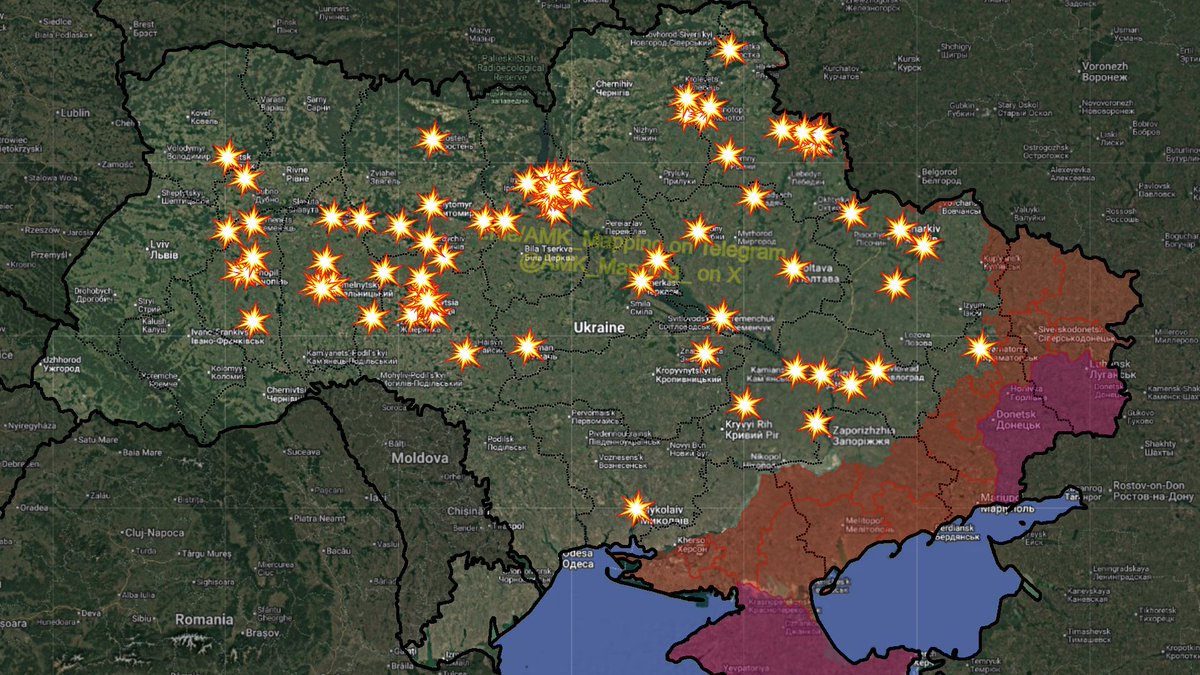
On 1 November 2026, a series of coordinated aerial attacks unfolded across three continents, underscoring a marked increase in hostile drone and air operations. The most extensive incident involved a sixteen‑hour drone barrage launched by Russian forces against western Ukraine, followed by a Venezuelan airstrike on an ELN guerrilla camp in Apure and a drone strike on Russia’s Kstovo oil refinery. The events, reported by open‑source monitoring channels, illustrate a widening geographic scope of aerial aggression.
Russia’s Sixteen‑Hour Drone Campaign Over Western Ukraine
At 02:09 UTC, the monitoring channel monitor_the_situation documented a large‑scale drone attack that persisted for sixteen hours across multiple western Ukrainian oblasts. The unmanned aerial systems targeted electrical substations and railway infrastructure, causing explosions at several power nodes and disrupting rail traffic. While the source did not specify civilian casualties, the attacks damaged critical energy assets, potentially affecting millions of residents dependent on the grid. The operation employed commercially available or modified drones, reflecting a shift toward persistent, low‑cost aerial harassment. The source URL is https://t.me/monitor_the_situation/40435.
Venezuelan Airstrike on ELN Guerrilla Camp in Apure
At 00:43 UTC, the Telegram channel CIG_telegram reported that the Venezuelan National Armed Forces (FANB) bombed a guerrilla encampment belonging to Colombia’s Ejército de Liberación Nacional (ELN) in the state of Apure. Fundaredes, a Venezuelan human‑rights NGO, confirmed nineteen deaths among combatants and civilians. The bombing employed conventional aerial bombs, and the strike was described as part of ongoing counter‑insurgency operations. The coordinator of Fundaredes, Juan Francisco García, stated:
“A bombing by the Venezuelan National Armed Forces (FANB) against a camp of the Colombian guerrilla group, the Ejército de Liberación Nacional (ELN), resulted in nineteen deaths.”
The incident was reported at https://t.me/CIG_telegram/86398 and highlights the use of air power in internal security contexts.
Drone Strike on Kstovo Oil Refinery, Russia
At 02:21 UTC, the same monitoring channel noted a drone impact at the Kstovo refinery in Nizhny Novgorod Oblast. The strike ignited a fire that temporarily halted fuel processing, raising concerns about supply chain disruptions. No casualty figures were released, and the responsible party was not identified in the source. The incident was posted on https://t.me/monitor_the_situation/40437.
Assessment of the Global Spike
The three incidents demonstrate a convergence of low‑cost drone technology and conventional air power in both interstate and internal conflicts. Russia’s prolonged drone campaign against Ukrainian infrastructure signals an escalation in the use of unmanned systems to achieve strategic attrition without committing manned aircraft. In Venezuela, the deployment of bombs against a non‑state actor reflects a willingness to employ air assets in counter‑insurgency, potentially raising the conflict’s lethality. The Kstovo refinery attack, though lacking attribution, suggests that critical industrial sites remain vulnerable to drone incursions. Collectively, these events indicate a broader trend of aerial aggression that transcends regional boundaries, demanding heightened monitoring and defensive preparedness.