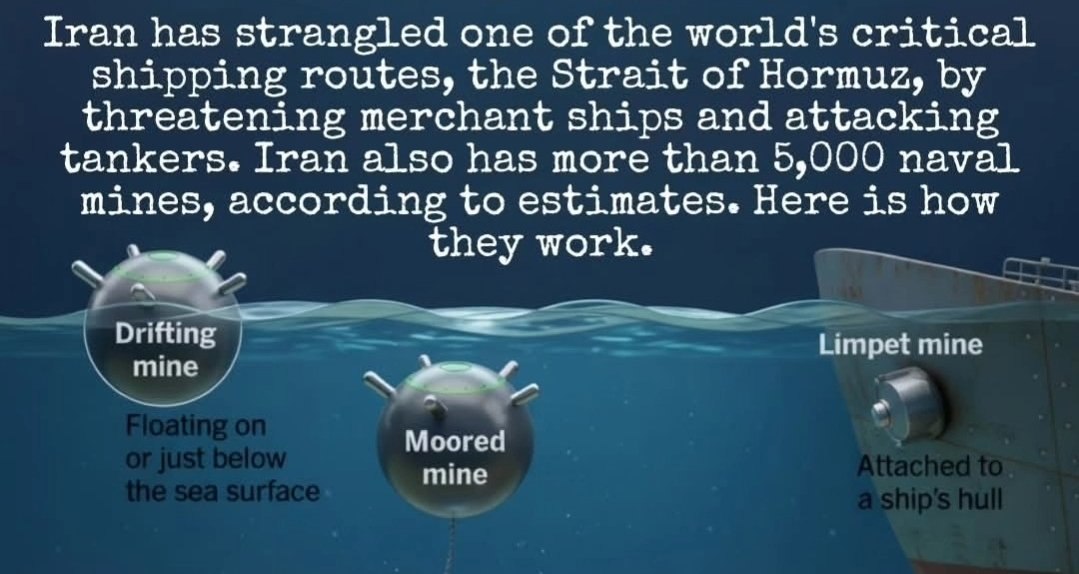
On 30 October 2026, Iran executed a series of coordinated kinetic actions that spanned maritime, aerial, and ground domains, underscoring a marked shift in its operational posture. The most consequential incident involved the use of speedboats to attach limpet mines to commercial oil tankers transiting the Strait of Hormuz, temporarily disabling the vessels and igniting concerns over the security of a critical global oil conduit.
Naval Mine‑Laying Operation in the Strait of Hormuz
At 14:45 local time, Iranian forces deployed fast‑attack speedboats equipped with limpet mines against two oil tankers operating in international waters of the Strait of Hormuz, the narrow passage separating Iran and Oman. Video evidence released by the Telegram channel monitor_the_situation shows the speedboats approaching the hulls, affixing the explosives, and withdrawing before the mines detonated, causing the tankers to lose propulsion and drift for several minutes. No casualties were reported among the crews, and the vessels were later towed to safety.
"Iran has changed tactics in the Strait of Hormuz, using speedboats to attach limpet mines to oil tankers' hulls, disabling them minutes later," – Reuters, cited by monitor_the_situation.
Weapons employed: limpet mines and high‑speed craft. Organizing entity: the Islamic Republic of Iran (IR). The incident was documented in a photo posted at https://t.me/monitor_the_situation/40182. The operation aligns with Iran’s longstanding claim to control over the strait and represents a tactical escalation from previous missile or drone threats.
IRGC Naval Attack on a Separate Tanker
Earlier, at 06:44, another Iranian naval action was reported by the same channel. IRGC personnel attached two explosive devices to an oil tanker, which subsequently caught fire. The video footage, also hosted on the channel, confirms the presence of explosive charges on the hull. Again, there were no reported injuries, but the incident amplified the perception of a coordinated campaign targeting commercial shipping.
"Oil Tanker Burns in Strait of Hormuz After IRGC Attack," monitor_the_situation, 06:44 UTC.
Weapons: conventional explosive devices. Organization: Islamic Revolutionary Guard Corps (IRGC). Source URL: https://t.me/monitor_the_situation/40100.
U.S. Airstrikes on Qeshm Island
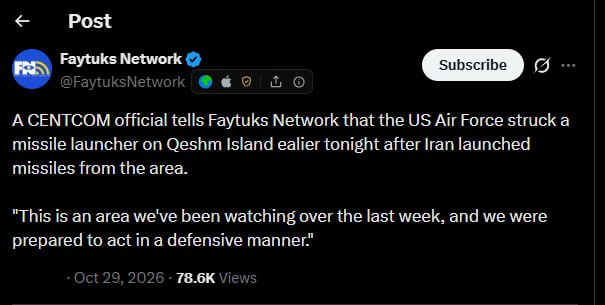
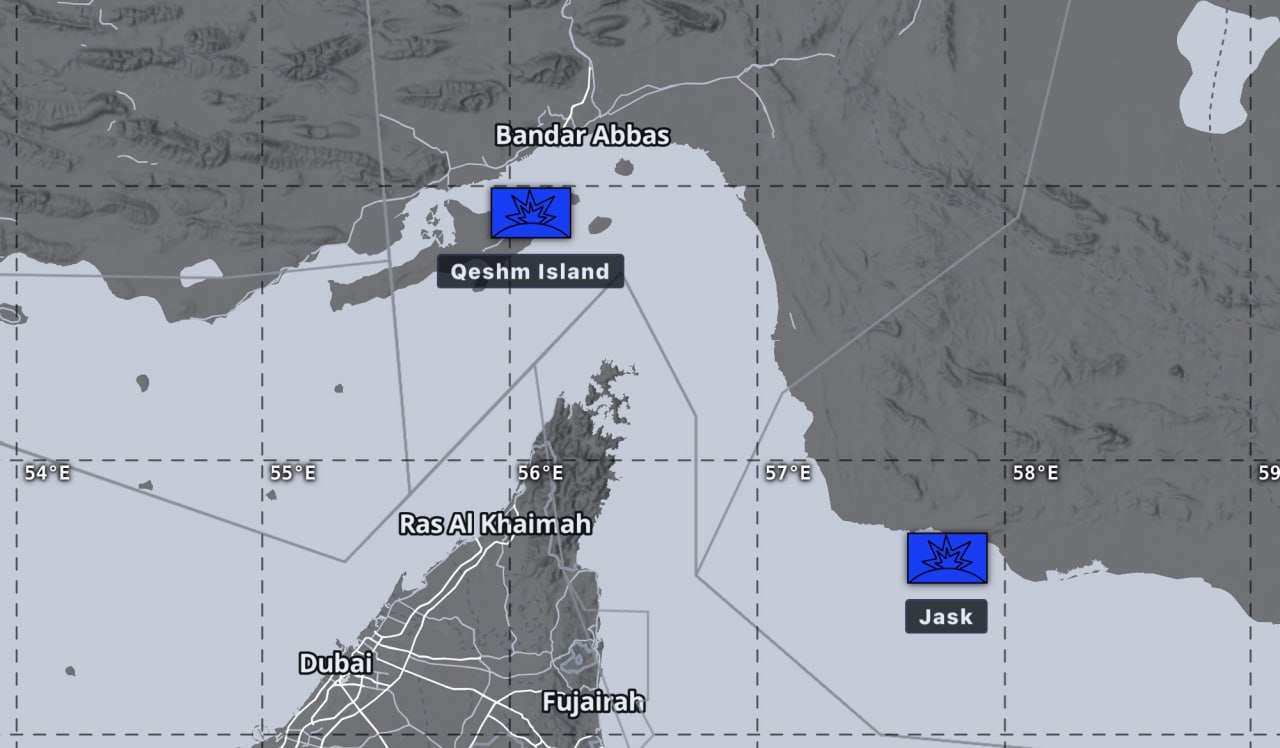
In the early morning hours, United States forces conducted two separate airstrikes on Iran’s Hormozgan Province. At 06:58, BellumActaNews reported that U.S. aircraft targeted an IRGC launch squad on Qeshm Island, while local witnesses in nearby Bandar‑e‑Jask observed a series of explosions near the airport. A second strike, logged at 07:02, focused on a missile launcher on Qeshm Island. Both actions were described by a CENTCOM official to Faytuks Network as defensive measures following missile launches from the area.
"This is an area we’ve been watching over the last week, and we were prepared to act in a defensive manner," – CENTCOM official, Faytuks Network.
No casualty figures were released, and the U.S. statements emphasized a limited, precision response aimed at preventing further missile threats. Weapons: unspecified aerial munitions. Organizations: U.S. Air Force, U.S. Central Command (CENTCOM), IRGC. Source URLs: https://t.me/BellumActaNews/178033 and https://t.me/BellumActaNews/178031.
IRGC Interception of a Hostile Fighter Jet
At 06:51, the Jerusalem Post (JPost) reported that the IRGC intercepted an unidentified hostile fighter jet over Qeshm Island. According to IRNA‑cited unofficial sources, the IRGC fired warning shots—explosions observed over the water—potentially aimed at vessels violating international agreements in the Strait of Hormuz.
"IRGC intercepts, averts 'hostile fighter jet' over Qeshm Island," JPost, 06:51 UTC.
Weapons: fighter jet (hostile) and warning shots from IRGC air defenses. Organization: IRGC. Source URL: https://www.jpost.com/middle-east/iran-news/article-913328.
Covert Ground Movement at Mehrabad Airport
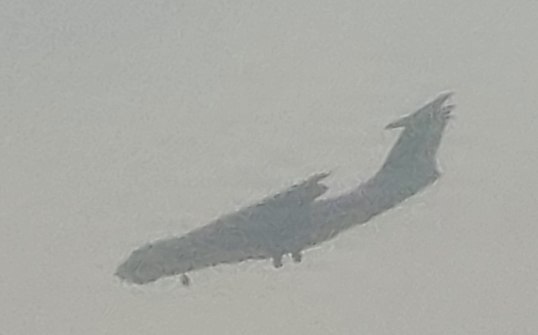
At 11:59, the same monitor_the_situation channel posted a photo of an IL‑76 military transport aircraft landing at Tehran’s Mehrabad Airport with its transponder turned off. While the aircraft’s cargo and mission remain undisclosed, the deliberate deactivation of the transponder suggests a covert or sensitive operation, possibly linked to the broader kinetic activities observed that day.
"🟡 IL‑76 Lands at Tehran Airport With Transponder Off," monitor_the_situation, 11:59 UTC.
No weapons were involved, and no casualties were reported. Source URL: https://t.me/monitor_the_situation/40146.
Analytical Assessment
The clustering of these events within a twelve‑hour window indicates a coordinated escalation by Iran to assert control over the Strait of Hormuz while simultaneously testing the response thresholds of regional and extra‑regional actors. The use of limpet mines represents a low‑cost, high‑impact method to disrupt commercial shipping without the overt escalation associated with missile strikes. Conversely, the U.S. airstrikes demonstrate a willingness to employ precision kinetic force to neutralize perceived missile launch capabilities on Iranian territory.
From a strategic perspective, Iran’s simultaneous maritime and aerial actions serve multiple objectives: deterring foreign naval presence, signaling domestic resolve, and probing the operational readiness of U.S. and allied forces. The IRGC’s interception of a hostile jet and the warning‑shot explosions further illustrate a layered defense posture aimed at protecting the strait’s airspace and maritime lanes.
While casualty reports remain absent, the potential for escalation is heightened by the proximity of these kinetic events to civilian infrastructure—namely, commercial tankers and a major Tehran airport. International observers are likely to monitor shipping insurance rates, naval patrol patterns, and diplomatic communications for signs of further escalation or de‑escalation.