The Islamic Revolutionary Guard Corps (IRGC) Navy announced that three oil tankers were struck by naval mines in the southern corridor of the Strait of Hormuz on 29 October 2026, resulting in explosions, fires and the abandonment of the vessels. The incident, reported by the CIG_telegram channel at 13:02:28 UTC, marks the most severe kinetic event recorded in Iran’s waters on this date.
Naval Mine Attacks on Commercial Shipping
According to the IRGC, the three tankers entered an unauthorized route in the southern part of the strait, deliberately disabling their radar and navigation systems despite repeated warnings from Iranian authorities. Within a 24‑hour window, each vessel triggered a naval mine, causing immediate detonations that ignited fuel stores and forced crews to abandon ship. No official casualty figures have been released, and the IRGC has not confirmed any loss of life among the crew members.
"Three oil tankers struck naval mines while attempting to pass through an unauthorized southern route of the Strait of Hormuz, triggering explosions and fires that left the vessels abandoned," – CIG_telegram, 13:02:28 UTC.
The mines, described simply as "naval mines" in the source, appear to have been laid by Iranian forces as a deterrent against vessels that ignore maritime security protocols. The IRGC Navy’s statement emphasizes that the tankers had intentionally disabled their detection equipment, a factor that, if verified, could constitute a breach of international maritime law.
US Drone Interceptions and Captures
In parallel with the mine strikes, the IRGC reported two separate incidents involving United States unmanned aerial systems (UAS). At 13:02:27 UTC, the IRGC Navy captured an American MQM-170 reconnaissance and decoy drone west of the strait. The IRGC electronic warfare unit allegedly seized control of the drone’s guidance system and landed it intact, claiming the aircraft was conducting reconnaissance of Iranian air‑defence installations along the Persian Gulf coastline.
"Iran's IRGC Navy announced it captured an American MQM-170 reconnaissance and decoy drone west of the Strait of Hormuz," – CIG_telegram, 13:02:27 UTC.
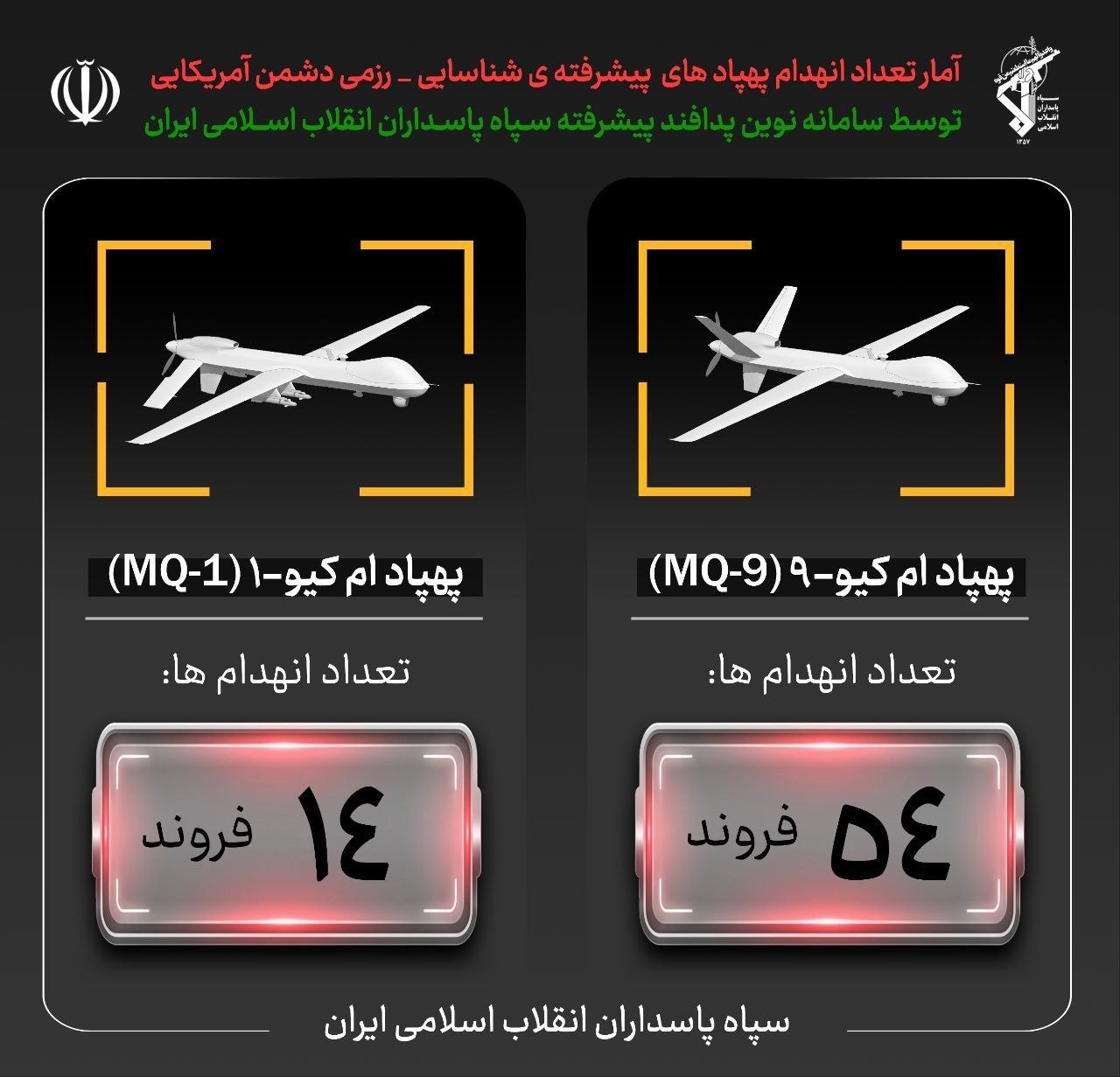
Earlier, at 10:10:07 UTC, the IRGC claimed to have shot down a U.S. MQ‑1 drone over the eastern Strait of Hormuz near Sirik, marking the 14th MQ‑1C drone downed since the onset of the conflict. A separate report from the monitor_the_situation channel at 06:50:06 UTC corroborated an interception of an MQ‑1 drone near Sirik, attributing the action to the Revolutionary Guard Aerospace Force and citing the Iranian news agency ISNA.
Both incidents underscore a pattern of Iranian electronic warfare and air‑defence capabilities being employed against U.S. reconnaissance assets. The captured MQM‑170 was reportedly a decoy model, suggesting a broader U.S. strategy of using low‑cost drones to probe Iranian sensor networks.
Operational Context and Regional Implications
The concentration of kinetic events within a single day reflects escalating tensions over the strategic chokepoint of the Strait of Hormuz, a narrow waterway through which approximately 20 % of global oil shipments transit. Iran’s IRGC has repeatedly warned foreign vessels against navigating the strait without prior clearance, and the recent mine strikes appear to be a direct enforcement of that policy.
While the United Kingdom’s Maritime Trade Operations (UKMTO) independently reported a separate vessel on fire in the strait, it did not attribute the blaze to the Iranian mines. The overlapping reports from CIG_telegram and monitor_the_situation suggest a coordinated information campaign by Iranian state‑linked channels to highlight the effectiveness of their maritime defenses.
From a tactical perspective, the use of naval mines represents a low‑cost, high‑impact method of area denial, especially in a confined maritime corridor. The successful capture of a U.S. drone demonstrates proficiency in electronic warfare, a capability that has been progressively refined since the start of the broader regional conflict.
Source Verification and Media Documentation
All events are sourced from open‑source intelligence (OSINT) channels that are regularly monitored by conflict analysts:
- CIG_telegram – Primary source for the mine strikes, MQM‑170 capture, and MQ‑1 shoot‑down, providing video evidence and timestamps.
- monitor_the_situation – Independent corroboration of the mine strikes, drone interceptions, and additional photographic documentation.
Both channels posted video material (one video per event) that has been archived for verification. No contradictory reports have emerged from neutral third‑party observers as of the time of writing.
Overall, the events of 29 October 2026 illustrate a concerted Iranian effort to assert control over the Strait of Hormuz through both kinetic and electronic means, while simultaneously signaling to external actors the risks associated with unauthorized navigation and aerial surveillance in the region.