Russian FPV drone strike in Kramatorsk claimed the life of Canadian volunteer Jesse Adams, founder of the RainCoast Dog Rescue Society, as he attempted to evacuate animals from the front‑line city of Kramatorsk, Donetsk Oblast. The incident was reported by Monitor The Situation at 00:06:29 UTC on 29 October 2026. Adams was the sole fatality; no additional civilian or combatant casualties were confirmed. The weapon used was a Russian‑manufactured first‑person‑view (FPV) drone, a platform increasingly employed for precision strikes against non‑military targets.
Drone Attacks Escalate Across Multiple Fronts
Within hours, Russia announced a coordinated launch of more than 600 unmanned aerial systems toward the Moscow region overnight, marking the latest large‑scale assault on the capital. The claim, cited by Al Jazeera, stated that the drones were intercepted by air‑defence units, though the exact number of downed aircraft was not disclosed.
"Russia says more than 600 drones launched towards Moscow overnight" – Al Jazeera, 29 Oct 2026
In the south, four Russian KAB glide bombs struck the suburbs of Zaporizhzhia at 01:43 UTC, damaging residential infrastructure and causing at least two civilian injuries. The glide‑bombs, guided by satellite navigation, represent a shift toward precision‑guided munitions in the ongoing bombardment of Ukrainian cities.
Kharkiv experienced a separate wave of unmanned attacks at 05:50 UTC. Geran‑2/4 drones, identified by Monitor The Situation, hit multiple districts of Kharkiv City and surrounding towns, igniting a large fire in the Kholodnohirs'kyi District. While casualty figures remain unverified, the fire threatened several apartment blocks and required the deployment of emergency services.
Ukrainian forces also employed drone technology in offensive operations. At 05:40 UTC, mid‑range Ukrainian drones struck two targets in Luhansk city centre and its southern suburbs, causing widespread power outages across the region. Video evidence posted by @AMK_Mapping_ corroborated the loss of electricity to critical infrastructure.
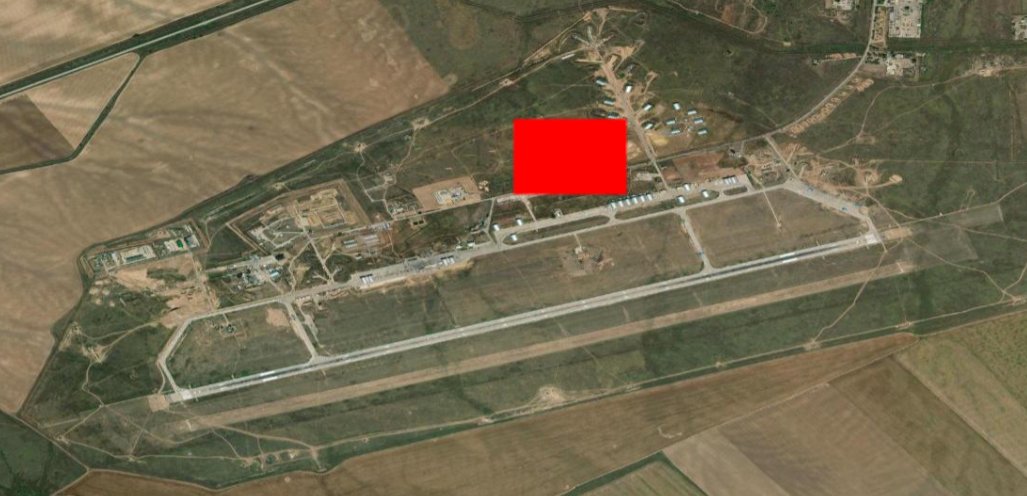
Further north, Ukrainian drones attacked the Marinovka Air Base in Volgograd Oblast, Russia, at 04:58 UTC. The strike ignited a fire detected by NASA’s FIRMS satellite system, confirming the presence of an active blaze at a key launch point for Russian glide‑bomb attacks on Ukrainian territory. The incident underscores the expanding reach of Ukrainian UAV operations beyond the front lines.
Ground Advances in Donetsk
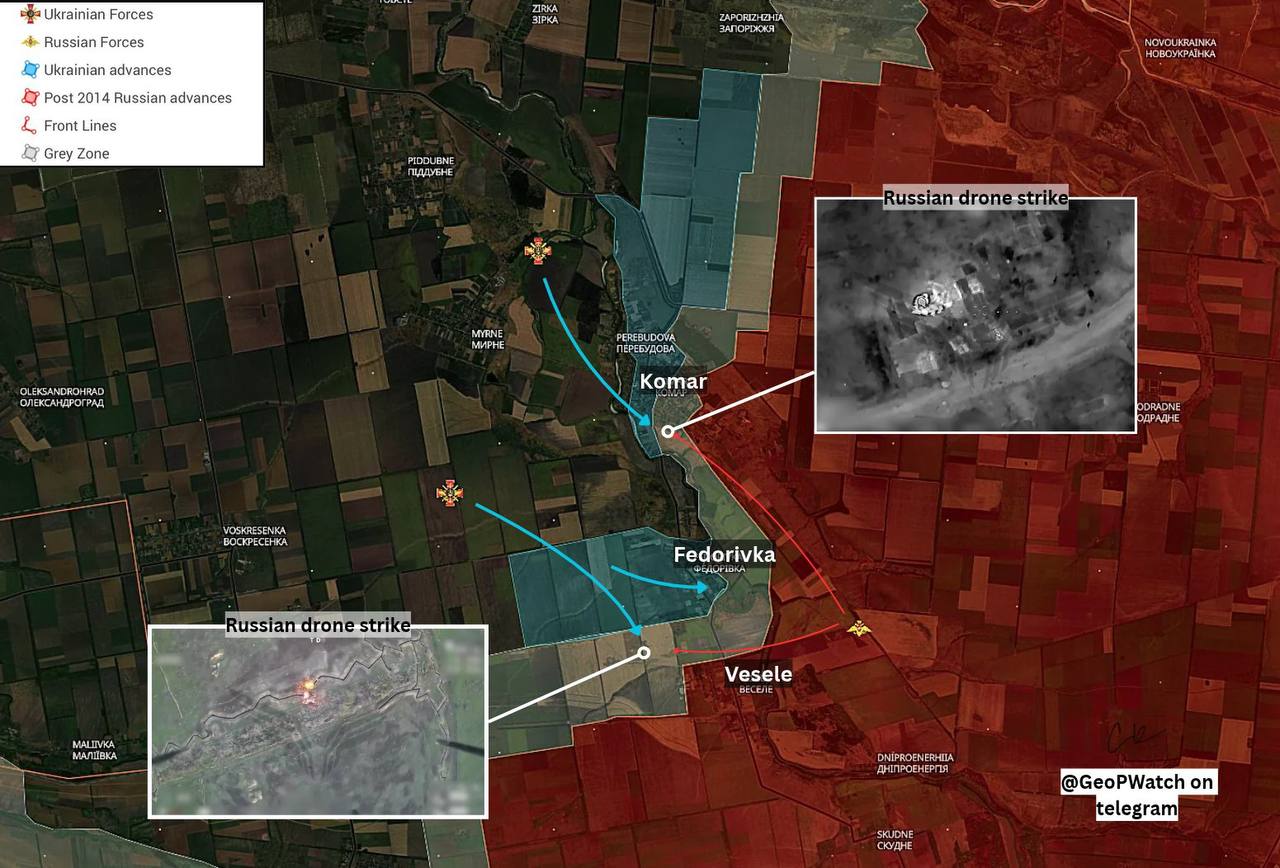
Geolocated footage released by GeoPWatch at 01:54 UTC documented Ukrainian military advances in southern Donetsk Oblast. Ukrainian forces seized the settlement of Komar and the nearby village of Fedorivka, establishing a foothold that expands the front line northward. The advance was accompanied by Russian drone strikes on Ukrainian positions west of Vesele, indicating heightened contestation of newly captured terrain.
The capture of Komar and Fedorivka represents the most significant territorial gain for Ukrainian forces in the Donetsk sector since the start of the year, suggesting a coordinated offensive that leverages both ground maneuver and aerial reconnaissance.
Strategic Implications
The convergence of high‑intensity drone activity and ground advances illustrates a multi‑domain escalation in the Ukraine conflict. Russian reliance on FPV and glide‑bomb drones for targeted strikes against both civilian and military assets reflects an adaptation to contested airspace, while Ukrainian deployment of mid‑range and tactical UAVs demonstrates growing offensive capability beyond defensive use.
Casualty reports remain fragmented, but the documented deaths of a foreign humanitarian worker and multiple civilian injuries highlight the expanding human cost of unmanned warfare. The simultaneous launch of hundreds of drones toward Moscow signals a strategic intent to pressure the Russian interior, potentially diverting air‑defence resources from the front lines.
Ground gains in Donetsk, coupled with successful strikes on Russian air infrastructure, suggest a coordinated Ukrainian effort to exploit Russian overextension in the aerial domain. Continued monitoring of UAV deployment patterns and territorial changes will be essential for assessing the trajectory of the conflict.