On 28 October 2026, Ukrainian authorities confirmed that Russia launched more than 100 ballistic missiles against Kyiv over the preceding fourteen days, resulting in one civilian death and fifteen injuries. The attacks targeted a university campus, a major bridge, an administrative building and medical facilities, underscoring a sustained escalation in long‑range strike capability.
“Zelenskyy reports over 100 missiles fired at Kyiv in the past two weeks; a recent attack on a university campus, bridge, administrative building and medical facilities killed one and injured 15.” – monitor_the_situation
Russian Missile Campaign on Kyiv
The missile barrage, documented by the monitoring channel monitor_the_situation and echoed by Kyiv Independent (@KyivIndependent), employed a mix of short‑range and intermediate‑range ballistic missiles launched from multiple launch sites in western Russia. The concentration of strikes on civilian infrastructure marks a shift from earlier tactics that focused primarily on military targets.
Casualties: 1 civilian killed, 15 civilians injured. Weapons: ballistic missiles. Actors: Russian Armed Forces.
Ukrainian Drone Strike on NAK Azot Chemical Plant
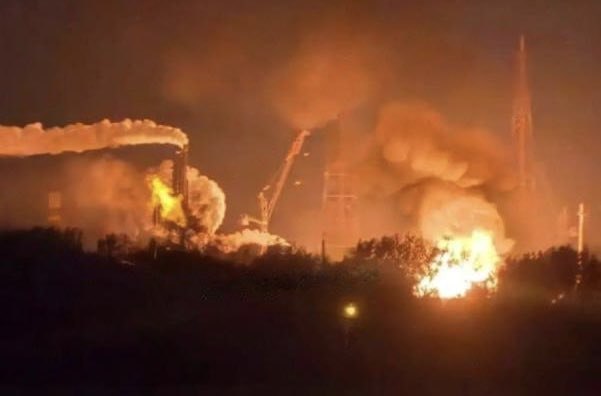
In a coordinated aerial operation, Ukrainian unmanned aerial systems (UAS) struck the NAK Azot chemical plant in Tula Oblast, Russia, igniting a fire that threatened nitrate precursor storage used in Russian explosives manufacturing. The incident was reported by the same monitoring channel at 05:08 UTC.
While no casualties were reported, the damage to a strategic industrial asset demonstrates Ukraine’s expanding use of precision drones to disrupt Russian war‑material production.
Location: NAK Azot chemical plant, Tula Oblast, Russia. Weapons: attack drones. Actors: Ukrainian forces (unspecified unit).
Ukrainian Ground Offensive Leveraging Gas Pipelines
President Volodymyr Zelenskyy announced a new offensive aimed at retaking territory by exploiting existing gas pipeline corridors to outflank Russian defensive lines. The maneuver, described in a briefing posted to monitor_the_situation at 01:45 UTC, reflects a tactical adaptation that integrates civilian infrastructure into combat operations.
Although the exact locations of the advances remain undisclosed, the statement indicates coordinated action by the Ukrainian Armed Forces against Russian positions, with the intent to create multiple axes of attack and stretch Russian logistical support.
Weapons/Tools: utilization of gas pipelines for maneuvering and concealment. Actors: Ukrainian Armed Forces, Russian Armed Forces.
Analytical Assessment
The three events illustrate a reciprocal escalation: Russia intensifies long‑range missile strikes on Ukrainian urban centers, while Ukraine expands its strike portfolio to include high‑value industrial targets in Russia and adopts unconventional ground tactics. The missile campaign places continued pressure on Kyiv’s civil defense and emergency response capacities, demanding heightened alertness and resource allocation.
Conversely, the drone strike on NAK Azot signals Ukraine’s growing proficiency in cross‑border UAV operations, a capability that can impose material costs on the Russian war economy without direct troop engagement. The use of gas pipelines as a conduit for ground forces suggests a strategic emphasis on mobility, surprise, and the exploitation of existing infrastructure to mitigate the challenges of a protracted frontline stalemate.
Overall, the pattern of actions points to a widening operational envelope on both sides, with potential implications for civilian safety, industrial security, and the broader trajectory of the conflict.