On 28 October 2026 Israeli security forces carried out a sequence of kinetic operations that spanned the West Bank and the Gaza Strip, reflecting a heightened tempo of military activity in the occupied Palestinian territories. The most prominent event was the demolition of two residential structures in Nablus (Shechem) that Israeli officials identified as the homes of suspected terrorists. The demolition, executed by Battalion 8208, was broadcast in a video released by the Israeli channel idkunim_il at 12:35 local time.
Demolition in Nablus (Shechem)
According to the source, the operation targeted the homes of two individuals linked to recent attacks originating from the Shechem area. The demolition was carried out using explosives, and the video showed the structures collapsing amid a backdrop of Palestinian flags. No casualties were reported in the immediate aftermath, and the Israeli statement emphasized the preventive nature of the action, describing the targets as “terrorists” whose elimination was intended to disrupt future attacks.
"Until the results are published, you are invited to watch the explosion in the homes of two terrorists from the Shechem area with Palestinian flags on them. Execution by: Battalion 8208," idkunim_il posted.
The demolition underscores a broader Israeli policy of employing punitive demolitions as a deterrent, a practice that has drawn criticism from international human‑rights organizations for its impact on civilian property and family members.
Infiltration and Arrests by Israeli Border Police
Earlier in the day, at 12:21, Israeli Border Police (referred to as the Border Guard) announced the capture of six individuals suspected of planning imminent attacks in the West Bank. The operation, described in a statement by Hallel Bitton Rosen on idkunim_il, took place during the night and resulted in the seizure of “many weapons and combat equipment.” No specific weapon types were listed, and the source did not disclose casualty figures, indicating that the arrests were conducted without lethal force.
"During the night our fighters captured from the West Bank Border Guard unit six terrorists suspected of planning imminent attacks. In addition, they seized many weapons and combat equipment. Peace to our forces," idkunim_il quoted.
The arrests occurred in an area broadly identified as Judea and Samaria, a term used by Israeli authorities for the West Bank. The operation reflects ongoing Israeli efforts to pre‑empt attacks through intelligence‑driven raids, a tactic that has intensified since the October 7 2023 conflict.
Targeted Killings of Hamas Commanders in Gaza
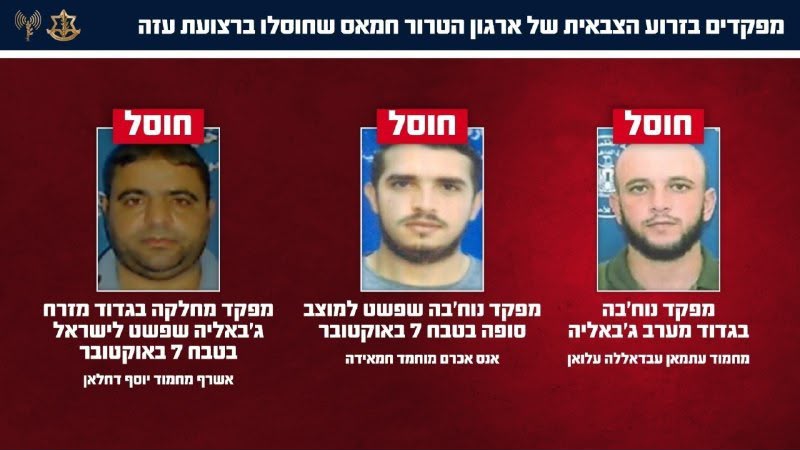
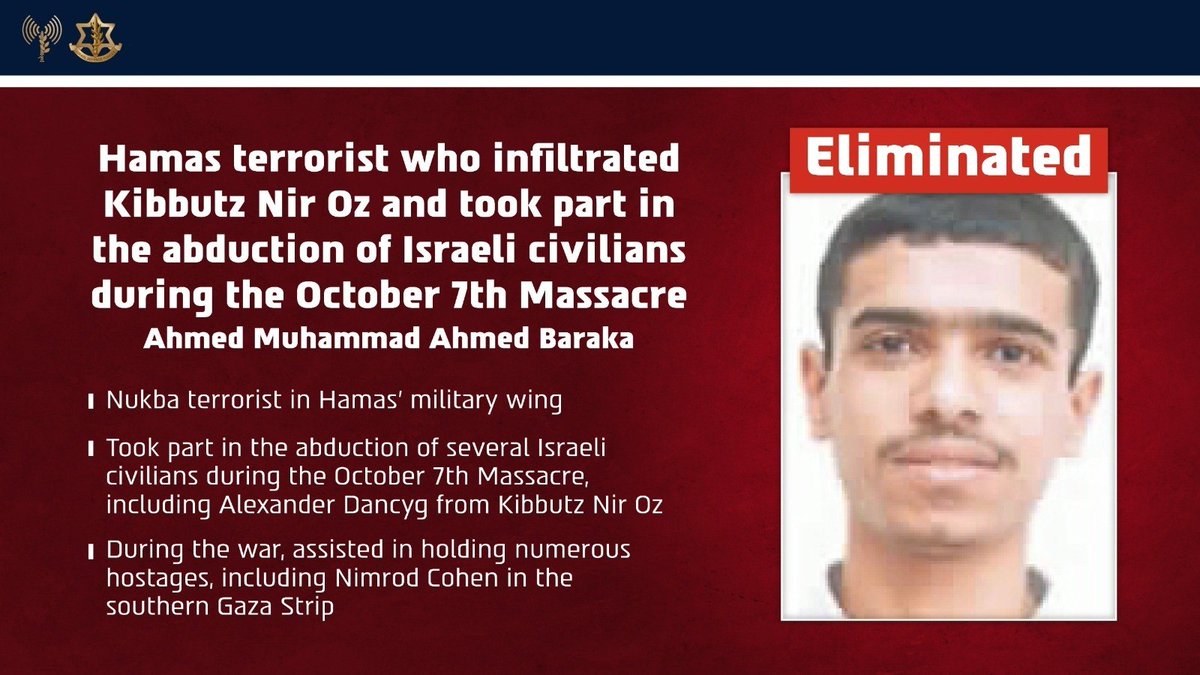
Two separate air‑strike operations were reported in the Gaza Strip on the same day, each claiming the elimination of senior Hamas operatives. At 12:08, the Israel Defense Forces (IDF) announced the killing of three Hamas military commanders, including a Nukhba unit leader who participated in the October 7 assault on the Sufa outpost and a department commander who entered Israeli territory on the same day. The IDF statement, disseminated via idkunim_il, did not provide casualty numbers beyond the three commanders, nor did it specify the weapons used, noting only that the strikes were “targeted.”
Later, at 07:06, the monitoring channel monitor_the_situation reported a separate strike that killed three additional Nukhba fighters, one linked to the October 7 attacks and a platoon commander operating in northern Gaza. Both statements emphasized the precision of the operations and the absence of collateral damage, though independent verification of civilian impact remains limited.
The IDF said, "Targeted strikes killed three elite Hamas Nukhba fighters, including one in southern Gaza linked to the October 7 attacks and a platoon commander in the north." (monitor_the_situation)
Extended Lockdown and Raids in Hebron
At 10:41, Al Jazeera reported that Israeli forces continued a series of raids across the West Bank, with Hebron entering its sixth consecutive day of lockdown. The article highlighted concerns expressed by a United Nations agency, which warned that the situation could echo the 2025 “Iron Wall” operation—a large‑scale military campaign that resulted in extensive movement restrictions and civilian hardship. No direct kinetic action (e.g., explosions or gunfire) was detailed for Hebron on this date, but the sustained lockdown represents a form of kinetic pressure through mobility denial.
The UN agency’s statement, quoted by Al Jazeera, described the situation as “grave concern,” underscoring the potential for escalation if restrictions intensify. The ongoing presence of Israeli forces in Hebron has historically been a flashpoint for clashes, and the current lockdown adds to the cumulative humanitarian strain on the city’s Palestinian population.
Analytical Overview
The events of 28 October illustrate a coordinated Israeli strategy that combines demolition, arrests, targeted killings, and movement restrictions to degrade the operational capacity of Palestinian militant groups while exerting pressure on the civilian population. The demolition in Nablus represents a direct punitive measure aimed at individuals deemed to pose an imminent threat. The Border Police arrests demonstrate a pre‑emptive approach, leveraging intelligence to neutralize potential attackers before they can act.
In Gaza, the IDF’s air‑strike campaigns focus on high‑value targets within Hamas’s military hierarchy, particularly the elite Nukhba unit, which has been implicated in the October 7 attacks. By eliminating senior commanders, Israel seeks to disrupt command‑and‑control structures and deter future incursions.
The Hebron lockdown, while not a kinetic event in the strict sense, functions as a coercive tool that restricts civilian movement, hampers economic activity, and creates a climate of uncertainty. The UN agency’s warning signals that the cumulative effect of these measures could approach the scale of previous large‑scale operations, raising concerns about proportionality and compliance with international humanitarian law.
Collectively, these actions reflect an escalation in kinetic and non‑kinetic tactics that heighten the risk of broader confrontation. While Israeli officials frame the operations as necessary security measures, the lack of independent casualty verification and the potential for civilian impact underscore the importance of continued monitoring by international observers.