Mediazona announced that its database now lists 283,000 Russian soldiers killed in the war, adding 6,880 new names on 25 October 2026. The update, posted on the Telegram channel monitor_the_situation, underscores the cumulative human cost of the conflict for Moscow and provides the most recent quantitative benchmark for analysts tracking battlefield attrition.
"Mediazona adds 6,880 names to its list of Russian soldiers killed in Ukraine since early October, bringing the identified total to nearly 283,000,"Source: https://t.me/monitor_the_situation/39066.
Ukrainian strikes on Russian military‑industrial facilities
At 03:08 UTC, Ukrainian forces reported coordinated attacks on two high‑value Russian production sites: the Proton‑Electrotex electronics plant in Oryol and the Tolyattikauchuk petrochemical complex in Togliatti. Proton‑Electrotex supplies components for the Iskander‑M ballistic missile, cruise missiles and the Pantsir air‑defence system, while Tolyattikauchuk manufactures synthetic rubber used in solid‑rocket propellants. No immediate casualty figures were released, and both facilities reported only temporary operational disruptions. The claims were posted on the Telegram channel rnintel and are corroborated by satellite imagery showing smoke plumes over the Oryol site.
"Ukrainian forces have struck two major Russian military‑industrial facilities, targeting the Proton‑Electrotex electronics plant in Oryol and the Tolyattikauchuk petrochemical plant in Togliatti,"Source: https://t.me/rnintel/68183.
Deep‑penetration UAV raids in western Russia
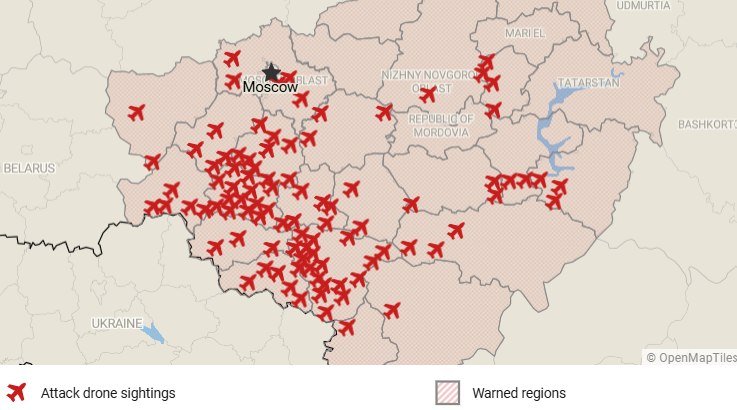
Ukrainian drone operators launched a “deep raid” into the Volga River basin, targeting undisclosed infrastructure in the western Russian heartland. The operation, reported by monitor_the_situation at 00:15 UTC, involved multiple unmanned aerial systems travelling hundreds of kilometres from Ukrainian‑held territory. While the exact payloads remain unclear, the raid demonstrates an expanding operational reach that challenges traditional air‑defence perimeters. No casualties were reported, but the presence of drones deep inside Russian territory raises concerns about the security of critical energy and transport corridors along the Volga.
"Ukrainian attack drones are conducting a deep raid into western Russia, with multiple drones heading toward targets in the Volga River basin,"Source: https://t.me/monitor_the_situation/39050.
UAV attacks on Russian border regions
At 02:42 UTC, Ukrainian‑operated UAVs struck the city of Belgorod in Belgorod Oblast, killing one civilian and wounding ten others, including an ambulance worker. The attack triggered a cascade of alerts across adjacent Russian regions—Rostov, Adygea, Stavropol Krai and Krasnodar Krai—where air‑raid sirens sounded in nearly every district. The incident, documented by the Telegram channel intelslava, illustrates the growing frequency of cross‑border UAV incursions and the strain they place on regional emergency services.
"Belgorod came under attack by Ukrainian UAVs. Authorities report one person killed and ten others injured, including an ambulance worker,"Source: https://t.me/intelslava/96949.
Russian Geran drones strike Ukrainian power infrastructure
Later in the morning, at 04:08 UTC, Russian‑manufactured Geran drones hit a 330/110/35 kV substation in Vinnytsia Oblast, Ukraine. The strike damaged transformer units but caused no reported fatalities. Video evidence posted by intelslava shows the drones approaching at low altitude before detonating on the substation’s control building. The attack underscores the reciprocal use of UAV technology by both sides to target critical energy assets.
"Russian Geran drones hit the 330/110/35 kV bar substation, Vinnytsia Oblast,"Source: https://t.me/intelslava/96955.
Analytical overview
The events of 25 October reveal a multi‑layered escalation pattern. First, the Mediazona casualty tally provides a quantitative backdrop that highlights the sustained attrition of Russian forces. Second, Ukrainian strikes on the Proton‑Electrotex and Tolyattikauchuk plants demonstrate a strategic focus on degrading Russia’s missile‑production and propellant supply chains. Third, the deep‑penetration UAV raid into the Volga basin signals a shift from border‑proximate operations to interior strikes, potentially aimed at disrupting logistics and energy flows. Fourth, the Belgorod UAV attack and the Geran drone strike on Vinnytsia illustrate the continued tit‑for‑tat use of unmanned systems to inflict civilian casualties and infrastructure damage. Collectively, these actions suggest that both Kyiv and Moscow are increasingly relying on precision‑strike capabilities to achieve asymmetric advantages while accepting the risk of broader civilian impact.