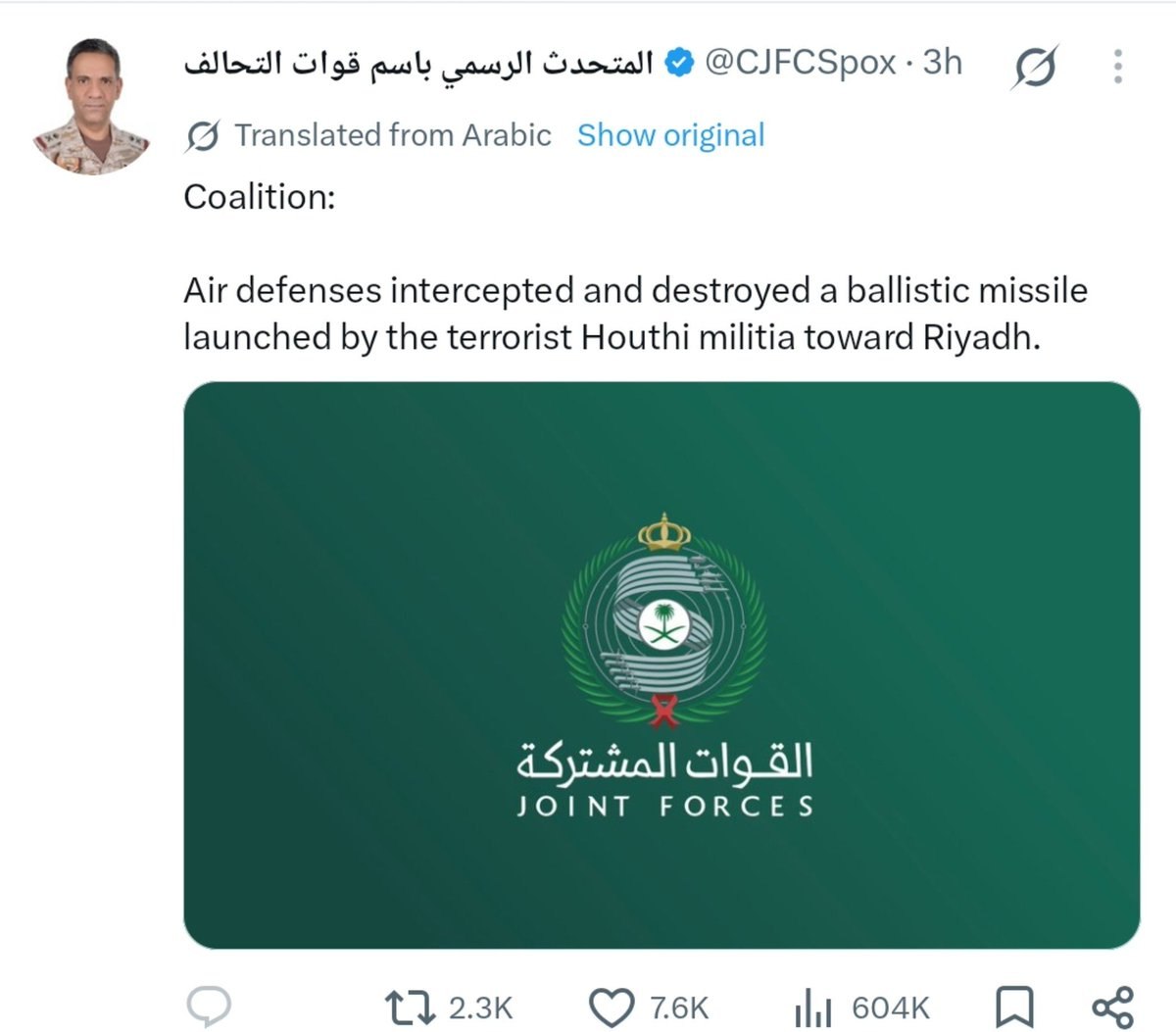
On 25 October 2026, Saudi Arabia’s integrated air‑defence network successfully intercepted a multi‑vector attack launched by Iran‑aligned Houthi militants from Yemen. The operation, which began at 10:42 GMT, involved a hostile drone and a missile aimed at the capital, Riyadh, as well as ten ballistic missiles directed toward the kingdom’s southern provinces. The rapid response, confirmed by the Saudi‑led coalition and reported by Al Jazeera, prevented any casualties and forced the temporary closure of Riyadh’s main airport.
Coordinated Assault on Riyadh and the Southern Region
According to the Al Jazeera report, the coalition’s air‑defence systems detected an inbound unmanned aerial vehicle (UAV) and a cruise‑type missile on a trajectory toward Riyadh’s airspace. Simultaneously, radar operators identified a salvo of ten ballistic missiles launched from Houthi‑controlled territory in Yemen, heading for the southern governorates of Asir, Najran and Jazan. All incoming threats were neutralised before they could reach populated areas or critical infrastructure.
"Saudi‑led coalition intercepted a drone, missile launched towards Riyadh and 10 missiles targeting southern region," Al Jazeera, 25 Oct 2026, https://www.aljazeera.com/news/2026/10/25/saudi-arabia-intercepts-missiles-and-drones-as-fighting-with-houthis-rages
The interception sequence began with the engagement of the drone over Riyadh’s western perimeter, followed by the destruction of the accompanying missile using Patriot‑type surface‑to‑air missiles. Within minutes, the air‑defence grid shifted to the southern sector, where the coalition’s THAAD and Arrow systems engaged the ballistic missiles. All ten projectiles were destroyed at high altitude, averting potential impact on civilian centres.
Additional Interceptions Over Riyadh
Earlier in the day, at 06:56 GMT, Saudi forces reported the interception of a separate ballistic missile over Riyadh, which caused temporary disruptions to air traffic and kept the airport closed for several hours. The same source, monitor_the_situation, noted that the missile was neutralised by the kingdom’s layered defence architecture, and that an earlier drone interception had already taken place.
"Saudi Arabia Intercepts Ballistic Missile Over Riyadh," monitor_the_situation, 25 Oct 2026, https://t.me/monitor_the_situation/39071
Following the 10:42 GMT event, a second wave of missiles and drones was intercepted at 16:41 GMT, allowing Riyadh’s airport to partially reopen. The coalition confirmed that the later attack originated from the same Houthi command structure, underscoring a sustained campaign to pressure Saudi air operations.
"Saudi Intercepts Missiles, Drones; Riyadh Airport Partly Reopens," monitor_the_situation, 25 Oct 2026, https://t.me/monitor_the_situation/39135
Southern Region Missile Interception
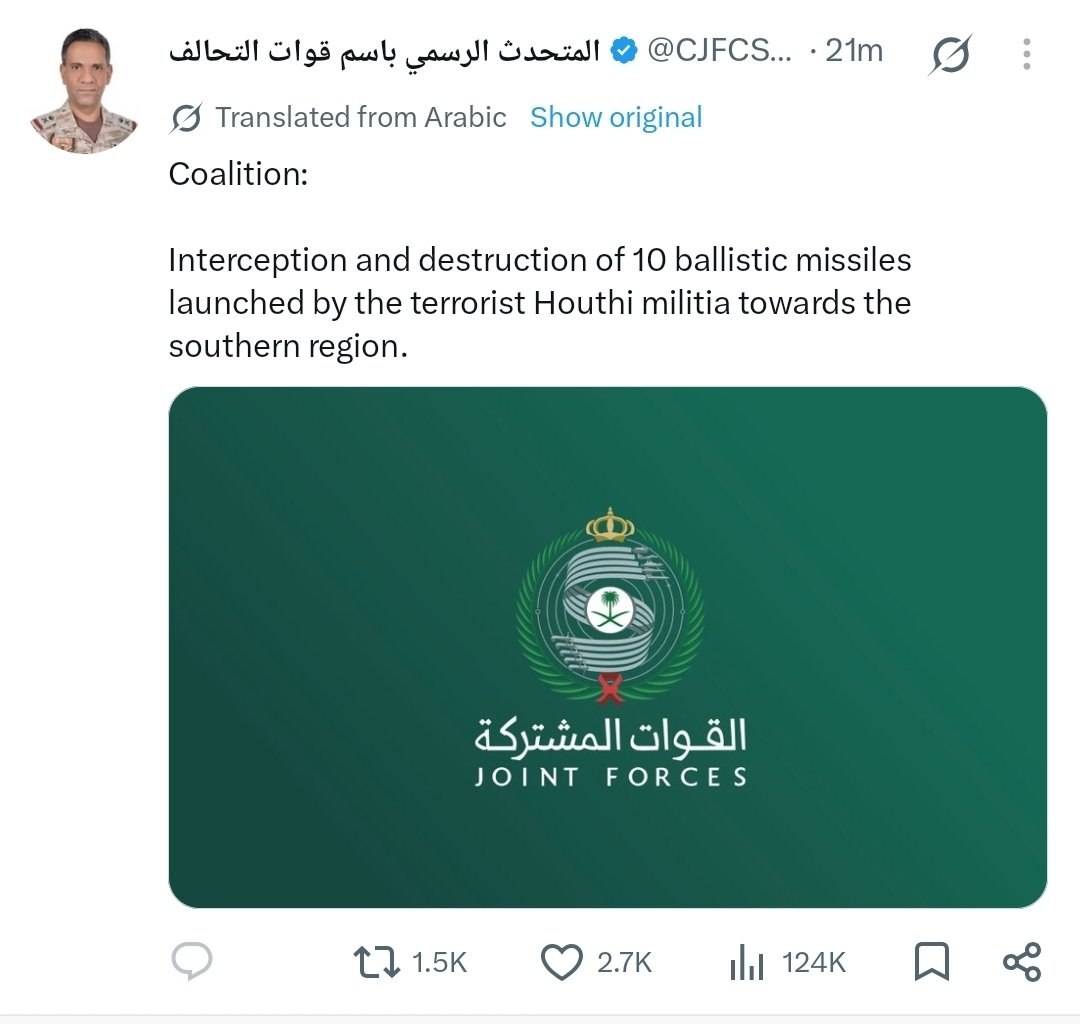
At 09:49 GMT, Saudi authorities announced the successful interception of ten ballistic missiles launched from Yemen over the southern region. The report, also from monitor_the_situation, highlighted early‑warning alerts observed in both the western and eastern sectors of the kingdom, indicating a broad detection net. No casualties were reported, and the missiles were destroyed before reaching any strategic targets.
"Saudi Arabia Intercepts 10 Ballistic Missiles From Yemen," monitor_the_situation, 25 Oct 2026, https://t.me/monitor_the_situation/39095
Targeted Attacks on Saudi Airbases
In addition to the capital‑focused assaults, Houthi forces launched cruise missiles at two key Saudi airbases. At 08:03 GMT, a cruise missile was fired at King Khalid Airbase in the southwest, a facility used for launching Saudi airstrikes into Yemen. Coalition statements confirmed that one missile was intercepted, while the fate of any additional projectiles remains unverified.
"Ansarallah (Houthis) launched cruise missiles at King Khalid Airbase," monitor_the_situation, 25 Oct 2026, https://t.me/monitor_the_situation/39080
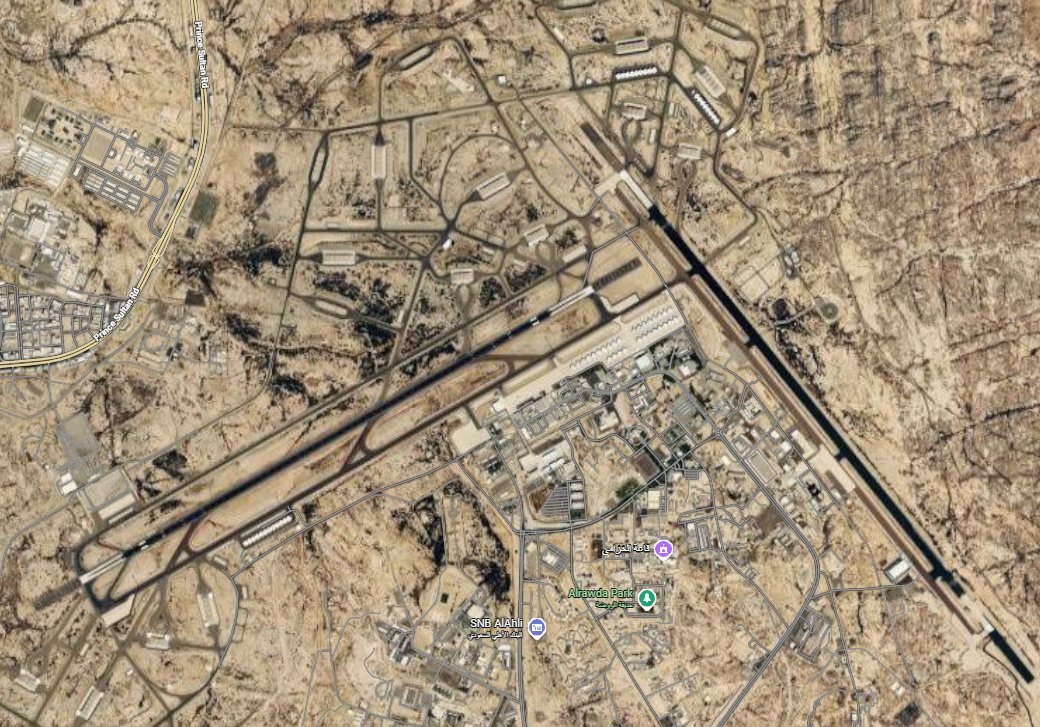
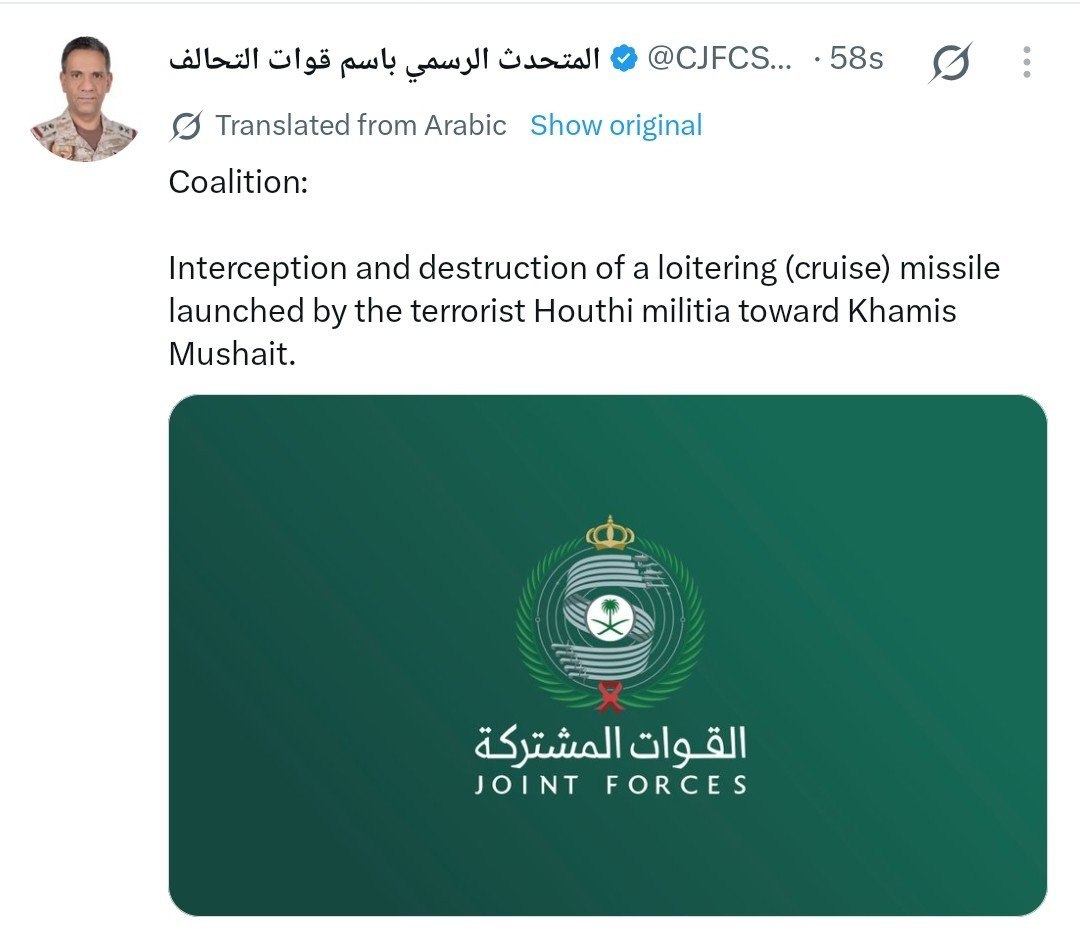
Earlier, at 07:37 GMT, a cruise missile targeted Khamis Mushait Air Base, also in the southern theater. The same transmission noted a concurrent ballistic missile interception over Riyadh, suggesting a coordinated effort to stretch Saudi defensive resources across multiple fronts.
"Cruise Missile Fired at Khamis Mushait Air Base," monitor_the_situation, 25 Oct 2026, https://t.me/monitor_the_situation/39077
Interception Near the Holy City of Mecca
At 13:49 GMT, Saudi air‑defence units intercepted a Houthi missile barrage near Mecca, protecting one of Islam’s holiest sites from potential damage. The Al Jazeera report confirmed that the missiles were neutralised without incident, reinforcing the breadth of the coalition’s defensive coverage.
"Saudi air defences intercept Houthi barrage near Mecca," Al Jazeera, 25 Oct 2026, https://www.aljazeera.com/news/2026/10/25/saudi-air-defences-intercept-houthi-barrage-near-mecca
Operational Impact and Strategic Assessment
The series of interceptions on 25 October demonstrates a significant escalation in Houthi offensive capabilities, including the use of both ballistic and cruise missiles, as well as UAVs. The attacks were synchronized to challenge Saudi air‑defence layers across a wide geographic spectrum, from the capital to the southern border and key military installations.
Saudi Arabia’s response illustrates the effectiveness of its multi‑tiered air‑defence architecture, which integrates Patriot, THAAD, Arrow and indigenous systems. The rapid neutralisation of all inbound threats prevented any loss of life and limited material damage. However, the repeated closures of Riyadh’s airport and the temporary disruption of civil aviation underscore the broader economic and logistical repercussions of sustained missile activity.
Analysts note that the Houthi strategy appears aimed at degrading Saudi air‑strike capabilities by targeting airbases that support operations in Yemen. By striking King Khalid and Khamis Mushait airfields, the militants seek to force the coalition to allocate additional resources to base defence, potentially reducing sortie rates against Houthi positions.
Furthermore, the inclusion of a drone in the 10:42 GMT attack reflects an expanding Houthi payload portfolio, likely facilitated by external support networks. The coordination of drone, cruise missile and ballistic missile elements in a single day suggests a higher level of operational planning than previously observed.
While Saudi forces successfully repelled the immediate threats, the events of 25 October highlight the need for continued vigilance, intelligence sharing, and potential upgrades to early‑warning radar coverage, especially along the western frontier where missile trajectories originate.
In summary, the kinetic events of 25 October 2026 represent the most intensive Houthi‑directed kinetic campaign against Saudi Arabia to date, testing the resilience of the kingdom’s air‑defence network and exposing vulnerabilities in civil aviation continuity.