In the early hours of 24 October 2026, the Russian Armed Forces executed a large‑scale retaliatory strike on the outskirts of Zaporizhzhia, Ukraine, employing at least 18 KAB glide‑bombs and two Geran‑2 loitering munitions. The attack, reported by the Telegram channel @monitor_the_situation, targeted villages south of the city and the historic Old City district, marking the most significant kinetic response to a wave of Ukrainian drone operations across Russian territory.
"Russia launched a heavy overnight attack on the outskirts of Zaporizhzhia, Ukraine, using at least 18 KAB glide‑bombs and two Geran‑2 drones." – monitor_the_situation, 04:01 UTC
According to the channel’s video evidence (https://t.me/monitor_the_situation/38917), the glide‑bombs struck residential clusters, causing extensive structural damage but no confirmed civilian casualties at the time of reporting. The Geran‑2 drones, repurposed from Iranian Shahed designs, were observed hovering over the Old City before detonating, creating secondary fires that required immediate emergency response. Russian authorities have not released an official casualty figure, but local officials indicated that several homes were rendered uninhabitable and that emergency services were stretched thin.
Ukrainian Long‑Range Drone Strike on Tolyatti Chemical Plant
Just minutes after the Zaporizhzhia assault, Ukrainian long‑range drones penetrated deep into Russian heartland, striking the Tolyattikauchuk Chemical Plant in Tolyatti, Samara Oblast. The attack ignited a large fire that engulfed a section of the plant’s processing units, as documented in a video posted by the same monitoring channel (https://t.me/monitor_the_situation/38926). No injuries were reported, but the incident raised concerns about potential hazardous material releases and disruptions to regional chemical production.
"Ukrainian long‑range drones hit the Tolyattikauchuk Chemical Plant in Tolyatti, Samara Oblast, causing a large fire." – monitor_the_situation, 04:57 UTC
The drones employed in this operation are believed to be the Ukrainian “Mriya‑2” platform, capable of carrying up to 150 kg of payload over distances exceeding 1,200 km. While the exact payload remains unconfirmed, the fire’s intensity suggests a high‑explosive or incendiary load. The strike underscores Ukraine’s expanding reach into industrial zones previously considered beyond the effective range of its UAV fleet.
Mid‑Range Drone Campaign Against Energy Infrastructure
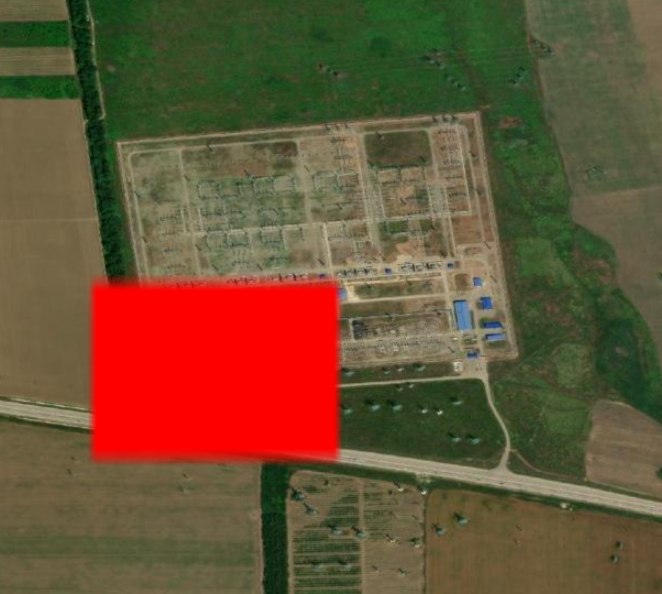
Simultaneously, a coordinated series of mid‑range drone attacks targeted energy infrastructure across Crimea, Krasnodar Krai, and the Russian‑occupied regions of Kherson and Zaporizhzhia. The strikes, reported at 04:09 UTC, caused widespread power outages, with electricity only partially restored in parts of Crimea. The Taman 500 kV substation near Starotitarovskaya, Krasnodar Krai, suffered a severe fire after being hit by a Ukrainian drone, as confirmed by NASA FIRMS satellite data and corroborated by on‑ground footage (https://t.me/monitor_the_situation/38918).
"Ukrainian Drones Strike Energy Infrastructure Across Crimea and Southern Russia, causing widespread power outages." – monitor_the_situation, 04:09 UTC
These mid‑range platforms, likely the “Bayraktar TB2” or domestically produced “A1‑UAV”, carry payloads of 30‑50 kg and are optimized for precision strikes against substations, transformers and transmission lines. The attacks disrupted electricity supply to tens of thousands of households and industrial customers, highlighting the vulnerability of Russia’s aging grid in contested territories.
Internet Outage in Occupied Crimea
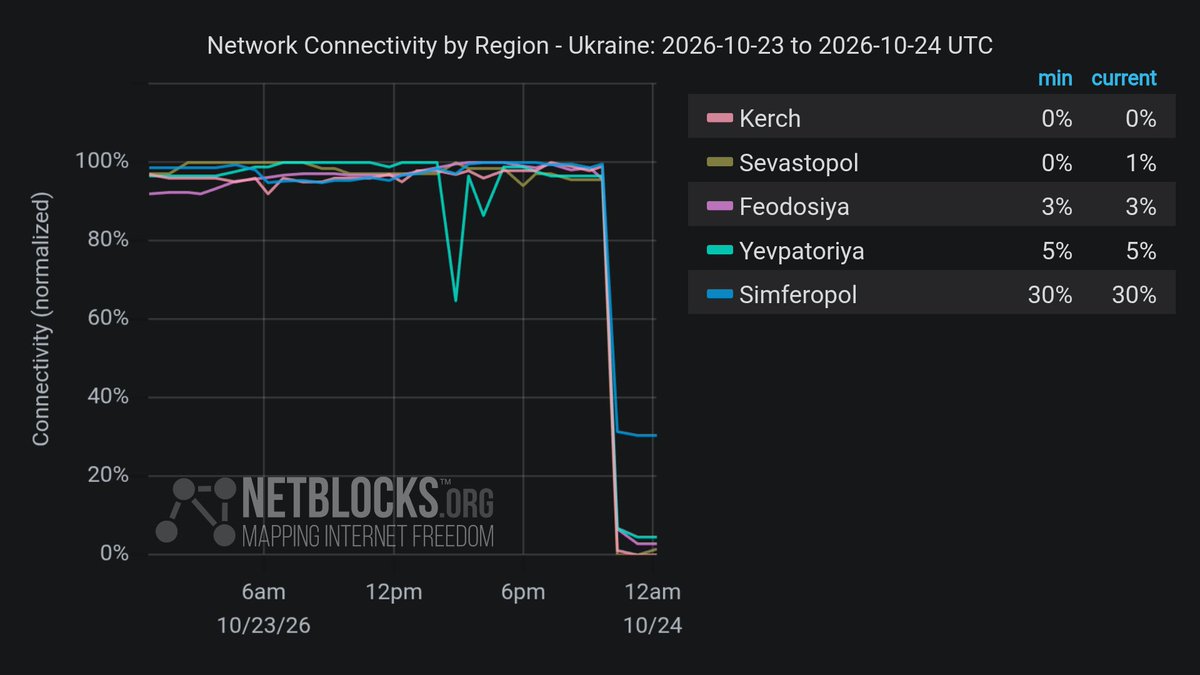
At 00:29 UTC, Ukrainian drone strikes on power facilities in occupied Crimea resulted in a complete loss of internet connectivity across the peninsula. Network monitoring tools recorded a sudden drop in latency and packet flow, confirming the outage. The disruption compounded the humanitarian impact of the power cuts, limiting communication for residents and emergency responders alike.
"Internet Down in Crimea After Ukrainian Drone Strikes" – monitor_the_situation, 00:29 UTC
While the exact technical cause remains under investigation, analysts attribute the outage to damage inflicted on fiber‑optic nodes co‑located with the targeted substations. The incident illustrates the dual effect of drone strikes on both physical infrastructure and the digital lifelines that depend on it.
Strategic Assessment
The sequence of events on 24 October reflects a clear escalation in Ukraine’s UAV doctrine. By extending strike ranges to industrial complexes such as the Tolyattikauchuk Chemical Plant and by systematically targeting high‑value energy nodes, Kyiv is seeking to impose economic and logistical costs on Moscow while forcing the Russian military to divert air‑defence assets away from the front lines.
Russia’s heavy glide‑bomb response in Zaporizhzhia demonstrates a willingness to employ precision‑guided munitions in a punitive manner, aiming to deter further Ukrainian UAV incursions. However, the use of KAB glide‑bombs—originally designed for deep‑strike missions against fortified targets—against civilian villages raises concerns under international humanitarian law, particularly regarding proportionality and distinction.
Both sides appear to be testing the limits of their respective UAV capabilities. Ukraine’s successful penetration of Russian airspace at distances exceeding 1,200 km suggests improvements in navigation, electronic‑counter‑measure resistance, and payload integration. Conversely, Russia’s deployment of Geran‑2 loitering munitions in a densely populated urban environment indicates an expanding role for cheap, expendable drones in its own offensive repertoire.
Implications for Regional Stability
The combined effect of these strikes is a heightened risk of collateral damage and civilian hardship in both Ukraine and Russia. Power outages in Crimea and Krasnodar Krai affect not only military installations but also civilian hospitals, schools and water treatment facilities. The chemical plant fire, while contained, poses environmental hazards that could cross regional borders.
International observers are likely to scrutinize the legality of both the Ukrainian drone campaign and the Russian glide‑bomb retaliation. Monitoring agencies such as the OSCE and the UN Human Rights Office may request access to the affected sites to assess compliance with the laws of armed conflict.
In the short term, the Russian military is expected to reinforce air‑defence corridors around key industrial zones, potentially reallocating assets from the front lines in Donbas and Kherson. Ukraine, in turn, may continue to refine its long‑range UAV tactics, leveraging commercial satellite imagery and open‑source intelligence to identify vulnerable targets while minimizing exposure to Russian SAM systems.
Conclusion
The events of 24 October 2026 illustrate a rapidly evolving aerial warfare landscape in the Russia‑Ukraine conflict. Ukrainian drones have demonstrated the capacity to strike deep into Russian territory, targeting critical industrial and energy infrastructure, while Russia has responded with a heavy glide‑bomb and drone barrage on Zaporizhzhia’s outskirts. The interplay of these actions underscores the growing importance of unmanned systems in shaping strategic outcomes and the urgent need for robust mechanisms to protect civilian populations from the escalating kinetic effects of drone warfare.