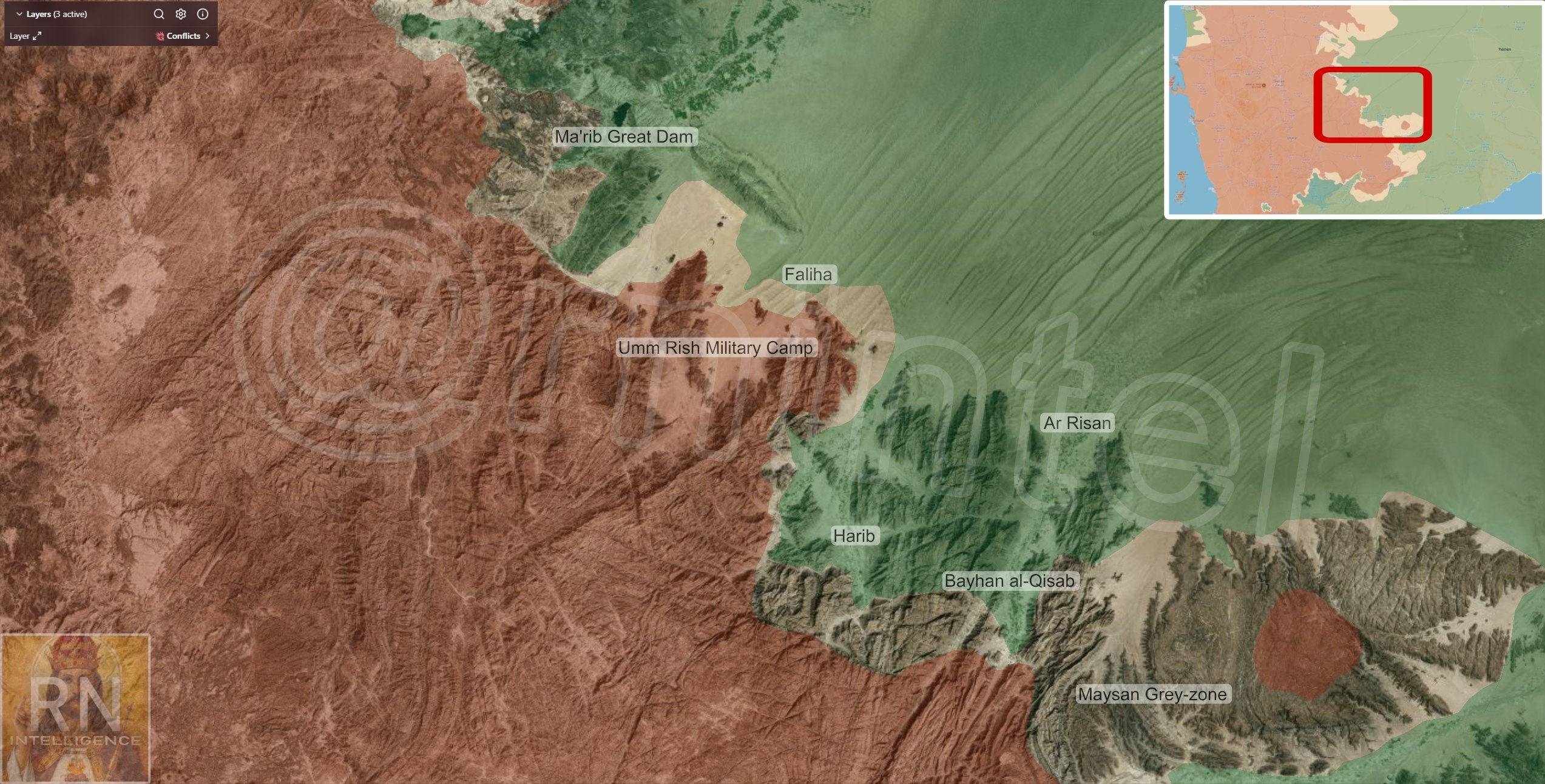
On 19 October 2026, the Houthi movement launched a coordinated series of ballistic missile strikes against Yemeni government and Saudi‑aligned militia training facilities in Shabwah Governorate, causing the deadliest single‑day loss of life in the conflict since early 2025. According to Al Jazeera, at least 18 personnel were killed when three missiles hit a military training camp during a scheduled exercise, confirming the attack as the most lethal kinetic event of the day.
"Three ballistic missiles struck the camp while trainees were conducting drills, resulting in eighteen confirmed fatalities and numerous injuries," the Yemeni government forces spokesman told Al Jazeera.
The strike, reported at 12:51 UTC, targeted a camp located near the town of Al‑Alam in Shabwah Governorate. The weapons used were identified as medium‑range ballistic missiles, a capability the Houthi forces have expanded since acquiring Iranian‑supplied technology. The victims were primarily newly recruited fighters serving under the Yemeni government’s emergency forces, many of whom were in the early stages of basic combat training.
Additional Shabwah Assaults Amplify Casualties
Earlier in the day, at 10:21 UTC, the Houthi forces fired multiple ballistic missiles at Al‑Alam Camp, a facility operated by Saudi‑aligned militias. IntelSlava reported that the attack resulted in more than 40 fatalities among newly recruited pro‑government fighters. Video footage released by the source showed the aftermath, with bodies strewn across the training grounds and smoke rising from the damaged structures.
At 09:15 UTC, rnintel corroborated the earlier strike, publishing a video that displayed 40‑50 bodies lying in the compound after a single ballistic missile impact. The source described the target as a “facility belonging to Saudi‑aligned militias in the Shabwa Governorate,” underscoring the Houthi strategy of striking both government and coalition‑backed militia assets.
These attacks collectively indicate a focused Houthi campaign to degrade the training capacity of forces aligned with the internationally recognized Yemeni government and its Saudi partners. The use of ballistic missiles, rather than more conventional artillery or small‑arms fire, reflects an escalation in both range and destructive power.
Ground Operations in Marib Follow Missile Strikes
Following the missile barrage on Al‑Alam, Houthi forces extended their offensive to the central Marib Governorate. At 09:33 UTC, rnintel reported that Houthi units attacked the town of Harib, advancing from the direction of the Al‑Alam camp. Simultaneous clashes erupted in Bayhan al‑Qisab, a strategic locality near the Marib‑Shabwah border. The engagement involved Houthi combatants, Shabwah Emergency Forces, and elements of the Southern Transitional Council (STC). Photographic evidence released by rnintel showed Houthi fighters positioned on the outskirts of Harib, with smoke plumes indicating ongoing artillery exchanges.
The ground movement appears to be a direct response to the earlier missile attacks, aiming to exploit the disarray among pro‑government forces and to secure territorial footholds in Marib, a governorate that has been a focal point of the broader civil war since 2015.
Northern Front: Diversified Assaults on PLC Vehicles
While the southern theater experienced intense kinetic activity, the northern Al Jawf Governorate witnessed a different pattern of attacks. On 19 October at 13:23 UTC, GeoPWatch released video footage documenting a series of assaults on vehicles belonging to the Popular Liberation Committee (PLC) and its affiliates. The attacks employed a mix of landmines, “Rujoom” quadcopter drones, ballistic missiles, RPG‑7 launchers, and Dehlavieh anti‑tank guided missiles (ATGMs).
The footage, spanning two weeks of engagements, shows PLC convoys ambushed on rural roads, with quadcopter drones delivering small payloads that trigger improvised explosive devices (IEDs). In several instances, RPG‑7 fire was directed at lightly armored vehicles, while Dehlavieh ATGMs struck heavier transport trucks. The inclusion of ballistic missiles in the northern attacks suggests a coordinated effort by Ansarullah to project force across multiple fronts, leveraging both conventional and unconventional weaponry.
These diversified tactics underscore the evolving nature of the conflict, where insurgent groups increasingly blend aerial, ground, and missile capabilities to target both military and logistical assets.
Strategic Implications
The concentration of ballistic missile strikes on training facilities in Shabwah represents a calculated attempt by the Houthi movement to cripple the replenishment pipeline of government and coalition forces. By targeting recruits before they can be fully integrated into combat units, the Houthis aim to create a long‑term attrition effect that extends beyond immediate casualties.
Simultaneously, the ground offensive in Harib and Bayhan al‑Qisab signals an intent to capitalize on the chaos generated by the missile attacks, potentially opening new supply routes or securing strategic high ground in Marib. Control of Harib would afford the Houthis a staging area for further incursions into central Yemen, threatening the fragile security arrangements brokered in recent ceasefire talks.
In the north, the multi‑modal assaults on PLC vehicles demonstrate Ansarullah’s capacity to conduct synchronized operations across disparate terrains. The use of quadcopter drones, a relatively low‑cost yet effective platform, indicates a diffusion of technology that could lower the threshold for future attacks on both military and civilian targets.
Overall, the events of 19 October illustrate a marked escalation in kinetic activity by Houthi and affiliated forces, combining high‑impact missile strikes with rapid ground maneuvers and diversified weapon systems. The immediate humanitarian impact is stark, with at least 78 confirmed deaths across the documented incidents and likely many more injured. The broader strategic outcome may be a further entrenchment of the conflict’s stalemate, as both sides incur significant losses while maintaining operational capabilities.