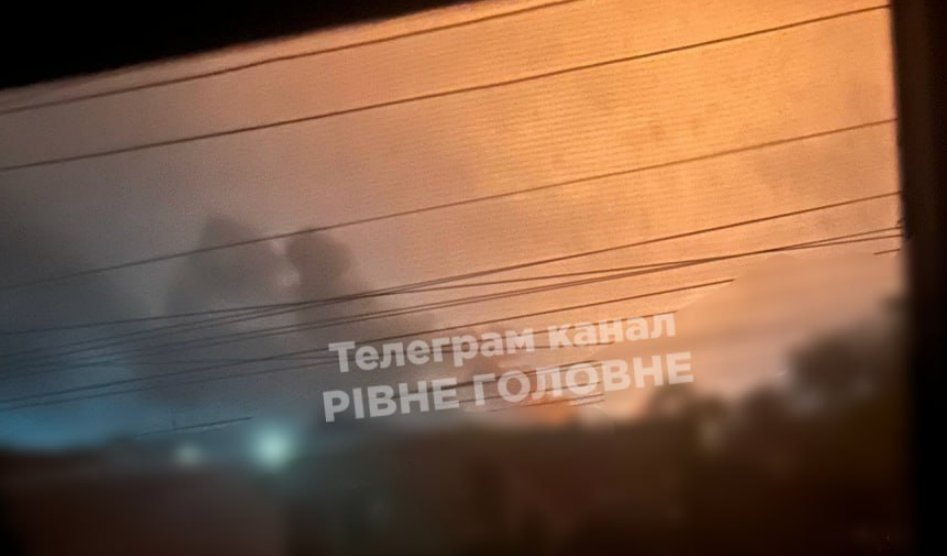
On the morning of 19 October 2026, Ukraine unleashed a coordinated swarm of more than 1,000 unmanned aerial vehicles (UAVs) against Russian oil infrastructure, igniting multiple fires and marking one of the largest aerial offensives of the war. The operation, reported by Al Jazeera, underscores a rapid escalation in the scale and intensity of drone warfare, a trend mirrored by parallel developments in Iran where the Islamic Revolutionary Guard Corps (IRGC) employed artillery and drones against Kurdish villages.
Ukrainian Drone Barrage Targets Russian Energy Assets
The Ukrainian Ministry of Defense confirmed the launch of a massive UAV fleet aimed at oil refineries and storage sites deep within Russian territory. While the precise strike locations remain classified, satellite imagery and open‑source monitoring indicate simultaneous impacts at several facilities, resulting in visible plumes of smoke and confirmed fires. The Al Jazeera report notes that the attack represents a strategic shift toward high‑volume, low‑cost aerial assaults designed to disrupt Russia’s energy revenue stream.
"Ukraine launched over 1,000 drones against Russian oil facilities, igniting fires and demonstrating a new level of operational ambition," Al Jazeera, 19 Oct 2026.
Analysts from the European Centre for Security Studies (ECSS) argue that the sheer number of UAVs employed suggests a maturing logistical pipeline capable of mass production, training, and rapid deployment. The operation also highlights Kyiv’s growing reliance on drone technology as a force multiplier, especially as conventional air superiority remains contested.
Russian Glide‑Bomb Strike on Zaporizhzhia’s Southern Outskirts
At 01:38 UTC, Russian Air Force Su‑34 fighters released at least five KAB‑500L glide bombs on the Balabyne‑Kushuhum sector of Zaporizhzhia, a key industrial hub in southern Ukraine. According to the Telegram channel monitor_the_situation, three of the five munitions evaded Ukrainian air‑defence interception, striking residential and logistical targets. Preliminary damage assessments indicate significant infrastructure disruption, though casualty figures have not yet been released.
"At least five KAB glide‑bomb strikes hit the Balabyne‑Kushuhum area on Zaporizhzhia City's southern outskirts; Ukrainian air defence failed to intercept three of them," Monitor the Situation, 19 Oct 2026.
The use of precision glide bombs reflects Russia’s continued emphasis on stand‑off weapons that can be launched from beyond the range of most Ukrainian air‑defence systems. The incident also illustrates the persistent vulnerability of Ukraine’s southern corridor, a region critical for grain exports and energy transit.
Ballistic Missile Attack on Kyiv Metro
Shortly after midnight, Russian forces fired a ballistic missile that struck a Kyiv metro station, triggering at least five explosions within the underground network. The attack, reported by the same Telegram source, resulted in an uncertain number of casualties, with emergency services still tallying injuries and structural damage. The targeting of civilian transport infrastructure marks a stark escalation in the conflict’s urban dimension, raising concerns about compliance with international humanitarian law.
"Russian ballistic missiles strike Kyiv metro station, causing multiple explosions; casualties and damage details are still emerging," Monitor the Situation, 19 Oct 2026.
Experts from the International Institute for Strategic Studies (IISS) note that the missile’s trajectory and impact point suggest a possible use of the Iskander‑M system, a short‑range ballistic platform capable of delivering conventional warheads with high accuracy. The incident reinforces the pattern of Russian forces employing long‑range strike assets to pressure Ukrainian urban centers.
Geran Drone Campaign Across Western Ukraine
In a coordinated wave of attacks beginning at 03:23 UTC, Russian forces deployed Geran‑type UAVs across the western Ukrainian oblasts of Rivne, Volyn, Vinnytsia, and Khmelnytskyi. The strikes damaged a 330 kV substation in Kovel, an oil depot in Shepetivka, and disrupted railway lines critical for freight movement. The attacks were documented by the monitor_the_situation channel, which also shared a photo of the damaged substation.
"Large‑scale drone attacks hit Rivne, Volyn, Vinnytsia, and Khmelnytskyi oblasts, damaging a 330 kV substation in Kovel, an oil depot in Shepetivka, and railway infrastructure," Monitor the Situation, 19 Oct 2026.
The Geran platform, a reverse‑engineered variant of the Iranian Shahed‑136, demonstrates Russia’s continued reliance on low‑cost, expendable UAVs to pressure Ukrainian logistics. The targeting of energy and transport nodes aligns with a broader Russian strategy to erode Ukraine’s resilience by striking critical civilian infrastructure.
IRGC Artillery and Drone Strikes in Iran’s Kurdish Border Region
Parallel to the Ukrainian front, Iran’s Islamic Revolutionary Guard Corps (IRGC) conducted artillery bombardments and launched a one‑way attack drone against Gavileh village in the Marivan county of Kurdistan Province. The assault, reported by the GeoPWatch Telegram channel, resulted in civilian casualties and prompted the Kurdistan Workers’ Party (PJAK) to issue threats of retaliation. The incident underscores the spill‑over of drone and missile technology into intra‑state conflicts within the Middle East.
"The IRGC reportedly conducted artillery strikes and launched one‑way attack drones at Gavileh village in Marivan, Northwestern Iran today, according to the Kurdistan Human Rights Network. The PJAK have stated they will retaliate if the strikes continue," GeoPWatch, 19 Oct 2026.
Analysts at the Middle East Institute (MEI) argue that the use of one‑way attack drones—essentially loitering munitions without a return‑flight capability—reflects Iran’s adaptation of swarm tactics observed in the Ukraine war. The escalation raises the risk of a broader regional confrontation, especially given PJAK’s historical ties to Kurdish separatist movements in neighboring Iraq and Turkey.
Rubicon Center Releases First Geran‑4 Seeker Drone Footage
At 00:11 UTC, Russia’s Rubicon Center published the first publicly available video of a Geran‑4 Seeker drone strike in Ukraine. The footage, shared via Telegram, showcases the drone’s terminal guidance system homing on a moving target, a capability that could enhance the lethality of Russia’s UAV arsenal. While the exact strike location was not disclosed, the release signals a propaganda effort to demonstrate technological progress and to deter Ukrainian counter‑UAV measures.
"Russia's Rubicon Center releases first video of Geran‑4 Seeker drone strike, showcasing the weapon's capabilities," Monitor the Situation, 19 Oct 2026.
The Geran‑4, an evolution of earlier Shahed‑type drones, incorporates an electro‑optical seeker and data‑link upgrades, allowing for real‑time target acquisition. Defense analysts warn that the proliferation of such systems could lower the threshold for aerial attacks across contested zones, complicating detection and interception efforts.
Implications for Regional Security
The convergence of high‑volume UAV deployments, precision glide‑bomb strikes, and ballistic missile attacks on 19 October illustrates a broader shift toward autonomous and semi‑autonomous aerial warfare. In Ukraine, the Ukrainian Armed Forces’ mass drone offensive demonstrates an increasing capacity to conduct strategic strikes beyond conventional frontlines, while Russia’s continued use of glide bombs and advanced Geran drones reflects a diversification of its strike portfolio.
In Iran, the IRGC’s integration of artillery and drone attacks against Kurdish villages signals a transfer of tactics observed in the Ukraine theater to internal security operations. The cross‑regional diffusion of drone technology raises the prospect of more frequent, low‑cost, high‑impact attacks that can be launched with limited strategic warning.
Collectively, these events underscore the accelerating arms race in unmanned and missile systems across the Eurasian theater. Nations with advanced air‑defence networks, such as Ukraine, face mounting pressure to develop counter‑UAV solutions, while regional actors like Iran may increasingly employ similar tactics to achieve political objectives without committing large conventional forces.