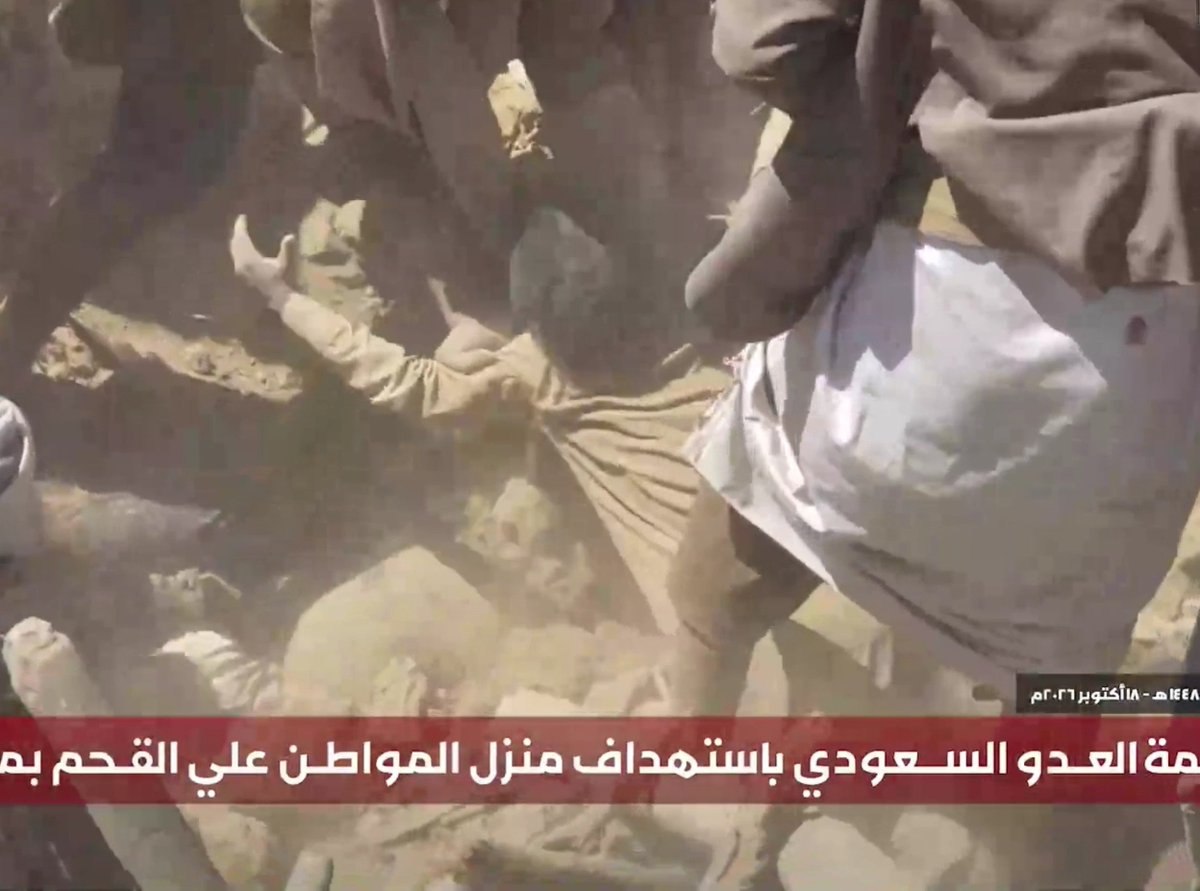
The Saudi Arabian Air Force conducted an airstrike on a residential dwelling in the Sahar District of Saada Governorate at 12:40 GMT, killing nine civilians and wounding sixteen, including children. The strike employed a US‑supplied Paveway precision‑guided bomb kit, which was recovered from the blast site, confirming the use of advanced Western munitions in the conflict.
Airstrike Details and Immediate Impact
According to the monitoring channel monitor_the_situation, the target was a single home located in the village of Sahar. The explosion destroyed the structure and caused extensive collateral damage to neighboring houses. Local reports, relayed by the state‑affiliated outlet Al Masirah, confirmed the casualty figures and highlighted the presence of the Paveway kit, marking one of the few documented instances of US‑origin weaponry being employed by Saudi forces in Yemen.
A Saudi Air Force strike on a home in Sahar district, Saada, killed 9 and injured 16, including children, per Al Masirah. A US‑supplied Paveway bomb kit was found at the site. – monitor_the_situation, 2026‑10‑18, https://t.me/monitor_the_situation/37624
The incident raises questions about the escalation of precision‑strike capabilities in the Yemeni theater and the potential for increased civilian harm when high‑explosive munitions are deployed in densely populated areas.
Ansarallah’s Western Taiz Offensive
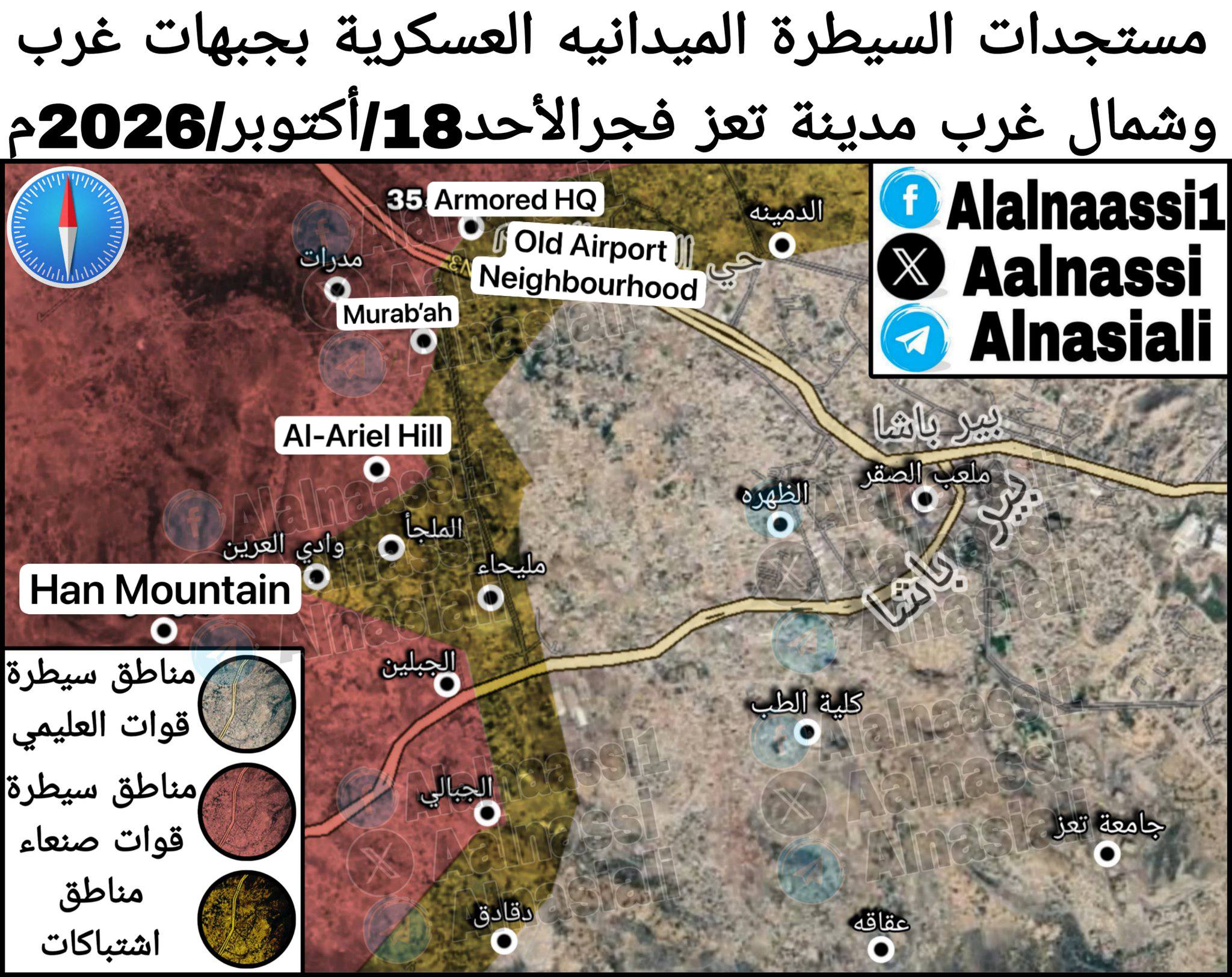
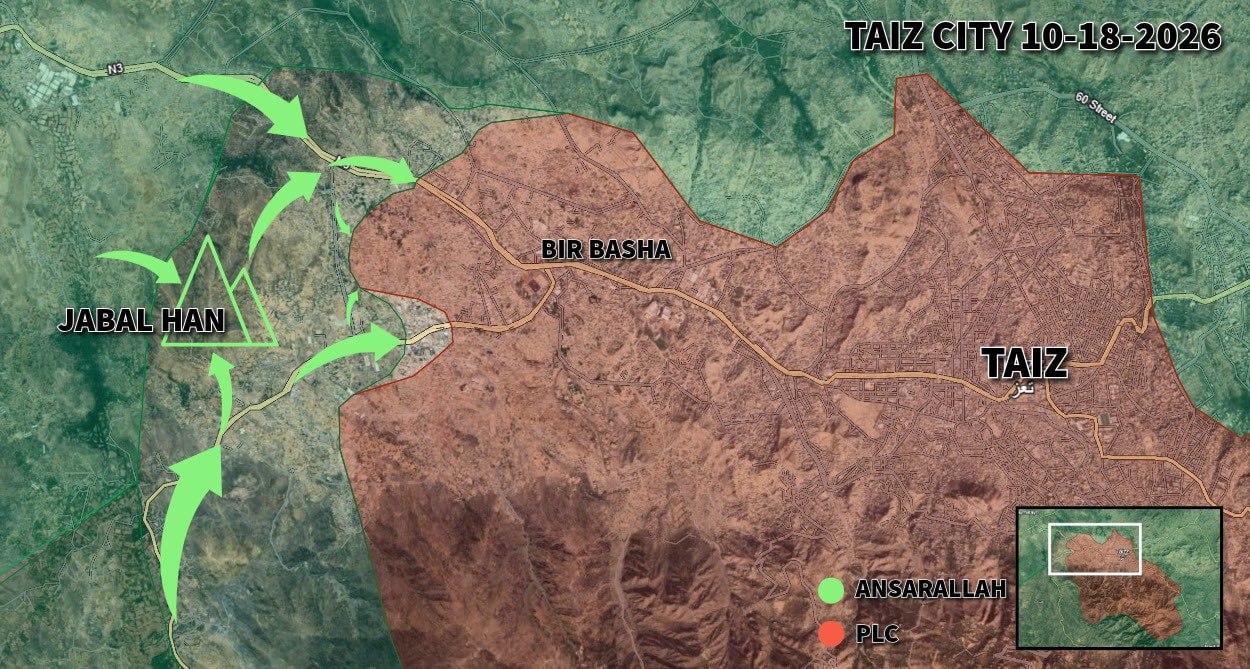
In the afternoon, the Houthi‑aligned Ansarallah movement reported significant territorial gains in western Taiz. At 13:26 GMT, the group announced the capture of multiple neighborhoods and the consolidation of control over Jabal Han, a strategic high ground overlooking the city’s main supply routes. The advance forced the 35th Armored Brigade of the Taiz Military Axis into defensive positions around the Old Airport and surrounding districts.
Ansarallah pushes into western Taiz city on multiple fronts and consolidates control over Jabal Han… pressing down both main roads towards the junction in the strategic transportation hub of Bir Basha. – CIG_telegram, 2026‑10‑18, https://t.me/CIG_telegram/85674
Later, at 16:38 GMT, a second update from the same channel detailed further progress. Ansarallah seized Al‑Jabalayn, Al‑Jabali, and the PLC’s 35th Armored Brigade camp, while also encircling a small contingent of PLC fighters on Jabal Han by taking the Al‑Murab’ah area and the Al‑Ariel hill to the northeast.
Ansarallah have advanced further in western Taiz city, capturing Al‑Jabalayn, Al‑Jabali, and the PLC’s 35th Armored Brigade camp… encircling the few dozen PLC fighters. – CIG_telegram, 2026‑10‑18, https://t.me/CIG_telegram/85678
The coordinated push reflects a broader Houthi strategy to dominate the western corridor of Taiz, a city that has been a focal point of protracted fighting between the Yemeni government and Houthi forces since 2015. Control of Jabal Han provides artillery advantage and observation over the main highway linking Taiz to the coastal port of Mocha.
Seizure of the Kahboub Mountain Range
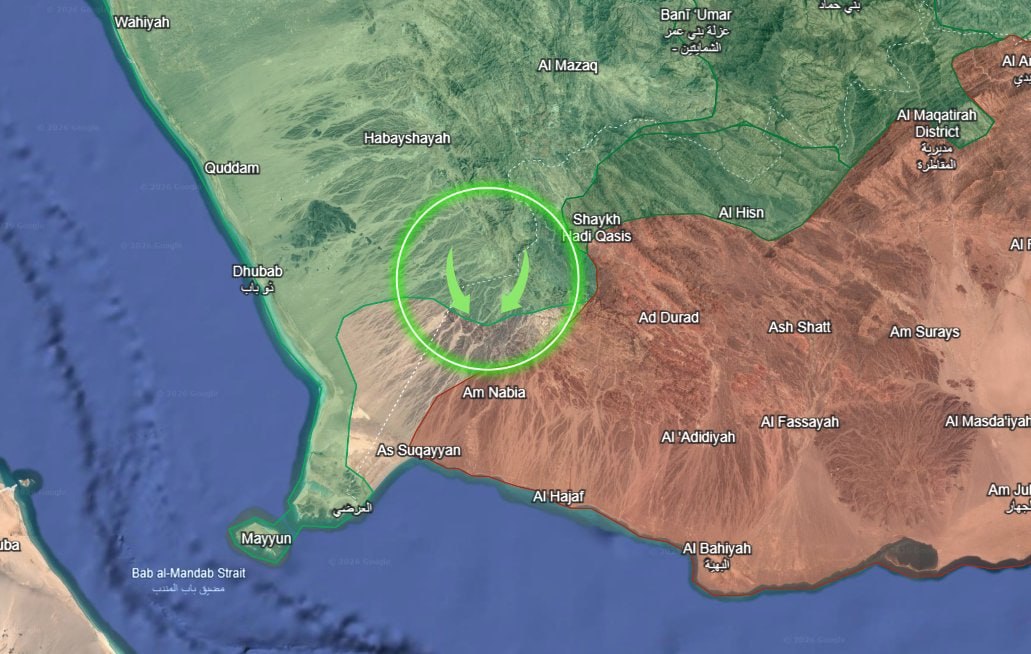
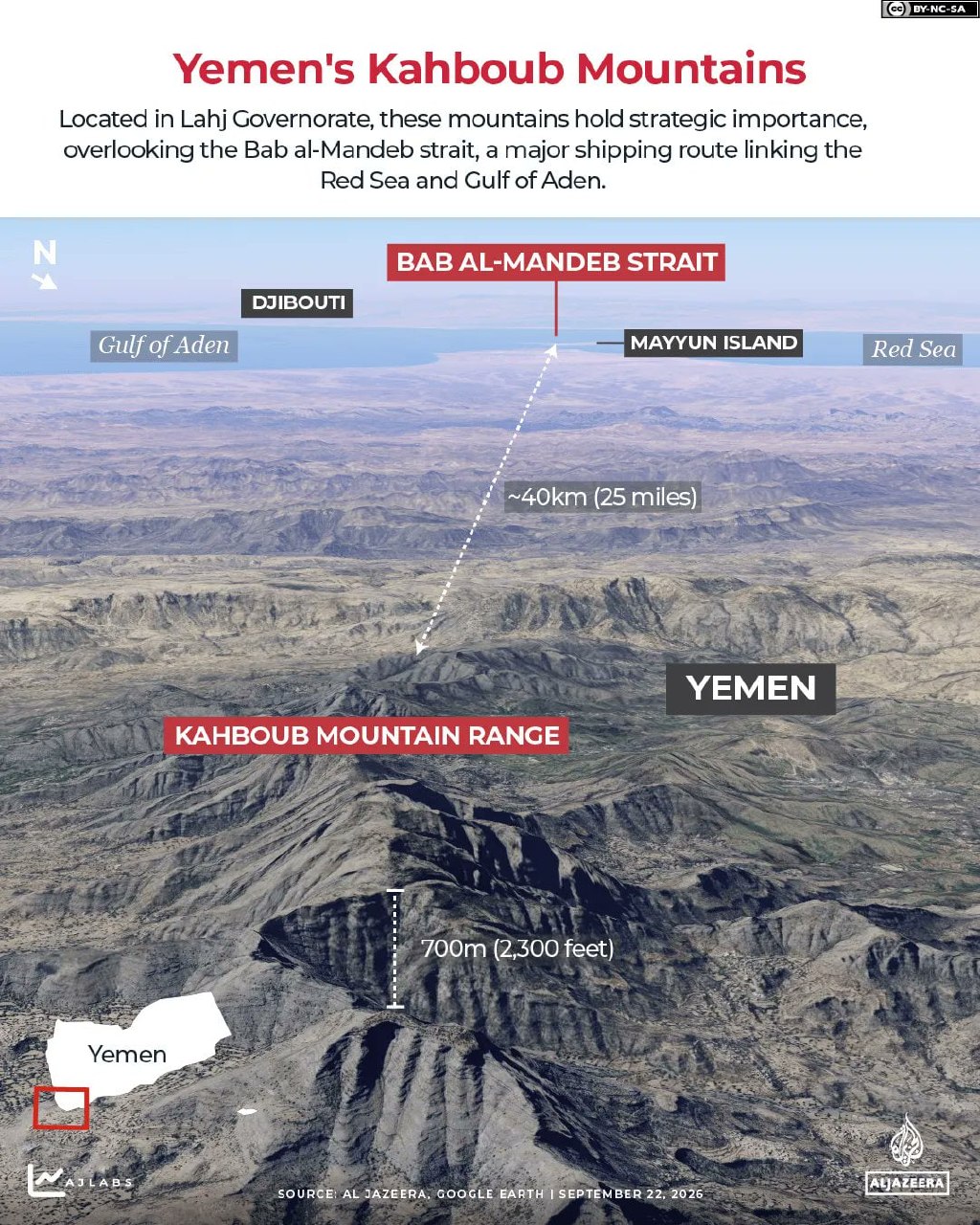
In the early hours of the day, Ansarallah also announced the capture of the remaining peaks of the Kahboub mountain range, which overlooks the Bab‑el‑Mandeb Strait. The operation secured the Al‑Wazi’iyah district, effectively eliminating the last pockets of resistance in the high ground that commands maritime traffic through the strait.
There are early reports from Yemeni platforms that Ansarallah has cleared the remaining peaks of the Kahboub mountain range in the Bab‑el‑Mandeb… Al‑Wazi’iyah district is now fully protected from all sides. – CIG_telegram, 2026‑10‑18, https://t.me/CIG_telegram/85672
Control of the Kahboub peaks grants the Houthis a tactical advantage for monitoring and potentially disrupting commercial shipping lanes, a factor that could influence regional security calculations involving Saudi Arabia, the United Arab Emirates, and international naval forces.
Analytical Assessment
The juxtaposition of a high‑intensity airstrike in the north and rapid ground advances in the south underscores the multi‑theater nature of the Yemeni conflict. The use of a US‑supplied Paveway bomb kit by Saudi forces indicates continued reliance on foreign precision‑guided munitions, while the Houthi‑aligned Ansarallah demonstrates growing operational capacity to seize and hold strategically valuable terrain.
From a conflict‑dynamics perspective, the Saada airstrike may provoke retaliatory actions from the Houthis, potentially increasing the frequency of cross‑border strikes. Simultaneously, the consolidation of western Taiz and the Kahboub range strengthens Houthi leverage in any future negotiations, as they now control key logistical corridors and high‑ground observation points.
Monitoring agencies should track subsequent movements of Saudi air assets in Saada and the response of Houthi anti‑air defenses, as well as the durability of Ansarallah’s hold on Taiz and the Bab‑el‑Mandeb highlands. The evolving situation remains fluid, with civilian protection and regional maritime security emerging as critical concerns.