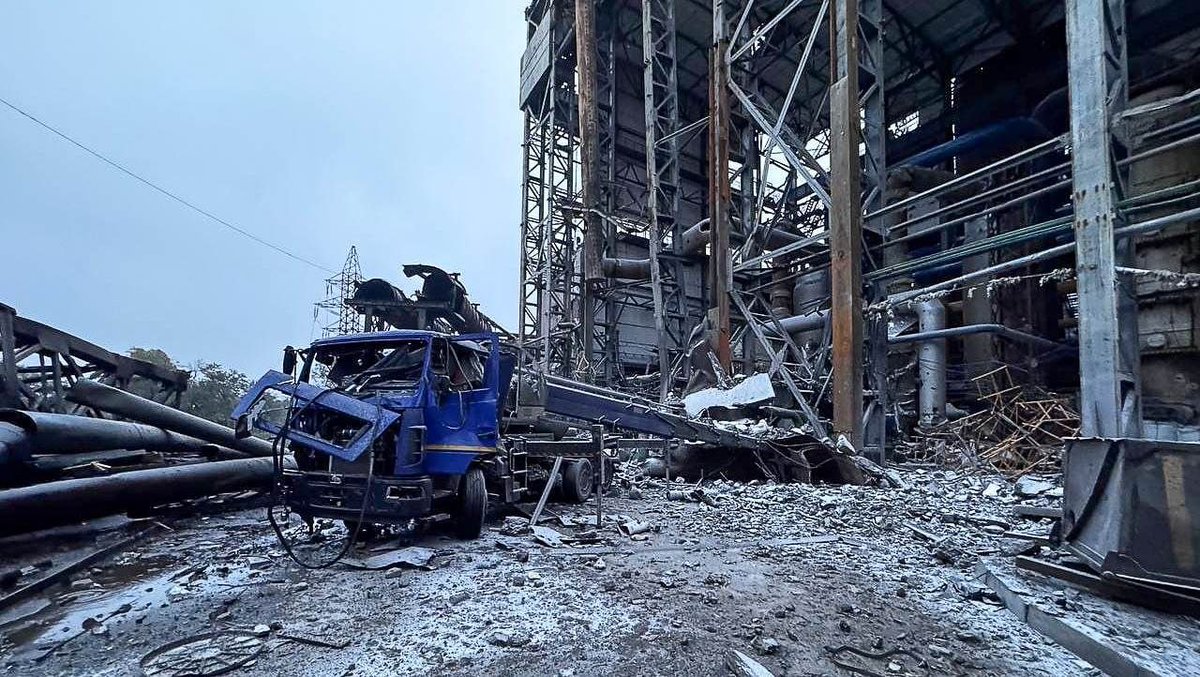
On 17 October 2026, a coordinated Russian missile strike targeted three major power plants and a key substation in the Kyiv region, temporarily disrupting the capital’s electricity supply. The attack, reported by monitor_the_situation, employed conventional missiles and was described as part of a broader effort to undermine Ukraine’s energy resilience.
Russian strikes hit three major power plants in Kyiv region and a key substation transferring nuclear power to the capital, part of the 'Kyiv energy ring'.No civilian casualties were confirmed, but the loss of power affected hospitals, schools, and critical infrastructure in the city.
Glide‑Bomb Assaults on Southern Urban Centers
Earlier that morning, Russian forces deployed glide‑bombs against residential areas in Kherson and Slovyansk. In Kherson, a KAB glide‑bomb struck a multi‑storey apartment block, killing one civilian and wounding twelve others. Video footage shared on the same Telegram channel showed the impact and subsequent rescue operations by local emergency services.
Russian Glide‑Bomb Strike Kills 1 in Kherson CityIn Slovyansk, a KAB‑250 glide‑bomb caused a partial collapse of a residential building, resulting in one death and ten injuries. Both attacks underscore the continued use of precision‑guided munitions against densely populated zones, raising concerns about compliance with international humanitarian law.
Guided Bombs Hit Sumy, Causing Injuries
At 07:23 UTC, eight Russian guided aerial bombs fell on the Sumy region, with four targeting the city itself. One bomb struck an apartment building before plunging into the Dnipro River; the remaining munitions impacted nearby streets. Two civilians sustained injuries, according to the channel’s report. The use of guided bombs in a civilian‑dense environment reflects a pattern of escalation in the northern front.
Ukrainian Counter‑Measures: Drones, Robots, and Anti‑Air Defenses
Ukraine’s response on 17 October demonstrated a diversification of kinetic tools. The 60th Mechanized Brigade deployed KARA ground robots for logistics, delivering supplies and evacuating casualties in the Donbas. Simultaneously, armed ground drones were employed to strike Russian positions for the first time, indicating a shift toward autonomous combat systems.
Ukraine's 60th Mechanized Brigade reports using KARA ground robots to deliver supplies and evacuate casualties, and armed ground drones to strike Russian positions for the first time.In the same region, the SIGNUM Battalion used a bicycle‑mounted anti‑tank guided missile launched from a drone to engage Russian infantry and vehicles, while the 30th Brigade intercepted multiple Russian UAVs using FPV drones and a net launcher. These actions illustrate Ukraine’s growing reliance on low‑cost, high‑impact unmanned platforms to counter Russian air and ground threats.
Strategic Targeting of Industrial Assets
Russia also launched six ballistic missiles at the Zaporizhstal steel plant in Zaporizhzhia, damaging energy, logistics, and blast‑furnace infrastructure. Although no casualties were reported, the strike disrupted steel production, a key export commodity for Ukraine’s war economy. Earlier, Ukrainian forces struck a Russian drone factory in Rostov Oblast and a missile‑brigade warehouse in Bryansk, employing missiles to degrade Russian production capabilities.
Ukraine Strikes Russian Drone Plant and Missile Brigade Warehouse
Casualty Trends and Civilian Impact
Ukraine’s General Staff announced that Russian forces suffered 1,950 casualties (killed or wounded) in the previous 24 hours, bringing the war’s total Russian losses to over 1.5 million since February 2022. Conversely, United Nations monitors warned that civilian casualties in Ukraine have reached record levels, citing intensified Russian energy attacks throughout September and continuing into October. Al Jazeera reported at least eight civilian deaths and nearly 60 injuries from recent Russian strikes across the country, highlighting the human cost of the kinetic campaign.
Conclusion
The events of 17 October illustrate a multi‑layered kinetic environment in Ukraine. Russian forces continue to employ guided bombs, glide‑bombs, and missile salvos against both strategic infrastructure and civilian targets, while Ukrainian forces expand the use of drones, autonomous robots, and anti‑air defenses to mitigate these threats. The escalation in energy‑sector attacks, combined with the growing sophistication of Ukrainian unmanned systems, suggests a continued intensification of the kinetic dimension of the conflict.