Washington is reportedly preparing to employ the GBU-43/B "Mother of All Bombs" (MOAB) against Iranian energy and nuclear facilities if President Trump authorizes renewed strikes, according to a CNN report cited by the intelligence channel rnintel. The decision reflects a marked escalation in U.S.-Iran hostilities, with the weapon’s 21‑ton blast capacity intended to cripple critical infrastructure. The source indicates the plan is contingent on presidential approval, underscoring the high‑level coordination required for such an operation.
"The U.S. military has decided to potentially use the ‘mother of all bombs’ on Iranian energy and nuclear infrastructure, should President Trump give the green light for renewed strikes," rnintel reported via Telegram (https://t.me/rnintel/67705).
Implications of a MOAB Deployment
A MOAB strike would represent the most powerful non‑nuclear weapon used by the United States since the 2003 invasion of Iraq. Its deployment could cause extensive civilian casualties, disrupt Iran’s electricity grid, and potentially trigger retaliatory attacks on U.S. assets in the region. International law experts note that the weapon’s indiscriminate effects may raise questions under the principles of proportionality and distinction. The move also signals a willingness by the Trump administration to employ extreme force to achieve strategic objectives.
Ukrainian Front: Russian Drone Campaign Intensifies
In the early hours of 15 October, Russian unmanned aerial systems struck multiple locations in Ukraine, extending the aerial campaign that has plagued civilian infrastructure since the war began. At 03:39:21 UTC, a Geran‑4/5 jet‑drone hit an electrical substation in Chornomorsk, Odesa Oblast, causing citywide power outages. Video evidence posted by monitor_the_situation confirms the impact and the subsequent loss of electricity for tens of thousands of residents (https://t.me/monitor_the_situation/36922).
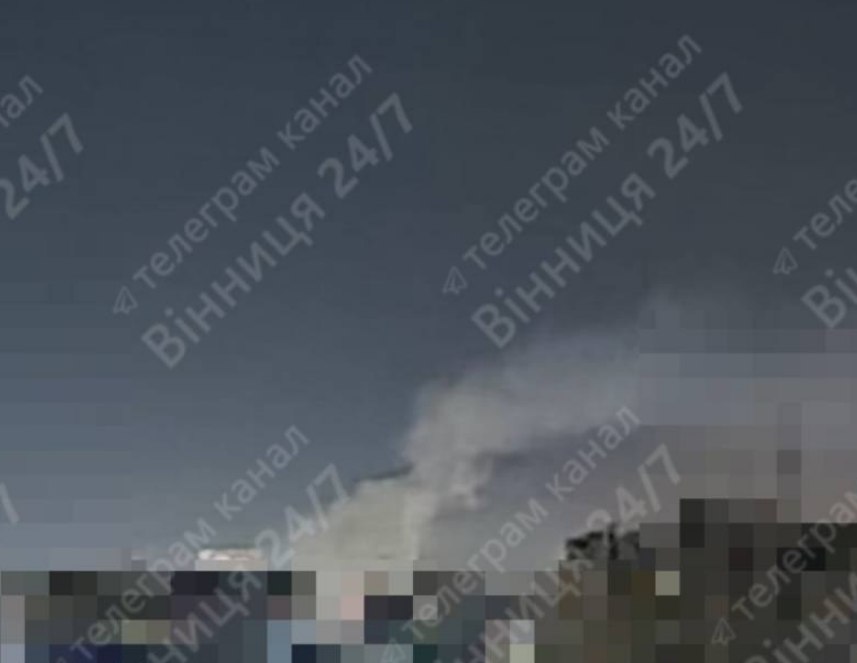
Just one minute earlier, at 03:38:03 UTC, Geran‑2 drones targeted Vinnytsia and surrounding towns, igniting a large fire—likely at railway facilities—and producing secondary explosions in Kozyatyn, Zhmerynka, Sutysky, and Kryzhopil. Photographic material released by the same source shows extensive damage and smoke plumes over the city (https://t.me/monitor_the_situation/36921). No casualty figures have been released, but the attacks disrupted transport and energy services, compounding civilian hardship.
Yemen: Ansarallah Secures Strategic High Ground
On the Arabian Peninsula, the Houthi‑aligned Ansarallah movement announced the capture of Jabal Han, a dominant mountain west of Taizz city in Yemen’s Taizz Governorate. The seizure, reported by CIG_telegram at 00:28:29 UTC, provides the group with a commanding view over the western suburbs of Taizz, potentially altering the tactical balance in the region (https://t.me/CIG_telegram/85519). While no casualty numbers were disclosed, the advance underscores the fluid nature of ground combat in Yemen’s protracted civil war.
Gulf Maritime Tensions: Ships Sink in the Strait of Hormuz
Simultaneously, the strategic Strait of Hormuz witnessed heightened naval confrontations. Iran’s state media, relayed by Al Jazeera, reported that Iranian forces have sunk multiple vessels as part of a broader campaign to pressure the United States. Tehran’s leadership reiterated its resolve to continue fighting until the United States concedes to Iranian demands, while also stating that it does not seek an endless war (https://www.aljazeera.com/news/liveblog/2026/10/15/iran-war-live-tehran-vows-to-fight-until-us-yields-as-ships-sink-in-hormuz?traffic_source=rss). The exact number of ships lost and the casualties incurred remain unverified, but the incident raises concerns about global oil shipments and the security of one of the world’s busiest maritime chokepoints.
Cross‑Theater Analysis
The concurrent escalation across four distinct theaters illustrates a broader pattern of heightened militarization and the use of high‑impact weapons. In the Middle East, the prospect of a MOAB strike and the sinking of commercial vessels in the Hormuz Strait signal a willingness by both the United States and Iran to employ extreme measures. In Eastern Europe, Russia’s deployment of Geran‑series drones demonstrates an ongoing strategy to target critical infrastructure, aiming to erode Ukrainian resilience without committing large ground forces. In Yemen, the capture of Jabal Han reflects the continued importance of terrain dominance in a war that has become increasingly localized yet remains geopolitically significant.
Potential Regional Ripple Effects
If the United States proceeds with a MOAB deployment, the immediate tactical effect would be the degradation of Iran’s energy and nuclear capabilities. However, the strategic fallout could include retaliatory missile strikes against U.S. bases in the Gulf, increased support for proxy groups, and a possible widening of the conflict to involve other regional actors such as Saudi Arabia and Israel. In the Black Sea region, continued drone attacks may prompt Ukraine to accelerate its own counter‑UAV programs, potentially drawing in additional NATO support. The Yemeni front, while geographically distant, could see intensified air operations from the Saudi-led coalition in response to the Houthi gain.