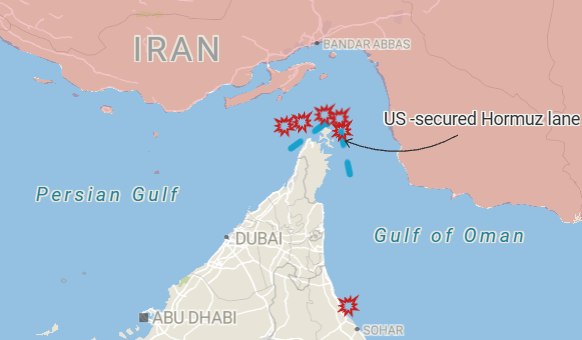
On 13 October 2026 a series of violent incidents unfolded across the eastern Mediterranean and the Persian Gulf, each contributing to a sharp rise in regional instability. The most severe event was a fatal explosion at Ramis Ridge in northern Israel that claimed the life of a 9th‑grade student. Within hours, the Israeli Air Force conducted a targeted strike in Khan Younis, Gaza, killing five Hamas militants, including members of the elite Nukhba unit. Simultaneously, Iranian forces launched attacks on six commercial vessels in the Strait of Hormuz, marking the highest single‑day tally of such incidents since the onset of the current conflict. These coordinated developments illustrate the multi‑theater nature of the confrontation and raise concerns about broader escalation.
Critical Explosion in Ramis Ridge, Israel
At approximately 04:04 local time, an explosion occurred at Ramis Ridge, a strategic high‑ground area near the town of Ma’alot in northern Israel. The blast resulted in the death of Elazar Yair Vilensky, a 9th‑grade student from Ma’alot. No additional casualties were reported, and authorities have not identified a weapon or explosive device type, classifying the incident as a civilian tragedy rather than a direct combat action. The source idkunim_il posted a photo of the scene and confirmed the victim’s identity. The Telegram channel also noted that the incident was shared on the broader “Updates from Israel and the world on Telegram” feed.
"The person killed in the explosion at the Ramim ridge: Elazar Yair Vilensky, a 9th‑grade student from Ma'alot" – idkunim_il, 13 Oct 2026
While the cause remains under investigation, the loss of a civilian student has prompted immediate statements from Israeli officials emphasizing the need for heightened security measures in border regions. The event underscores the vulnerability of civilian populations even in areas not directly engaged in active combat.
Airstrike in Khan Younis, Gaza Strip
At 05:05 local time, the Israeli Air Force executed an airstrike in the southern Gaza city of Khan Younis. According to the monitoring channel monitor_the_situation, the strike killed five Hamas militants, including operatives from the Nukhba unit of the Rafah Brigade. The targeted individuals were reportedly planning attacks against Israeli forces and civilians. No Israeli casualties were reported, and the strike was described as a pre‑emptive measure to disrupt imminent threats.
"IDF strikes in Khan Younis and southern Gaza killed five militants, including Nukhba operatives from Hamas's Rafah Brigade, who were planning attacks on Israeli forces and civilians." – monitor_the_situation, 13 Oct 2026
The operation employed precision‑guided munitions, though the specific weapon system was not disclosed. Video footage released by the same channel shows the aftermath, confirming the destruction of a building used as a command post. The strike aligns with Israel’s broader campaign to neutralize high‑value Hamas targets following a recent uptick in cross‑border attacks.
Iranian Naval Operations in the Strait of Hormuz
Earlier in the day, at 02:04 local time, Iranian forces engaged six commercial vessels transiting the Strait of Hormuz. The incident, reported by monitor_the_situation, represents the highest single‑day tally of attacks on merchant shipping since the war began in 2023. The United Kingdom Maritime Trade Operations (UKMTO) confirmed the attacks, noting that the vessels sustained varying degrees of damage but none suffered crew fatalities.
"Iran Strikes 6 Commercial Vessels Near Strait of Hormuz" – monitor_the_situation, 13 Oct 2026
While the exact weapons employed were not identified, the pattern suggests the use of small‑caliber naval guns or anti‑ship missiles, consistent with Iran’s previously documented tactics to exert pressure on international shipping lanes. The attacks occurred two days after a diplomatic warning from the United States urging Iran to refrain from further escalation. The incident has prompted immediate rerouting of commercial traffic and heightened alert levels among naval forces operating in the region.
Regional Implications
The concurrence of these three events illustrates a widening of conflict dimensions beyond the Israeli‑Palestinian theater. The fatal explosion in Ramis Ridge, though not yet linked to a militant group, raises concerns about potential spillover of hostilities into civilian areas of northern Israel. The Khan Younis airstrike demonstrates Israel’s continued reliance on air power to target Hamas leadership structures, a tactic that may provoke retaliatory rocket fire from Gaza.
Iran’s aggressive posture in the Strait of Hormuz adds a maritime dimension that threatens global energy markets. The attacks on commercial vessels could trigger insurance premium spikes and compel multinational navies to increase patrols, thereby stretching resources already committed to the eastern Mediterranean.
Analysts note that the simultaneity of these incidents may be coincidental, yet the pattern underscores the interconnected nature of security calculations among regional actors. Each event, while distinct in geography and actors, contributes to a cumulative risk environment where miscalculations could lead to broader escalation.
International observers are calling for de‑escalation mechanisms, including renewed diplomatic channels between Israel, Hamas, and Iran, as well as confidence‑building measures to protect civilian infrastructure and commercial shipping. Until such steps are taken, the probability of further incidents remains elevated.