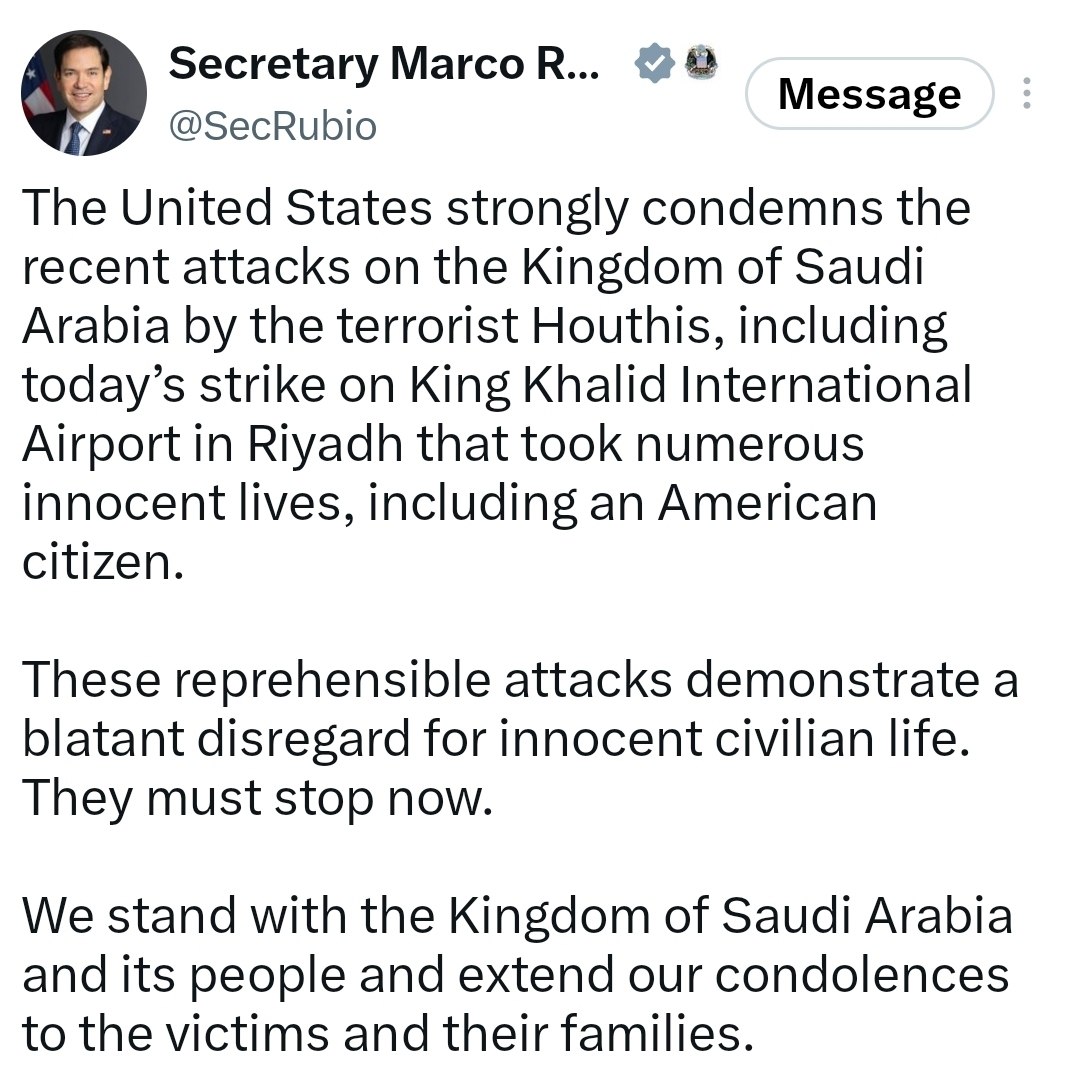
On 11 October 2026 Saudi Arabia faced its most severe kinetic incidents of the year, beginning with a ballistic missile strike on King Khalid International Airport in Riyadh at 00:04 UTC. The attack killed twelve individuals, including an American citizen, and prompted an immediate condemnation from U.S. Secretary of State Marco Rubio. Rubio’s statement, released via the GeoPWatch channel, stopped short of announcing new U.S. military assistance, noting that Washington already provides intelligence, defense, and refueling support to Riyadh.
"U.S. Secretary of State Marco Rubio condemned the recent attack on King Khalid International Airport, which killed 12 people, including a U.S. citizen. He stopped short of announcing any type of U.S. military assistance to Saudi Arabia, although Washington already provides intelligence, defense and refueling support to the kingdom." – GeoPWatch, https://t.me/GeoPWatch/40603
The weapon identified was a ballistic missile, launched from Yemen, and attributed to hostile elements operating in the Yemen‑Saudi theater. The strike targeted a civilian hub, disrupting flight operations and prompting heightened security protocols across the kingdom’s air transport network.
Second Airport Attack in Jeddah
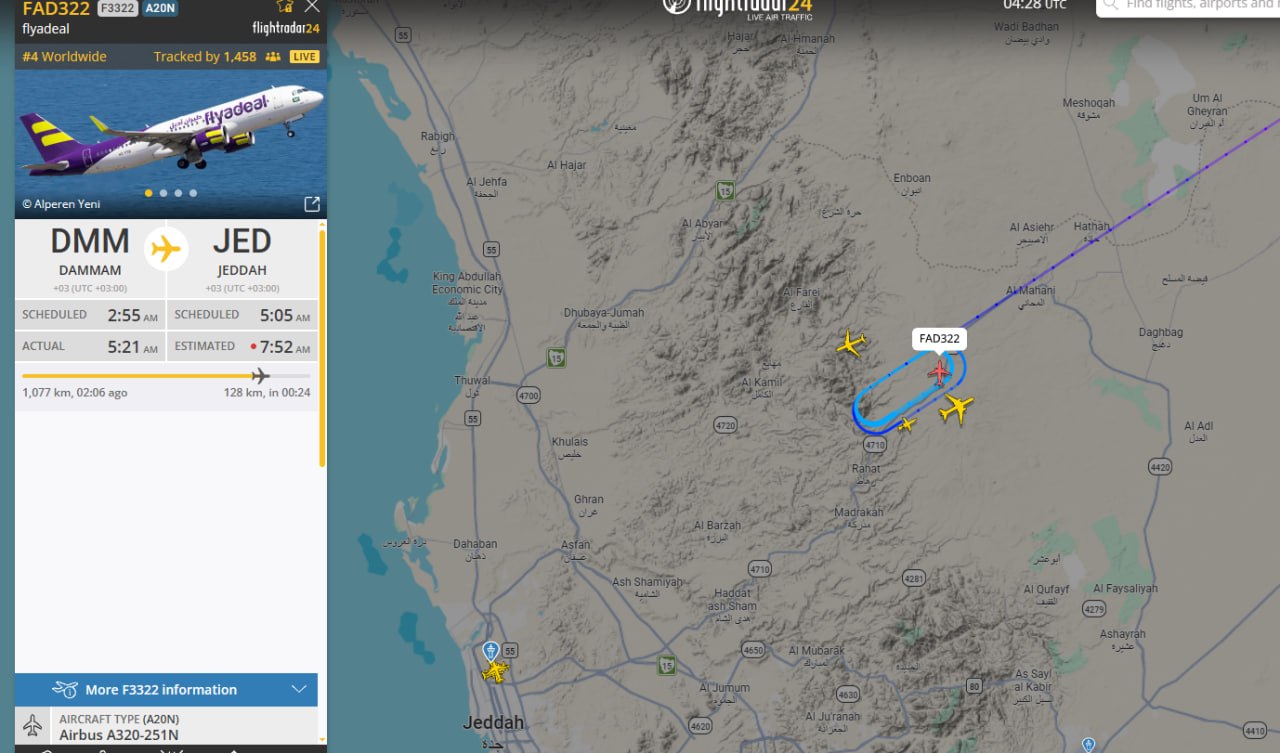
Four hours later, at 04:29 UTC, King Abdulaziz International Airport in Jeddah experienced a second coordinated assault. According to the rnintel channel, the airport was subjected to both missile and drone fire, marking the second attack within a twelve‑hour window. The aggressors were identified as Ansarullah, a Yemen‑based militia aligned with the Houthi movement. The immediate impact was the diversion of inbound flights and the implementation of holding patterns, as air traffic controllers worked to clear the airspace.
"Several flights headed for King Abdulaziz International Airport in Jeddah, western Saudi Arabia, are diverting or entering holding patterns. The airport is likely under an Ansarullah missile and drone attack for the second time in twelve hours." – rnintel, https://t.me/rnintel/67546
The combined use of missiles and unmanned aerial systems (UAS) reflects a tactical evolution by Ansarullah, aiming to strain Saudi civil aviation and project power beyond the Yemen border. No casualty figures were released for the Jeddah incident, but the disruption of commercial traffic underscores the broader economic ramifications.
Coalition Drone Interception in the Eastern Province
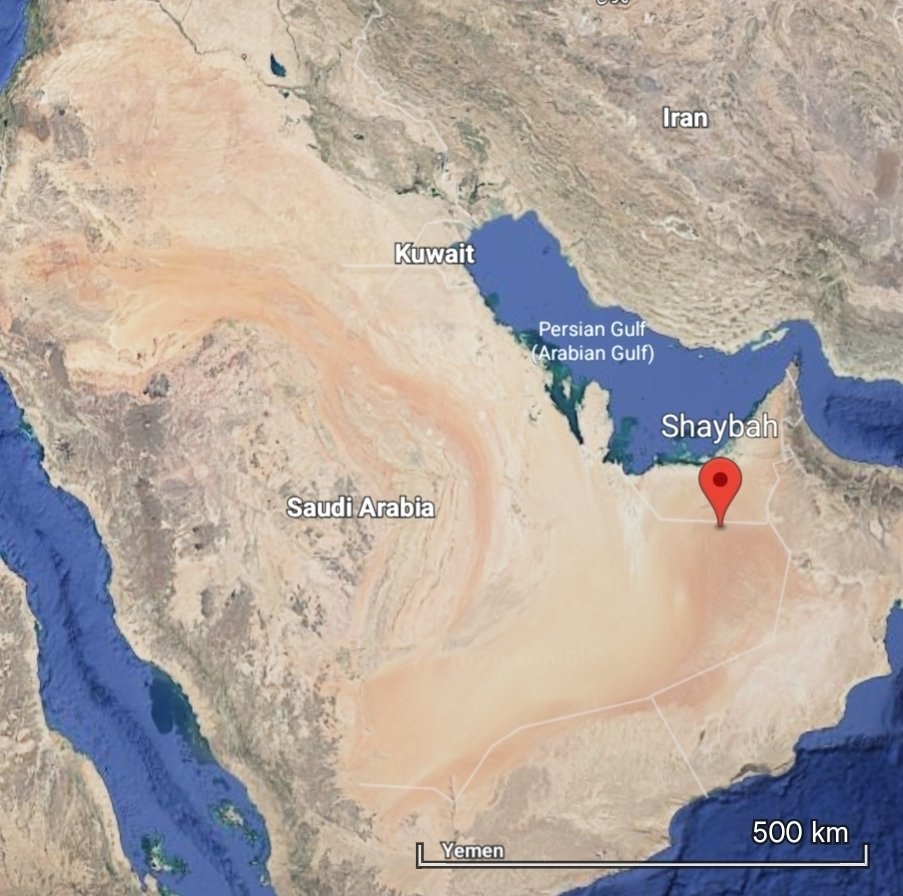
At 00:04 UTC, coalition forces intercepted and destroyed an unidentified drone over Saudi Arabia’s Eastern Province, near the remote border town of Shaybah. The monitor_the_situation channel reported that the drone was likely linked to Iranian proxy activities, given the ongoing Iran‑Saudi conflict. While the drone’s payload was not disclosed, its neutralization prevented potential damage to critical oil infrastructure in the region.
"Coalition forces intercepted and destroyed a drone in Saudi Arabia's eastern region, likely near Shaybah, amid the ongoing war with Iran." – monitor_the_situation, https://t.me/monitor_the_situation/36002
The interception demonstrates the layered air defense posture employed by Saudi Arabia and its allies, integrating radar, surface‑to‑air missiles, and rapid response units to counter low‑altitude threats.
Saudi Air Force Counter‑Strikes in Yemen
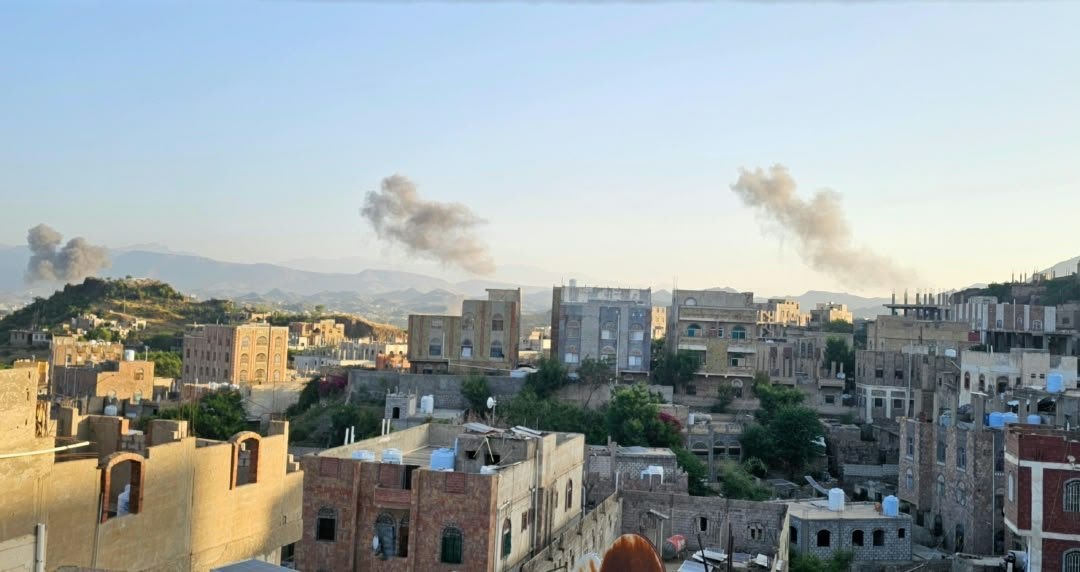
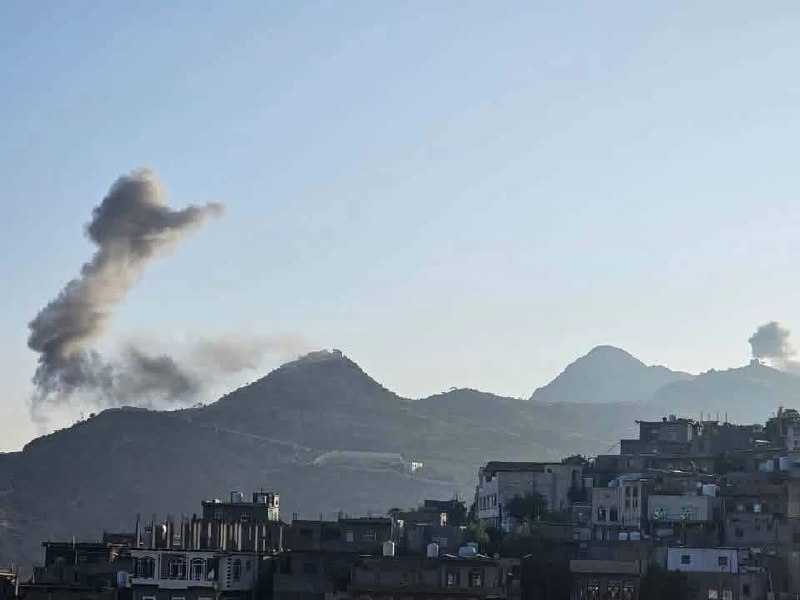
In parallel with the defensive incidents on Saudi soil, the Royal Saudi Air Force (RSAF) conducted a series of offensive airstrikes against Houthi positions in Yemen. GeoPWatch documented at least six airstrikes east of Taizz at 05:17 UTC, while intelslava reported three additional strikes in the same governorate at 04:22 UTC. The operations employed warplanes equipped with precision‑guided munitions, targeting command‑and‑control nodes and logistics depots used by the Houthi movement.
"Saudi warplanes conducted at least six airstrikes on Houthi positions east of Taizz in the early hours of Sunday." – GeoPWatch, https://t.me/GeoPWatch/40613
"The Royal Saudi Air Force (RSAF) carried out three airstrikes targeting Houthi positions in eastern Taiz Governorate." – intelslava, https://t.me/intelslava/96100
While casualty figures for these strikes were not disclosed, the intensity of the campaign indicates a sustained Saudi effort to degrade Houthi capabilities and deter further cross‑border attacks.
Strategic Implications
The sequence of kinetic events on 11 October illustrates a multi‑dimensional threat environment for Saudi Arabia. The ballistic missile strike on Riyadh’s primary international gateway represents a direct challenge to the kingdom’s civil aviation security and its ability to protect high‑value civilian infrastructure. The subsequent missile‑drone barrage on Jeddah demonstrates Ansarullah’s capacity to execute coordinated, time‑sensitive attacks across geographically dispersed targets.
Simultaneously, the successful interception of a drone in the Eastern Province highlights the effectiveness of coalition air defense networks, yet also signals that hostile actors continue to probe Saudi airspace, likely seeking to exploit perceived gaps near remote oil fields.
Saudi offensive air operations in Yemen serve a dual purpose: degrading Houthi military capacity and signaling deterrence to external backers, notably Iran. The rapid succession of defensive and offensive kinetic actions underscores the kingdom’s reliance on a layered security architecture that integrates domestic forces, coalition partners, and U.S. intelligence support.
International Response
U.S. diplomatic reaction, as articulated by Secretary Rubio, reaffirmed existing security cooperation without committing additional material aid. This measured response reflects broader U.S. policy aimed at maintaining regional stability while avoiding escalation. The lack of a formal aid announcement may also indicate confidence in Saudi Arabia’s existing defense posture, which includes integrated air defense systems supplied by the United States and European partners.
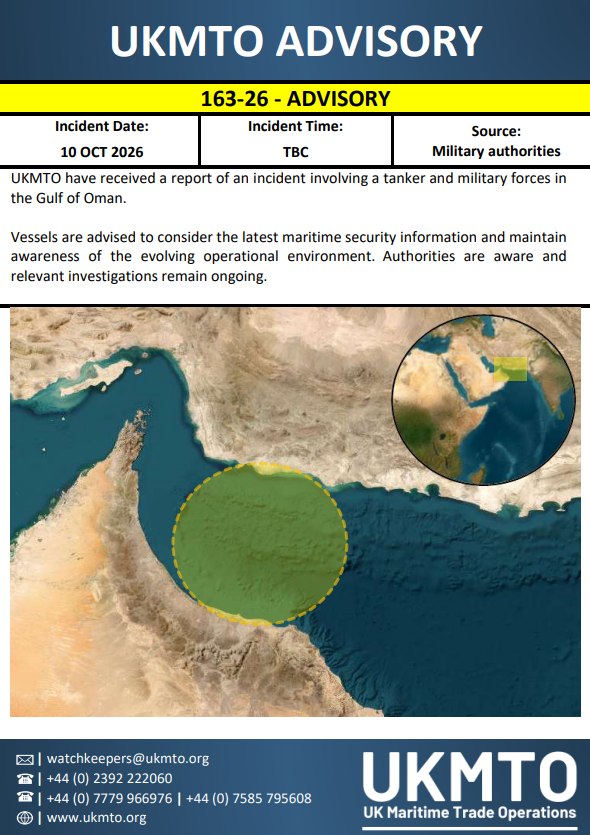
Regional actors, including Iran, have not issued official statements regarding the attacks, but the pattern of drone and missile use aligns with known Iranian proxy tactics. The ongoing maritime incident in the Gulf of Oman, involving a U.S. jet striking a cargo vessel attempting to breach an Iranian blockade, further contextualizes the heightened maritime and aerial tension surrounding the Arabian Peninsula.
Overall, the events of 11 October 2026 reinforce the volatile security calculus facing Saudi Arabia, where kinetic threats can emerge simultaneously on multiple fronts, demanding rapid coordination between national defense assets and international partners.