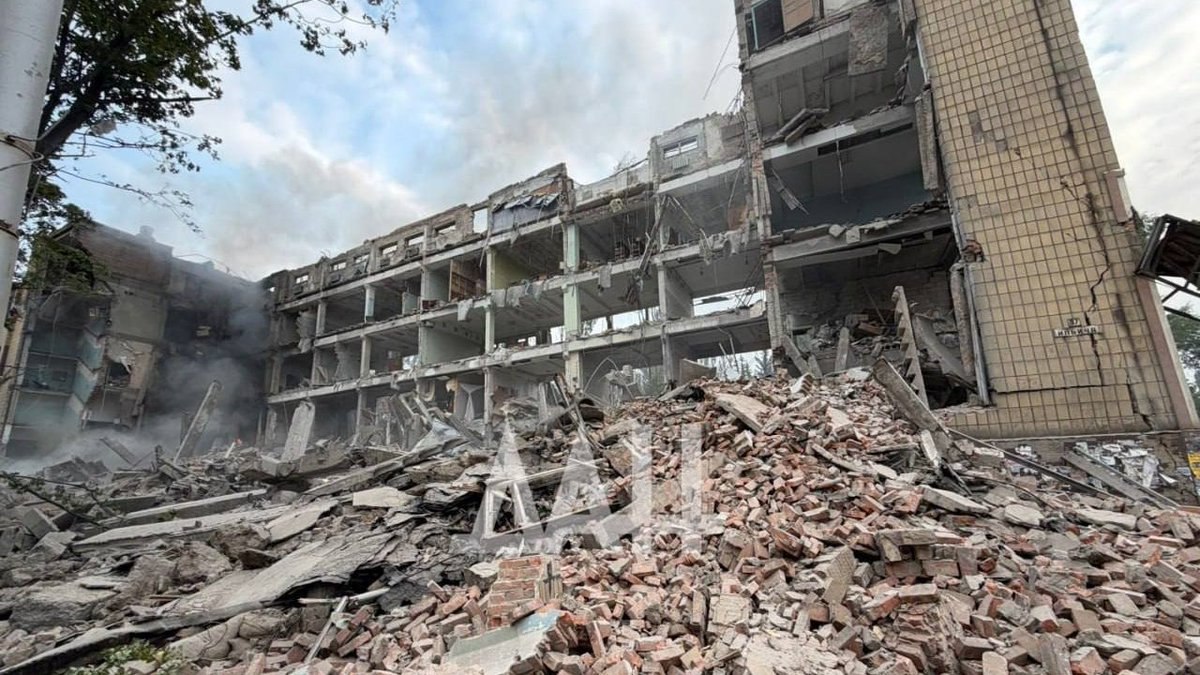
On 9 October 2026, Ukrainian forces executed a high‑precision strike on a Russian command post in Donetsk, Donetsk Oblast, resulting in the deaths of twenty Russian Army officers, including seven colonels. The attack, confirmed by Mediazona and relayed via the monitor_the_situation channel, employed at least seven SCALP cruise missiles targeting a staff meeting of the 41st Army and associated Central Milita units. The loss of senior officers represents a significant degradation of Russian command capability in the region.
"Ukrainian missiles struck a Russian command post in Donetsk, killing 20 officers including seven colonels," monitor_the_situation, 15:33 UTC.
Widespread Russian Glide‑Bomb Campaign
Earlier in the day, Russian forces intensified aerial bombardment across the country, deploying glide bombs in a series of coordinated attacks that killed forty‑one civilians and injured sixty‑seven. The most severe impact was recorded in Zaporizhzhia Oblast, where two civilians were killed and eighteen injured. According to the same monitor_the_situation feed, the campaign encompassed 1,039 strikes on 51 settlements, underscoring a sustained effort to pressure Ukrainian defensive lines.
"Russian Attacks Kill 41, Injure 67 Across Ukraine," monitor_the_situation, 09:19 UTC.
Targeted Bombardment of Ukrainian Military Sites
At 13:28 UTC, the Russian Aerospace Forces (VKS) conducted a series of guided aerial bombings on Ukrainian military positions in the Kharkiv region. Four FAB‑500 bombs equipped with UMPK guidance kits struck a UAV launch site of the 58th Separate Motorized Infantry Brigade in Velyki Prokhody and a temporary deployment point of the 57th Separate Motorized Infantry Brigade in Pershotravneve. A larger FAB‑3000 bomb, also guided, hit a temporary deployment point of the 65th Separate Mechanized Brigade. The use of precision‑guided munitions indicates a focus on degrading Ukrainian force projection capabilities.
"Four FAB‑500 aerial bombs equipped with UMPK guidance kits struck Ukrainian brigade sites," intelslava, 13:28 UTC.
Ukrainian Ground Advances in Donetsk
Concurrent with the missile strike, Ukrainian infantry units advanced in the Donetsk sector, compelling Russian troops to withdraw from several settlements. Reports from AlJazeera at 13:09 UTC describe a fluid front line, with Ukrainian forces leveraging the disruption caused by the command‑post attack to press forward. While casualty figures for this movement remain unverified, the tactical shift suggests a potential re‑allocation of Russian defensive resources.
"Ukraine pushes Russia back in Donetsk as military, civilian casualties soar," AlJazeera, 13:09 UTC.
Fortification of the Zaporizhzhia Nuclear Facility
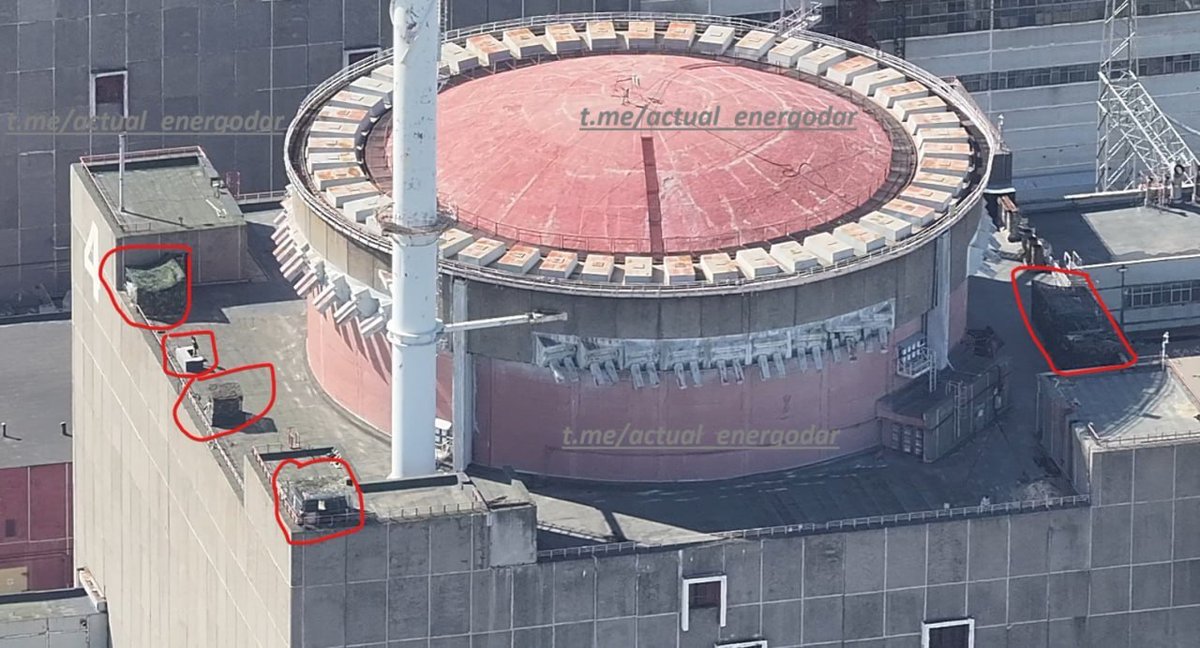
In a separate development, Russian forces reinforced the occupied Zaporizhzhia Nuclear Power Plant and the adjacent thermal plant in Enerhodar. The fortifications included the installation of firing points, electronic‑warfare (EW) antennas, and extensive barbed‑wire barriers, as documented by monitor_the_situation at 11:39 UTC. These measures aim to deter sabotage and secure critical energy infrastructure amid ongoing hostilities.
"Russian troops place firing points, EW antennas and barbed wire on reactor and turbine buildings," monitor_the_situation, 11:39 UTC.
Mass Drone Assault on Strategic Targets
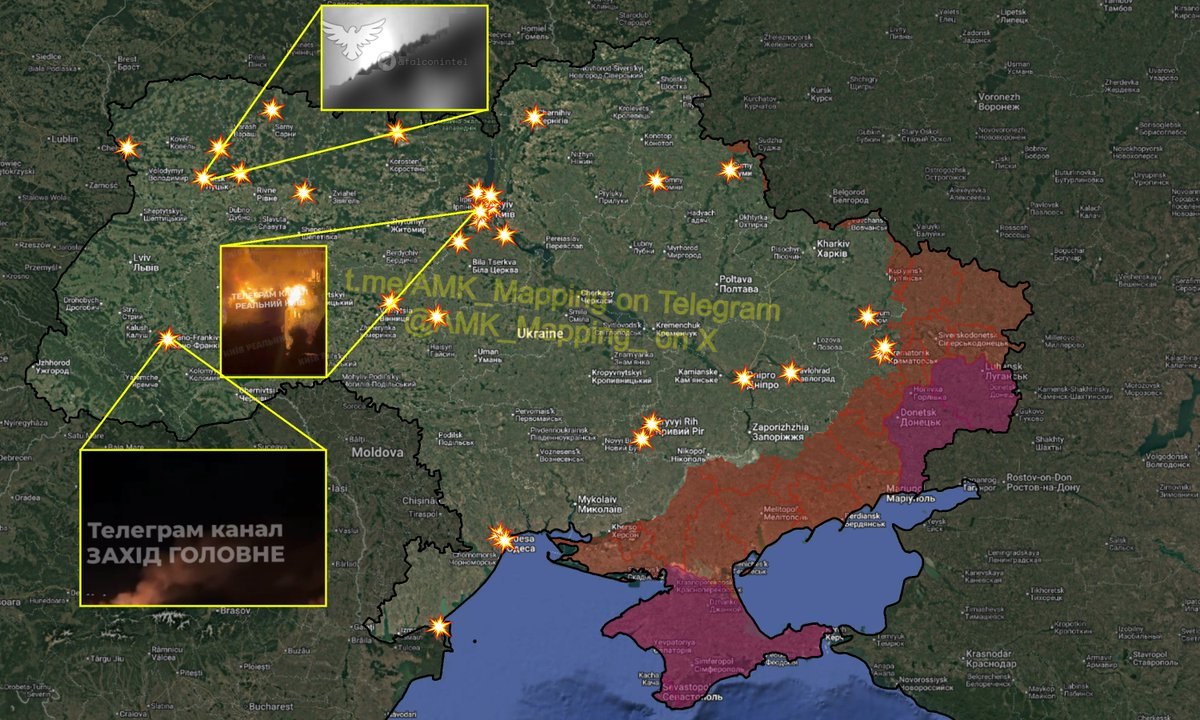
At 09:14 UTC, Russia launched a coordinated drone offensive employing Geran UAVs against multiple Ukrainian assets, including the Lutsk Airbase, Trypillya Thermal Power Plant, and the port of Odesa. One drone targeting the Yadoyn border crossing was intercepted and destroyed. The operation demonstrates Russia's reliance on expendable UAV swarms to impose pressure on logistical and energy nodes.
"Russia Launches Mass Drone Attack Across Ukraine," monitor_the_situation, 09:14 UTC.
Ukrainian Infantry Maneuvers Near Komar
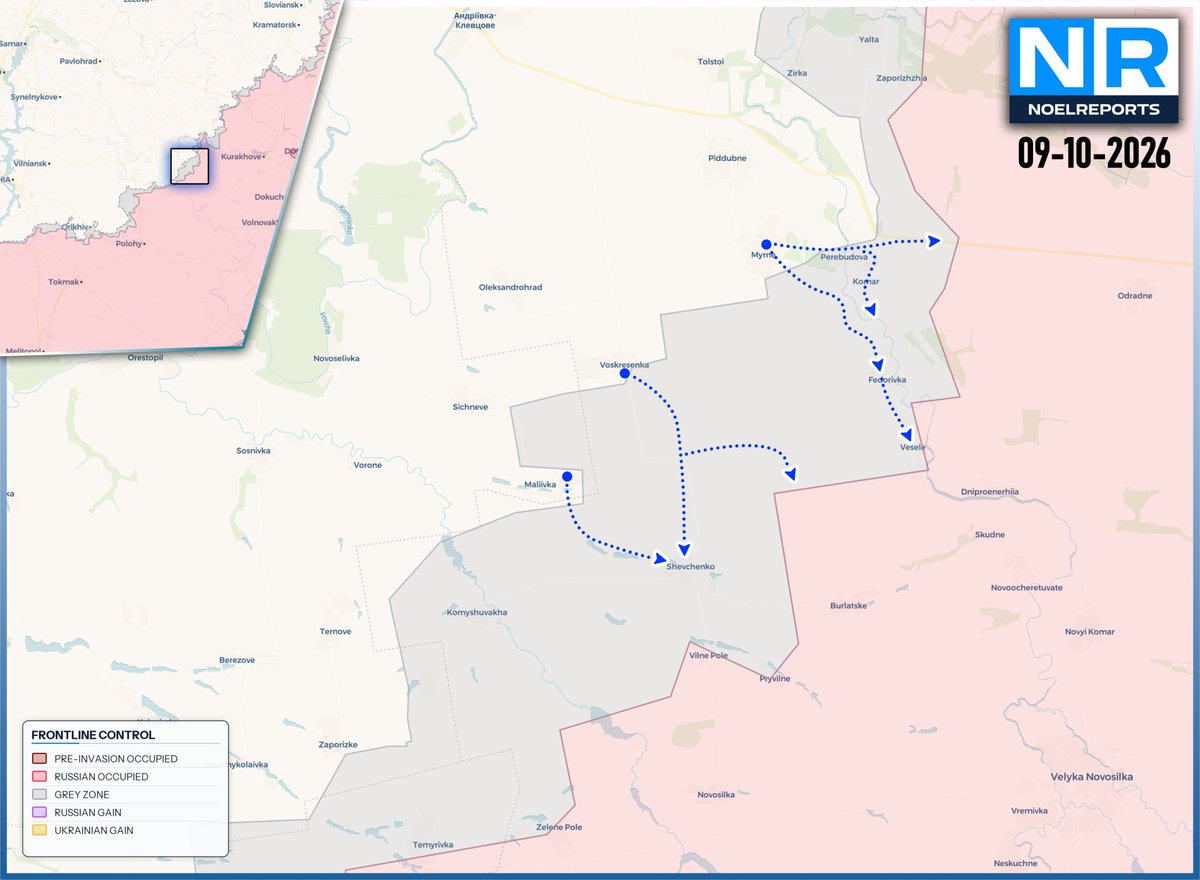
Later in the morning, Ukrainian infantry units advanced in small groups along both banks of the Mokri Yaly River near the settlement of Komar, Donetsk Oblast. According to monitor_the_situation at 08:46 UTC, the objective was to outflank Komar and move toward Shevchenko, Bahatyr, and Velyka Novosilka, applying pressure on Russian defensive positions.
"Ukrainian infantry advances in small groups on both banks of the Mokri Yaly River," monitor_the_situation, 08:46 UTC.
Analytical Overview
The events of 9 October illustrate a marked escalation in kinetic operations across multiple fronts in Ukraine. The Ukrainian SCALP missile strike represents a rare high‑value targeting of Russian command personnel, potentially disrupting operational coordination within the 41st Army. Simultaneously, Russia's extensive glide‑bomb campaign and precision‑guided aerial bombings reflect an effort to inflict civilian casualties, degrade Ukrainian air defenses, and neutralize key military assets.
Ground movements on both sides indicate a dynamic front line, with Ukrainian forces exploiting Russian vulnerabilities while Russia reinforces strategic infrastructure, notably the Zaporizhzhia nuclear complex. The mass drone attacks further underscore the expanding role of unmanned systems in the conflict, providing Russia with a low‑cost means to threaten dispersed targets.
Overall, the convergence of high‑precision strikes, large‑scale aerial bombardment, and rapid ground maneuvers suggests a phase of intensified kinetic engagement, with both belligerents seeking to shape the operational environment ahead of the forthcoming winter season.