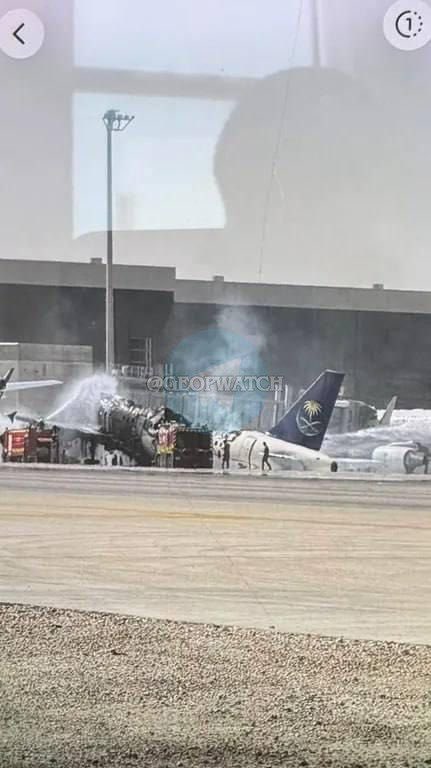
On 9 October 2026, Saudi Arabia launched a coordinated air campaign against Houthi‑controlled areas of Sanaa, marking the most significant kinetic event in Yemen for the day. The strikes were a direct response to Houthi missile attacks on Riyadh’s King Khalid International Airport that killed a Saudia pilot earlier in the week. Saudi aircraft targeted what the Ministry of Defense described as "key Houthi command and control nodes, ammunition depots, and air defence installations" within the capital. The operation, reported by the Telegram channel monitor_the_situation, resulted in at least twelve confirmed Houthi casualties and damage to multiple urban structures, though civilian casualty figures remain unverified.
"Saudi forces have launched multiple strikes on Houthi‑held Sanaa after the airport attack," the channel wrote, linking to a photo of smoke rising over a residential district (Source: https://t.me/monitor_the_situation/35726).
The airstrike underscores the escalation of the proxy conflict between the Saudi‑backed Yemeni government and the Iran‑aligned Houthi movement. While the Saudi Kingdom frames the operation as retaliation and a protective measure for its airspace, the Houthi leadership has vowed to increase missile launches against Saudi targets, indicating a likely continuation of tit‑for‑tat attacks.
Ground Counter‑Offensive at Bab al‑Mandab
Simultaneously, Houthi forces announced a successful repulsion of a Saudi‑backed ground offensive aimed at the strategic Bab al‑Mandab Strait. According to the Telegram channel GeoPWatch, Houthi fighters destroyed more than 22 armored vehicles using ballistic missiles, artillery, and heavy weapons, inflicting "dozens of casualties" on the attacking force. The statement, posted at 15:32 UTC, claimed that the offensive, described as the PLC’s (Presidential Leadership Council) new push toward the Murad and general Bab al‑Mandab direction, made no progress despite strong Saudi air support.
"Thanks to God's grace, support, and assistance, our armed forces – for the second time within a few hours – successfully repelled and expelled the enemy's Saudi‑backed forces," a Houthi spokesperson said (Source: https://t.me/GeoPWatch/40535).
The engagement highlights the continued importance of Bab al‑Mandab, a chokepoint through which an estimated 20% of global oil shipments transit. Control of the strait remains contested, with both sides seeking to secure maritime routes and deny the opponent strategic depth.
Yemeni Armed Forces Claim Full Control of the Strait
In a related development, the Yemeni armed forces, speaking through the same monitor_the_situation channel, declared that they had secured full control of Bab al‑Mandab Strait after clearing the area of hostile elements. The claim, posted at 14:09 UTC, was accompanied by a photograph of Yemeni naval vessels patrolling the waterway. The statement also accused Saudi media of ignoring missile strikes on Riyadh, suggesting a divergence in the narrative presented by coalition partners.
"Yemen's armed forces claim full control of the Bab al‑Mandab strait after clearing the area," the channel reported (Source: https://t.me/monitor_the_situation/35735).
Independent verification of the claim is pending, as satellite imagery and third‑party maritime monitoring have not yet confirmed a complete cessation of hostile activity. Nonetheless, the assertion reflects the Yemeni government's effort to project authority over a critical maritime corridor.
Ansarullah Captures Shamayteen District on Taʿizz Front
Earlier in the day, at 09:08 UTC, the Houthi‑aligned militia Ansarullah released video footage showing the capture of the Shamayteen district in Taʿizz Governorate. The footage, disseminated by GeoPWatch, displayed intense clashes, Saudi‑Royal Air Force (RSAF) airstrikes, and the seizure of storage facilities previously held by the PLC. The video suggests that the district, a key supply node for government forces, fell after a sustained ground assault supported by artillery and air power.
"Ansarullah published footage of the capture of the 'Shamayteen' district in the Ta'izz front from the PLC in previous days," the channel noted (Source: https://t.me/GeoPWatch/40529).
The capture represents a tactical gain for the Houthi coalition, potentially disrupting supply lines to government‑controlled areas in southern Yemen. It also illustrates the fluid nature of front‑line control in Taʿizz, where both sides have engaged in a series of offensives and counter‑offensives over the past months.
Analytical Assessment
The events of 9 October 2026 demonstrate a multi‑theater escalation in Yemen, with kinetic actions occurring simultaneously in the capital, along a vital maritime chokepoint, and on the southern front. The Saudi airstrike on Sanaa is the most consequential in terms of potential civilian impact and strategic signaling, reaffirming Riyadh’s willingness to employ high‑intensity air power in retaliation for Houthi missile attacks on Saudi territory.
Conversely, the Houthi claim of repelling a Saudi‑backed ground offensive at Bab al‑Mandab suggests that the coalition’s conventional ground capabilities remain limited in the face of entrenched anti‑air and anti‑armor defenses. The Yemeni armed forces’ assertion of full control over the strait, while unverified, indicates an attempt to consolidate maritime security and to counter Houthi narratives of coalition dominance.
The capture of Shamayteen district by Ansarullah adds a new dimension to the conflict’s ground dynamics, highlighting the importance of local militia coordination and the role of captured logistics hubs in sustaining offensive momentum.
Overall, the synchronized nature of these kinetic events points to a coordinated escalation strategy by both the Saudi‑backed coalition and the Houthi alliance. The likelihood of further retaliatory strikes, both aerial and missile‑based, remains high, with Bab al‑Mandab and the capital Sanaa poised to remain focal points of conflict in the coming weeks.