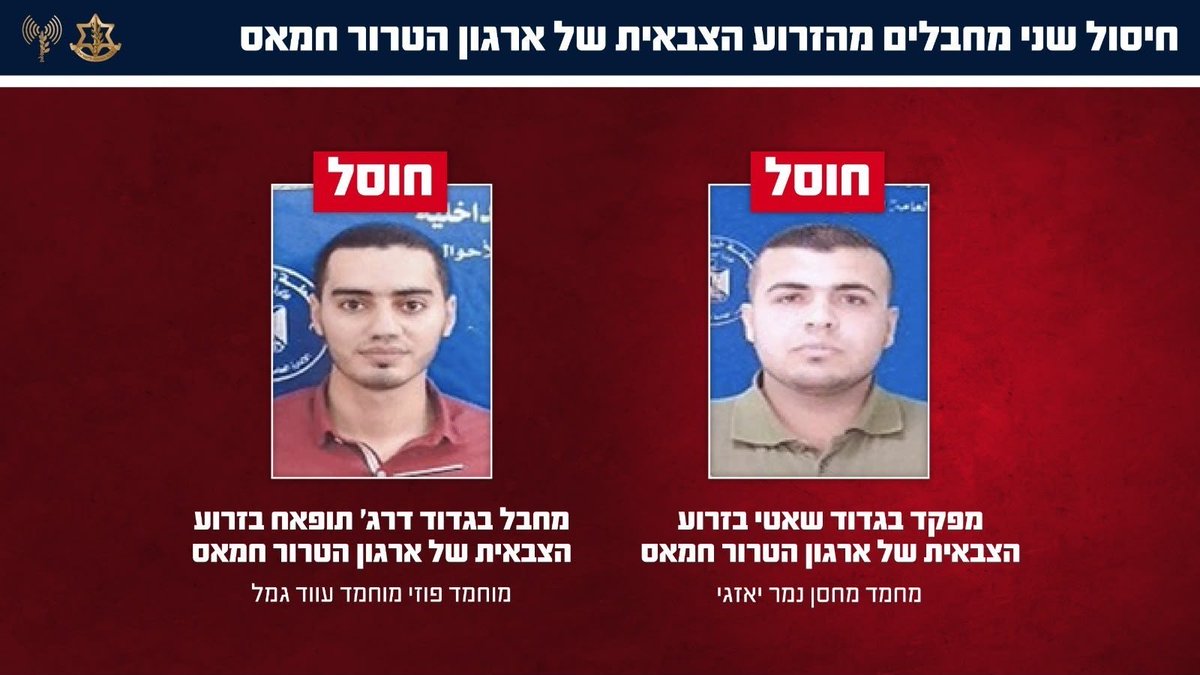
On 8 October 2026, an Israeli unmanned aerial vehicle (UAV) strike on Aydiyah Street, north of Al‑Shifa Hospital in Gaza City, killed Mohammed Al‑Yazji, a field commander of the Hamas Al‑Qassam Brigades. The precision attack, geolocated at 31.525338 N, 34.445959 E, marks the most significant kinetic event recorded for the day, reflecting a focused Israeli effort to dismantle senior militant leadership.
Drone Operations Targeting PIJ and Hamas Commanders
Within minutes of the Al‑Yazji strike, another UAV engaged the intersection of Al‑Jazaer and Al‑Quds streets in Gaza City, eliminating Ibrahim Mounir Al‑Masri, a commander of the Palestinian Islamic Jihad (PIJ) Saraya Al‑Quds Brigades anti‑tank unit. Both strikes were reported by the monitoring channel monitor_the_situation and corroborated by the @GeoConfirmed Twitter account, which posted geotagged footage of the impact sites.
"UAV strike at 16:18:32 UTC hit Al‑Jazaer/Al‑Quds intersection, confirmed kill of PIJ anti‑tank commander Ibrahim Mounir Al‑Masri," @GeoConfirmed
The use of armed drones underscores Israel’s reliance on remote‑controlled kinetic assets to achieve rapid target acquisition while minimizing exposure of ground forces.
Airstrike Eliminates Islamic Jihad Rocket Unit Leader
At 16:17:11 UTC, an Israeli airstrike on a rooftop near the Palestine Stadium in the Rimal district of Gaza City killed Ahmed Mahmoud Al‑Ramlawi, a commander of the PIJ Saraya Al‑Quds Shejaiya Battalion rocket unit. The strike, reported by the same monitoring channel, did not involve a specific weapon designation beyond the aircraft‑delivered ordnance, but the outcome was the removal of a senior rocket‑launch coordinator.
"Airstrike on Rimal rooftop kills PIJ rocket unit commander Ahmed Mahmoud Al‑Ramlawi," monitor_the_situation
These sequential strikes demonstrate a pattern of targeting high‑value individuals across multiple militant factions within a narrow time window.
Simultaneous IDF Operations in Gaza City and Sabra
At 16:11:27 UTC, Israeli Defense Forces (IDF) conducted coordinated strikes in Gaza City and the Sabra refugee camp, resulting in the deaths of two Hamas battalion commanders, one of whom was identified as a hostage‑holder. Photographic evidence accompanying the report was disseminated via the monitor_the_situation channel, confirming the locations of the impacts.
"IDF strikes in Gaza City and Sabra eliminate two Hamas battalion commanders, including a known hostage‑holder," monitor_the_situation
The operation illustrates Israel’s broader strategy of degrading command structures that facilitate hostage retention and operational planning.
Additional Confirmed Kill of Former Hostage‑Holder
Later in the day, at 16:51:10 UTC, the Jerusalem Post reported that IDF forces killed a Hamas commander in Gaza City who had previously overseen the detention of Israeli hostages. While the exact name was not disclosed, the report aligns with the earlier IDF claim of eliminating a hostage‑holder, reinforcing the focus on individuals linked to the October 7 attacks.
"IDF kills Hamas commander who held several former Israeli hostages in Gaza City strikes," Jerusalem Post
This confirmation from a mainstream media outlet adds credibility to the series of targeted killings reported by monitoring channels.
Airstrike in Khan Yunis Targets Hamas Operative Linked to Oct 7
At 09:36:04 UTC, the Israeli army executed an airstrike in Khan Yunis, killing Ibrahim Alaa, a Hamas commander implicated in the October 7 infiltration and the subsequent kidnapping of Sergeant Shaked Dean’s remains. The operation, reported by the idkunim_il channel, did not specify the weapon system but was described as an airstrike aimed at eliminating a high‑profile operative.
"IDF strike in Khan Yunis eliminates Hamas commander Ibrahim Alaa, linked to Oct 7 infiltration and body kidnapping," idkunim_il
The geographic spread of the strikes—from central Gaza City to southern Khan Yunis—highlights the IDF’s capacity to conduct simultaneous kinetic actions across the enclave.
Operational Assessment
The concentration of UAV and airstrike activity on 8 October reflects an intensified kinetic phase in the Gaza conflict. By targeting senior commanders across Hamas, PIJ, and Islamic Jihad, Israel aims to disrupt command‑and‑control networks, degrade rocket‑launch capabilities, and weaken hostage‑holding structures. The reliance on drones for urban strikes suggests a tactical preference for precision engagement with reduced collateral risk, although civilian infrastructure near Al‑Shifa Hospital remains vulnerable.
All events were sourced from open‑source monitoring channels (monitor_the_situation, @GeoConfirmed), mainstream media (Jerusalem Post), and regional outlets (idkunim_il). The consistency of reporting across independent sources strengthens the verification of each incident.