At 06:41 GMT on 7 October 2026, Yemen’s Houthi movement launched a missile that struck the runway of Aden International Airport, disrupting an inbound flight from Cairo and prompting immediate emergency procedures. Saudi Arabian air defenses simultaneously reported the interception of a second missile over Saudi airspace near Riyadh. The dual events were confirmed by Al Jazeera, which cited official statements from both the Yemeni government and the Saudi Ministry of Defense.
"Houthis launched a missile that struck Aden airport’s runway, while Saudi forces intercepted a missile near Riyadh," Al Jazeera reported.
Missile Strike on Aden Airport
The missile impact created a crater on the western end of the runway, rendering the strip temporarily unusable for commercial and military aircraft. Yemeni authorities reported no fatalities, but several ground‑crew members sustained minor injuries from debris. The attack underscores the Houthis’ continued capability to project force against strategic transport hubs in southern Yemen, a pattern observed since the escalation of the conflict in 2015.
Saudi Interception Near Riyadh
Saudi air defense systems detected an incoming projectile traveling at high altitude toward the capital. Within minutes, Patriot and Arrow missile batteries engaged the target, achieving a successful intercept. No casualties were reported in Saudi Arabia. The interception demonstrates the Kingdom’s layered air‑defense architecture and its readiness to counter cross‑border missile threats originating from Yemen.
Ground Offensive in Habal Habashi
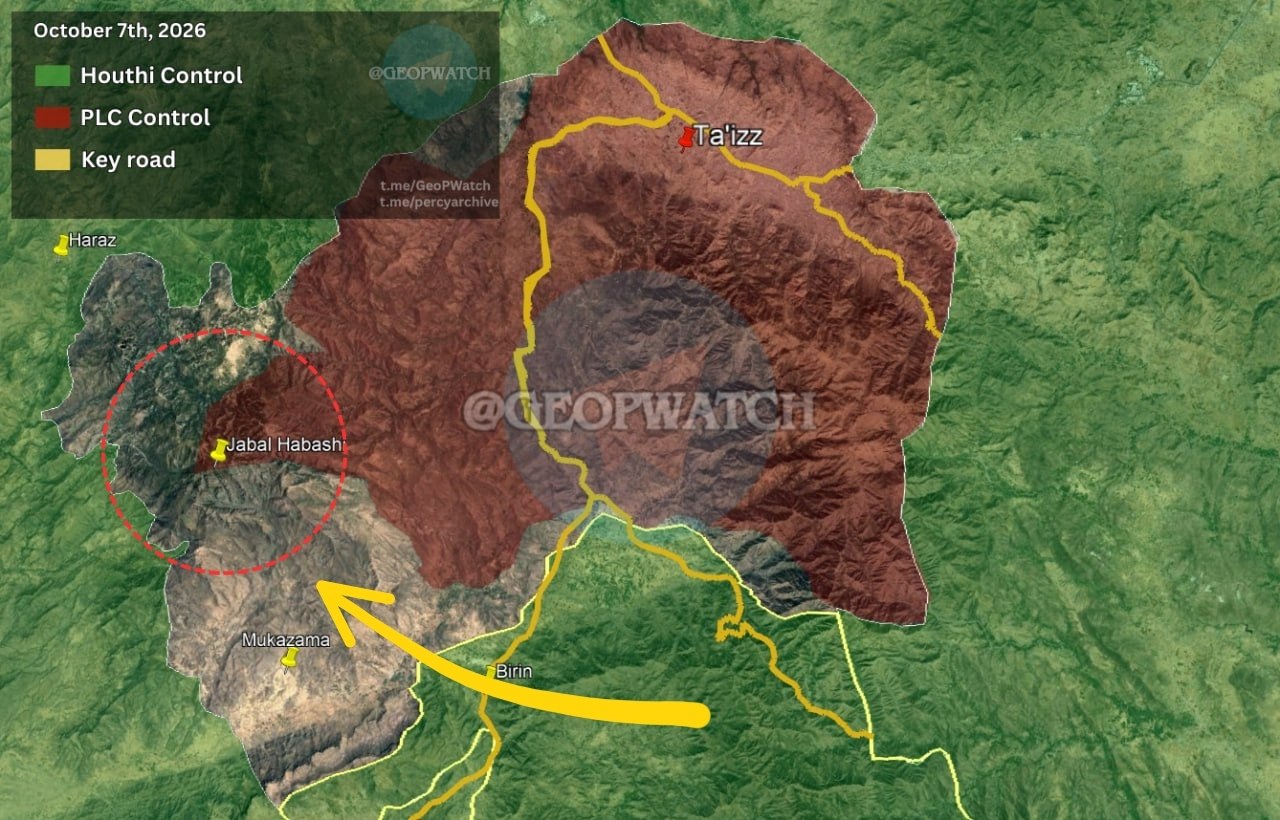
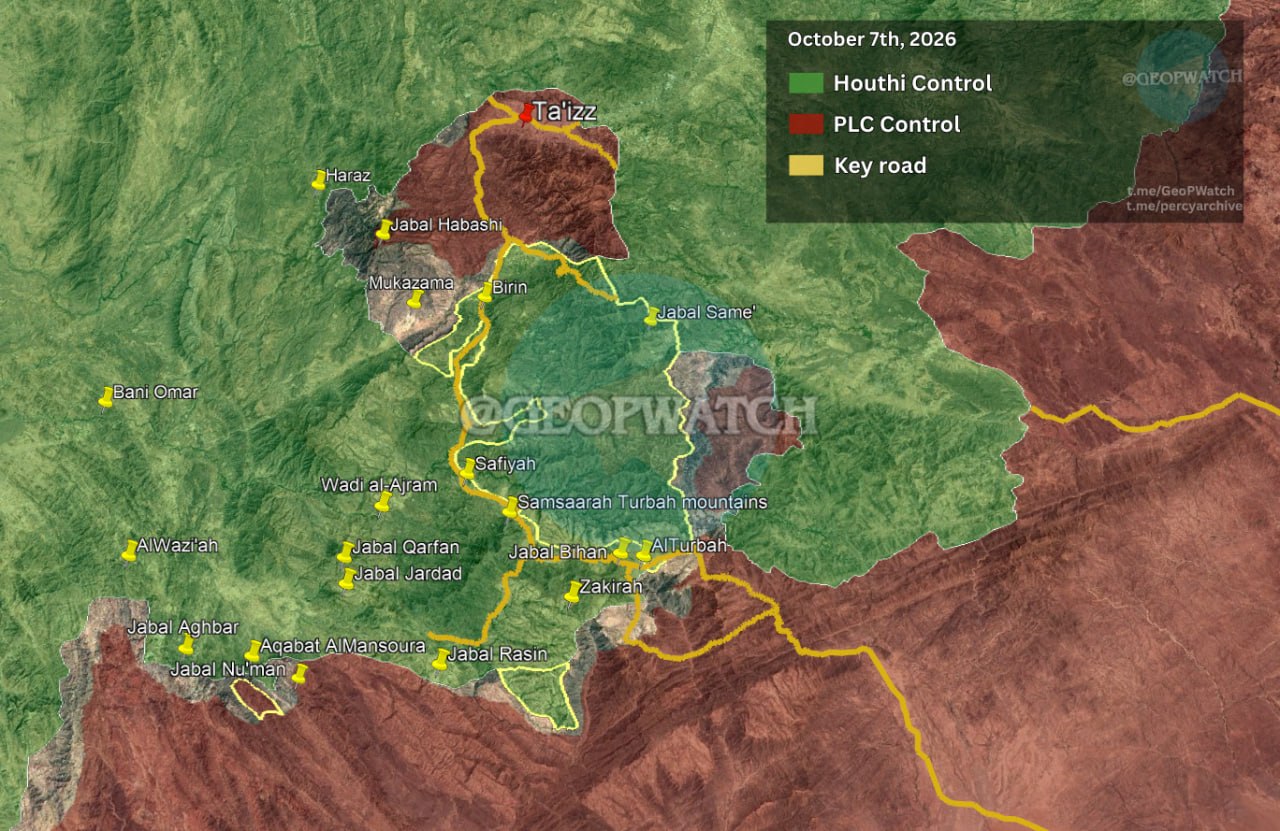
At 16:14 GMT, GeoPWatch documented a Houthi‑led offensive against the Presidential Leadership Council (PLC)‑held high ground in Habal Habashi, southwest of Taizz. The assault involved infantry units advancing on entrenched PLC positions without the reported use of heavy weapons. Photographic evidence released by GeoPWatch showed Houthi fighters establishing forward positions on the slopes, while PLC forces maintained defensive lines on the southern sector of the peak. No casualty figures were disclosed, but the shift in control of high ground could affect supply routes to nearby towns.
Encirclement of Ta'izz and Counter‑offensives
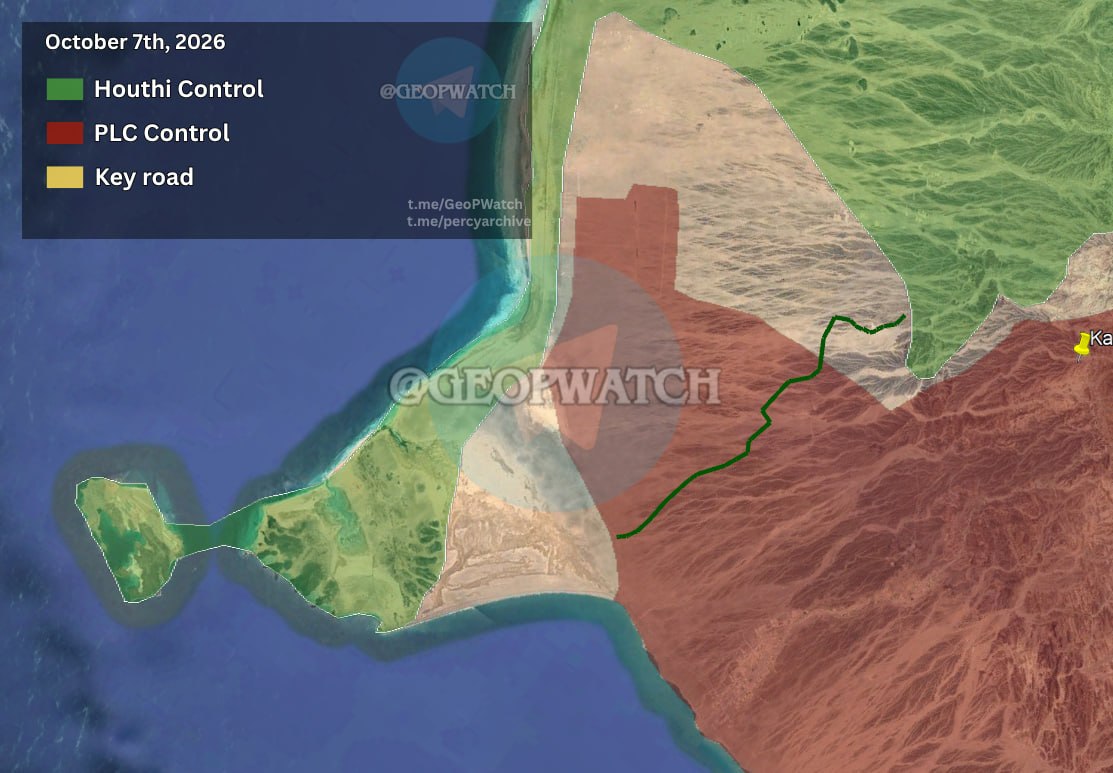
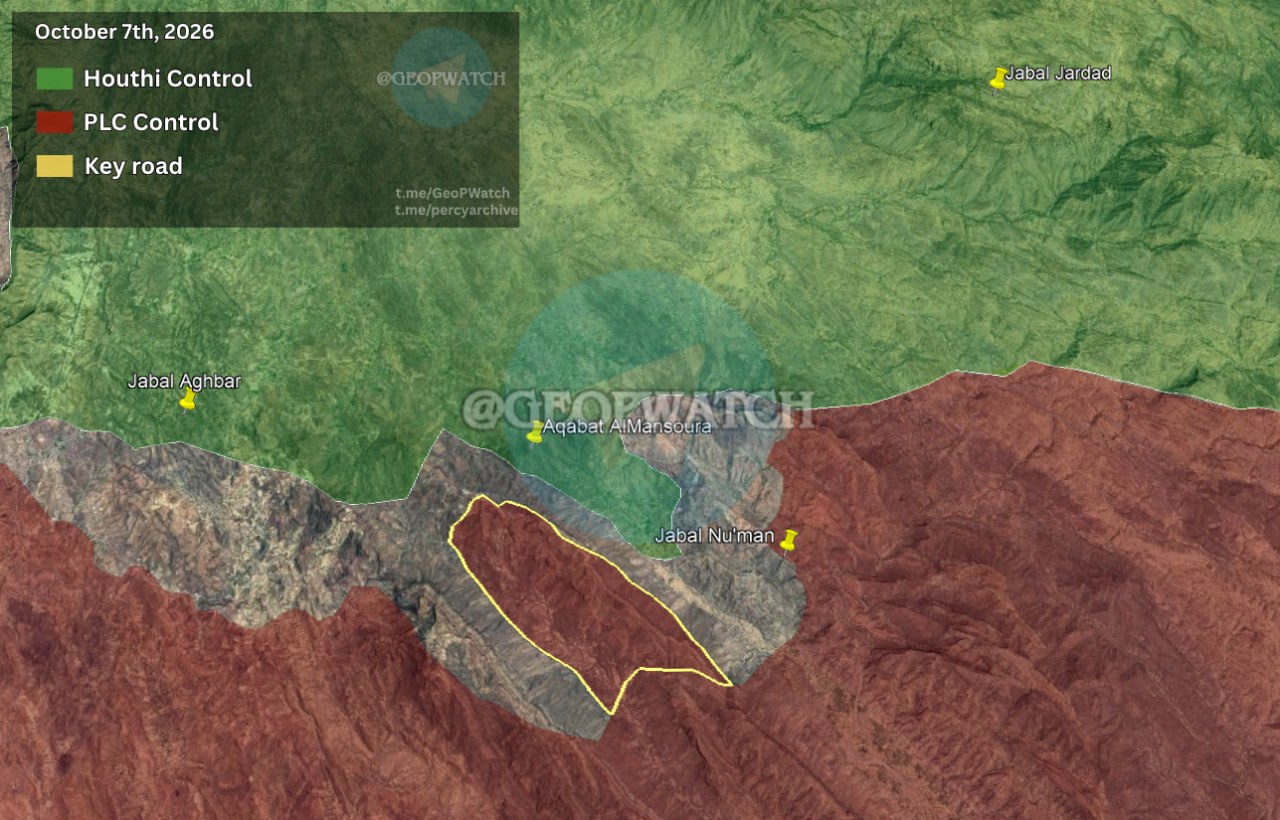
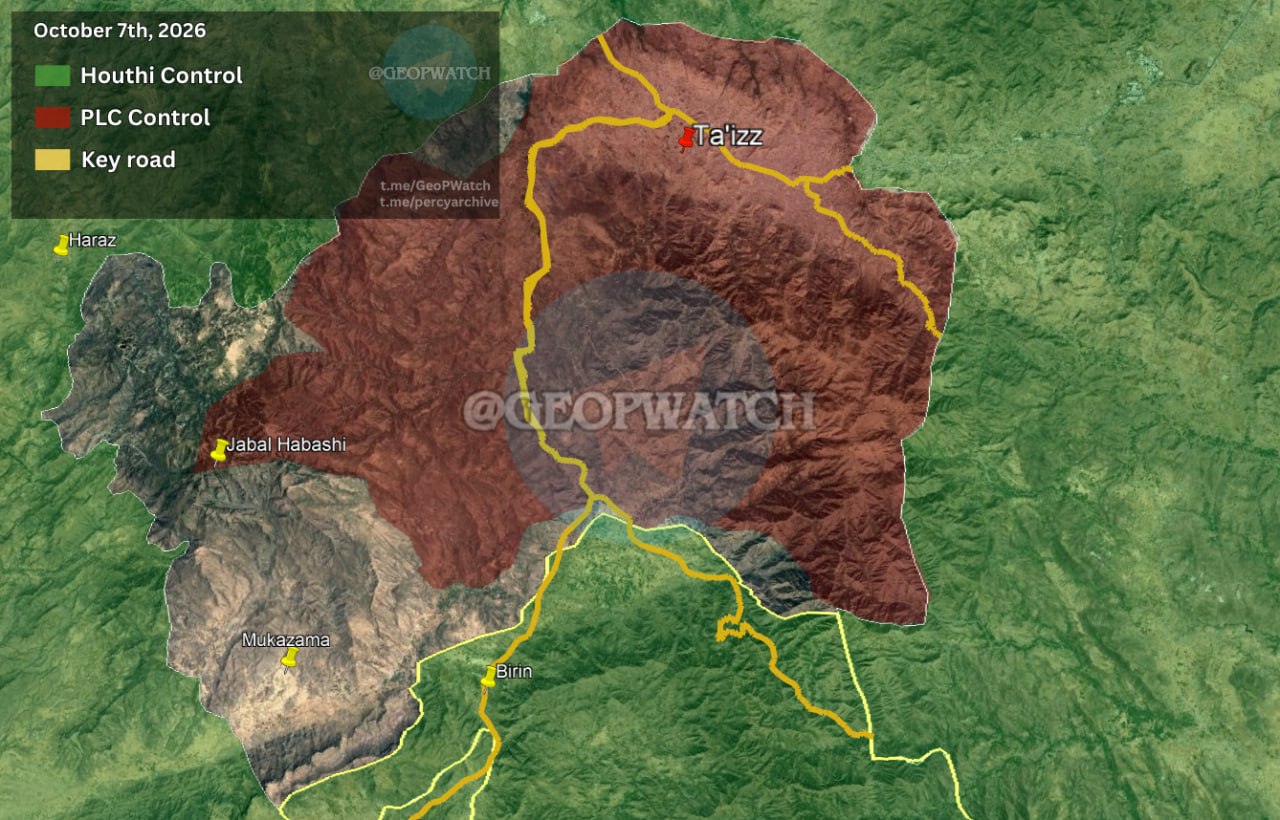
Earlier, at 15:25 GMT, GeoPWatch reported that Houthi forces had physically encircled the city of Ta'izz, creating two distinct siege pockets. Concurrently, PLC troops advanced toward the town of Mansoura and secured the heights surrounding it. In the Bab Al‑Bandeb sector, PLC forces retained control of Dhubab airport but lost the adjacent strait after a Houthi counter‑attack recaptured Mayyun. Since the previous update, the Houthis have added approximately 454 km² to their controlled territory, indicating a rapid territorial gain in the central highlands.
Red Sea Coast Recapture up to Mocha
At 11:40 GMT, Monitor the Situation relayed that Saudi‑backed Yemeni government forces launched a counter‑attack along the Red Sea coast, retaking territory up to the port city of Mocha. The operation reclaimed most coastal positions seized by the Houthis in the previous month, restoring a strategic corridor that links the Bab al‑Mandeb strait to inland supply lines. Reuters‑cited sources confirmed that Yemeni forces encountered limited resistance, and no major casualties were reported. Control of the Mocha coastline enhances the government’s ability to secure maritime traffic and to project power toward the contested Bab al‑Mandeb region.
Capture of Jabal Habashi Peak and Airstrikes
At 11:02 GMT, rnintel reported that Houthi forces captured the summit of Jabal Habashi peak, a key elevation overlooking Ta'izz. While the PLC retained a foothold on the mountain’s south‑eastern sector, the Houthis secured the majority of the ridge. The same day, Saudi airstrikes targeted the town of Qadas following its fall to Houthi control, employing precision‑guided munitions. The strikes were confirmed by satellite imagery and resulted in limited infrastructure damage; casualty numbers were not disclosed. The operation illustrates the continued use of air power by the Saudi coalition to contest Houthi advances in the highlands.
Drone Downed in Al Jawf
At 09:04 GMT, GeoPWatch reported that the Houthis claimed to have shot down a Royal Saudi Air Force CH‑4 unmanned combat aerial vehicle (UCAV) over Al Jawf Governorate in northern Yemen. The Houthi statement described the engagement as a successful anti‑aircraft action using small‑arm fire, though independent verification remains pending. No casualties were reported, and the incident highlights the vulnerability of low‑observable UAVs operating in contested airspace.
Operational Trends and Implications
The events of 7 October demonstrate a multi‑theater escalation by the Houthis, combining long‑range missile strikes, coordinated ground offensives, and anti‑aircraft actions. Simultaneously, Saudi‑backed forces continue to rely on airpower and rapid coastal counter‑attacks to regain strategic positions. The convergence of kinetic actions across southern, central, and northern Yemen suggests a deliberate effort by both sides to reshape frontlines before the onset of the winter weather season, which historically hampers mobility in the highlands. Monitoring of missile trajectories, UAV deployments, and ground troop movements will be essential for assessing the conflict’s trajectory in the coming weeks.