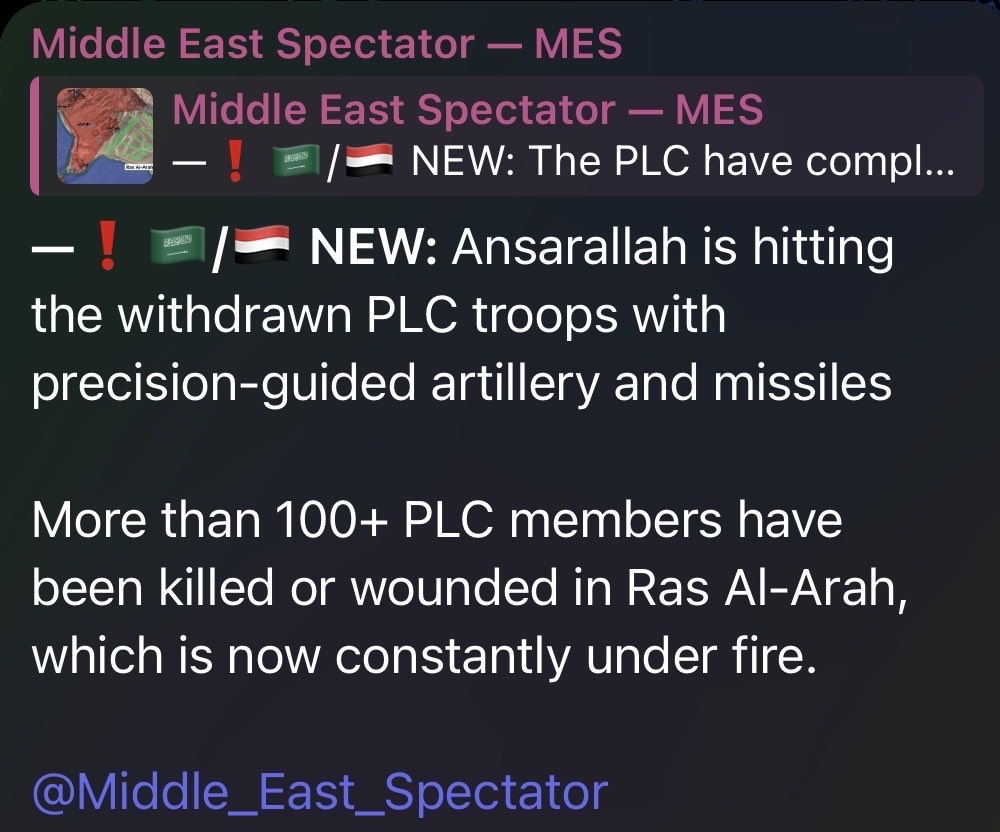
On 6 October 2026, Houthi forces launched a high‑precision rocket and artillery barrage on Popular Liberation Committee (PLC) troops stationed in Ras Al‑Arah, resulting in more than 100 casualties. The attack employed precision‑guided artillery and missiles, striking the withdrawn PLC contingent that had been holding the strategic port town. According to the Telegram channel monitor_the_situation, the strike left a “significant number of PLC members killed or wounded,” underscoring the heightened lethality of Houthi firepower in the southern Red Sea corridor.
“More than 100 PLC members killed or wounded as Houthi forces hit them with precision‑guided artillery and missiles in Ras Al‑Arah, which remains under constant fire.” – monitor_the_situation, https://t.me/monitor_the_situation/35009
The Ras Al‑Arah strike marks the most severe kinetic event recorded in Yemen on the date, reflecting a broader escalation pattern that includes simultaneous operations by multiple actors. The use of precision‑guided munitions indicates an advanced logistical capability within the Houthi arsenal, likely supplied through regional networks. The high casualty figure also raises concerns about the vulnerability of PLC forces, which have been operating in a fluid security environment along the Bab el‑Mandeb strait.
Saudi‑Led Coalition Expands Air Campaign
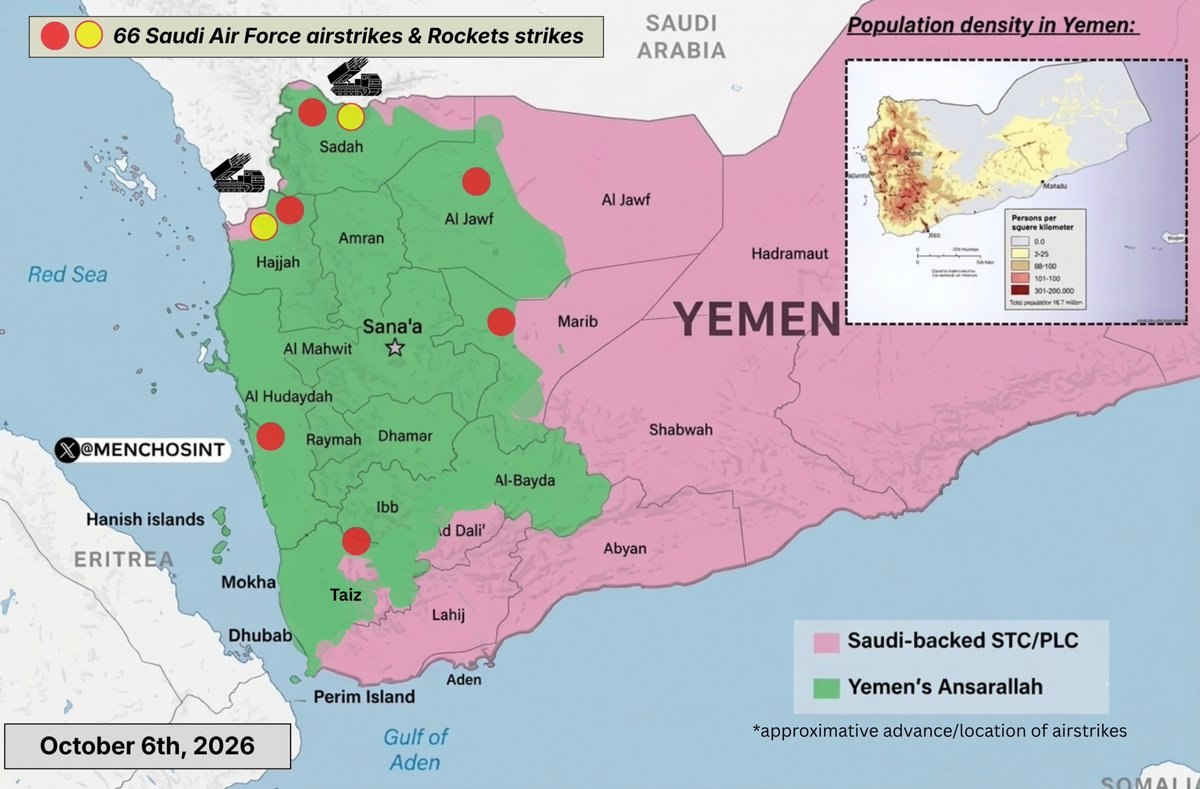
In a coordinated response, the Saudi‑led coalition executed 66 airstrikes and rocket attacks across six Yemeni provinces—Al‑Jawf, Taiz, Marib, Hodeidah, Hajjah, and Saada—while deliberately sparing the capital Sana’a. The operation, reported by monitor_the_situation, involved a mix of fixed‑wing aircraft and helicopter‑borne rockets, targeting PLC positions, Houthi command posts, and logistics hubs. The coalition’s air campaign aimed to degrade Houthi offensive momentum and protect key supply routes, particularly those feeding the northern highlands and the western coastal corridor.
🟠 **Saudi Arabia Launches 66 Strikes Across Yemen** – monitor_the_situation, https://t.me/monitor_the_situation/35075
While the coalition’s strikes were extensive, the absence of attacks on Sana’a suggests a calibrated approach to avoid civilian escalation in the capital. Nonetheless, the sheer volume of munitions deployed—estimated at over 200 rockets and missiles—has likely contributed to a rise in civilian displacement in the affected provinces, although precise figures remain unverified.
Ansarullah’s Ballistic Missile Deployments
Parallel to the coalition’s air offensive, the Ansarullah movement released footage confirming the launch of ballistic missiles against PLC forces in Ras Al‑Arah. The Telegram channel GeoPWatch posted video evidence of the missiles striking PLC positions, reinforcing the narrative of a multi‑front kinetic escalation. The ballistic missiles, identified as short‑range, were reportedly fired from positions south of the town, achieving direct hits on armored vehicles and command elements.
Ansarullah published footage of the use of Ballistic Missiles targeting PLC forces in ‘Ras AlArah’ of southern Yemen yesterday. – GeoPWatch, https://t.me/GeoPWatch/40461
These missile strikes complement the earlier artillery barrage, creating a layered threat environment for PLC units operating in the area. The coordination between Houthi ground forces and Ansarullah missile units suggests a degree of operational integration that could complicate coalition counter‑measures.
Ground Battles Shift Toward Al‑Wazi’iyah and Southern Taiz
On the same day, the CIG_telegram channel reported that Ansarallah repelled a PLC offensive southwest of Al‑Wazi’iyah, destroying multiple armored vehicles and inflicting dozens of casualties. The statement also claimed that PLC reinforcements moving toward the sector were intercepted by ballistic missiles, further degrading the PLC’s operational capacity in the Bab el‑Mandeb front.
Ansarallah has released a statement on the PLC's recent attempted offensive against the Bab el-Mandeb front, announcing that the PLC offensive “southwest of Al‑Wazi'iyah” was repelled. – CIG_telegram, https://t.me/CIG_telegram/85118
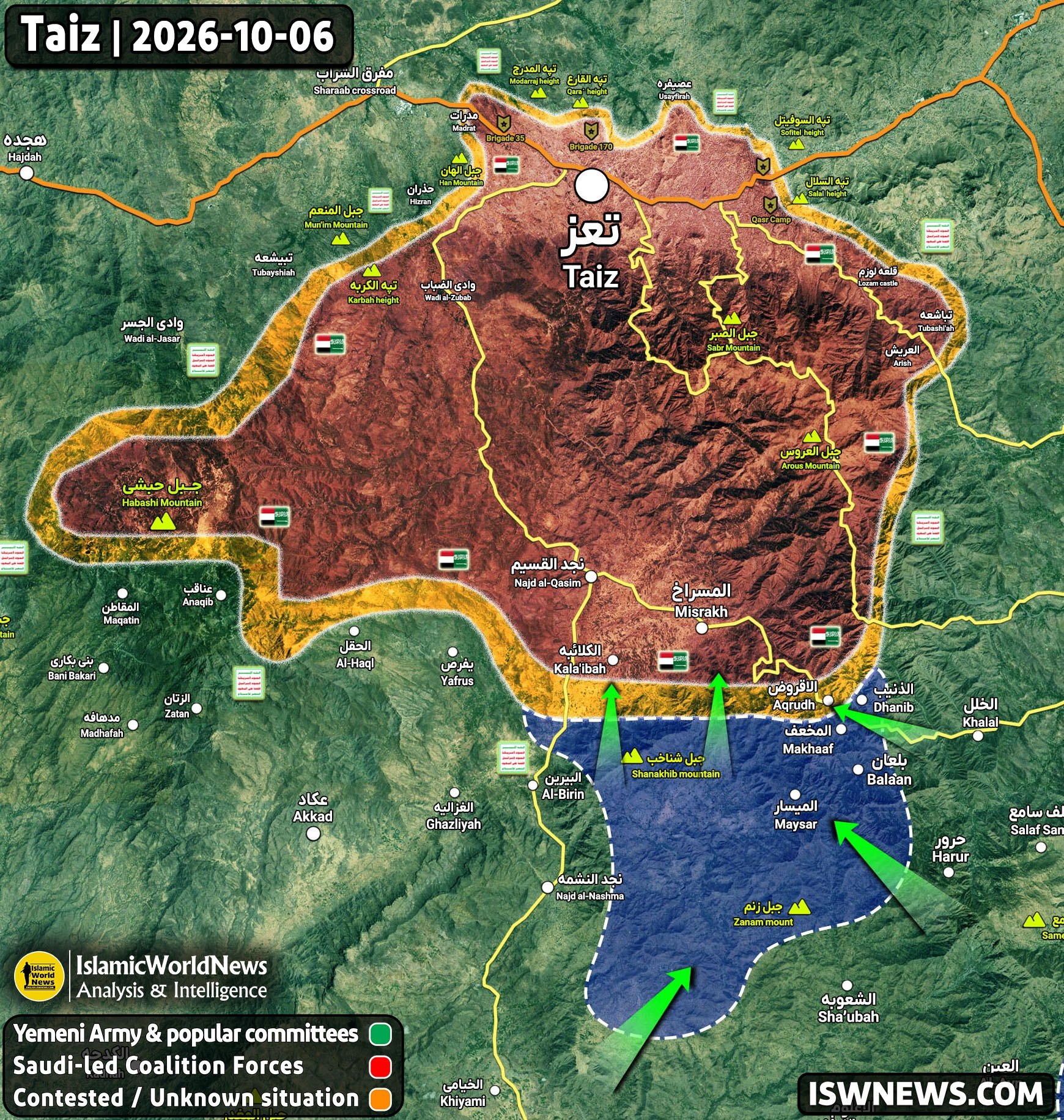
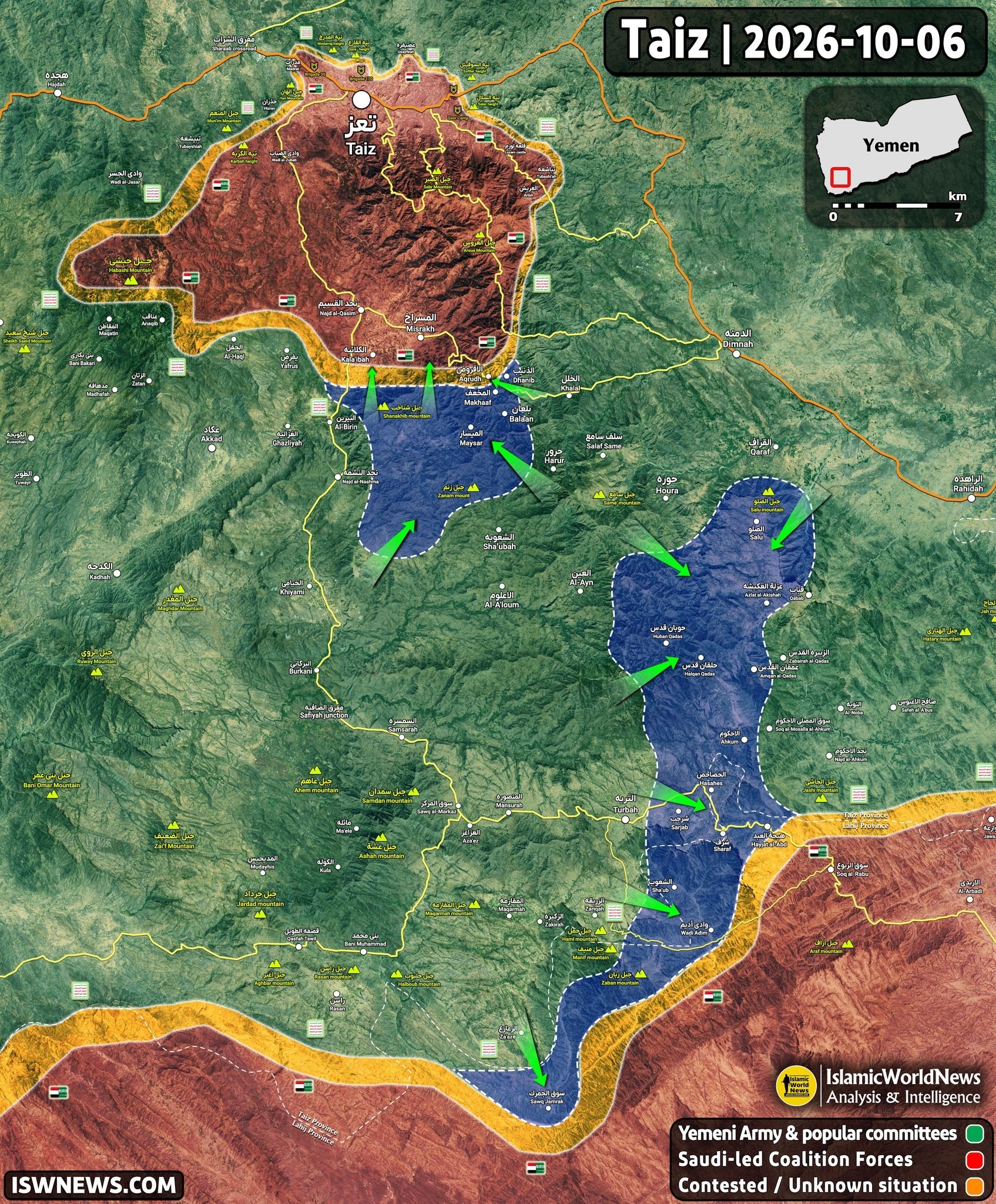
In the southern theater, Yemeni army and Ansarallah forces advanced deep into Taiz province, capturing several districts—including Al‑Salu, Al‑Mawasit, Same’, and Al‑Ma’afir—and pushing toward Lahij province. The operation, described as a “clearing” of southern Taiz, involved intense close‑quarter combat but did not report the use of heavy weaponry, indicating a reliance on infantry maneuvers and limited artillery support.
Ansarallah advances in southern Taiz; Al‑Salu, Al‑Mawasit, Same', and Al‑Ma'afir districts captured. – CIG_telegram, https://t.me/CIG_telegram/85116
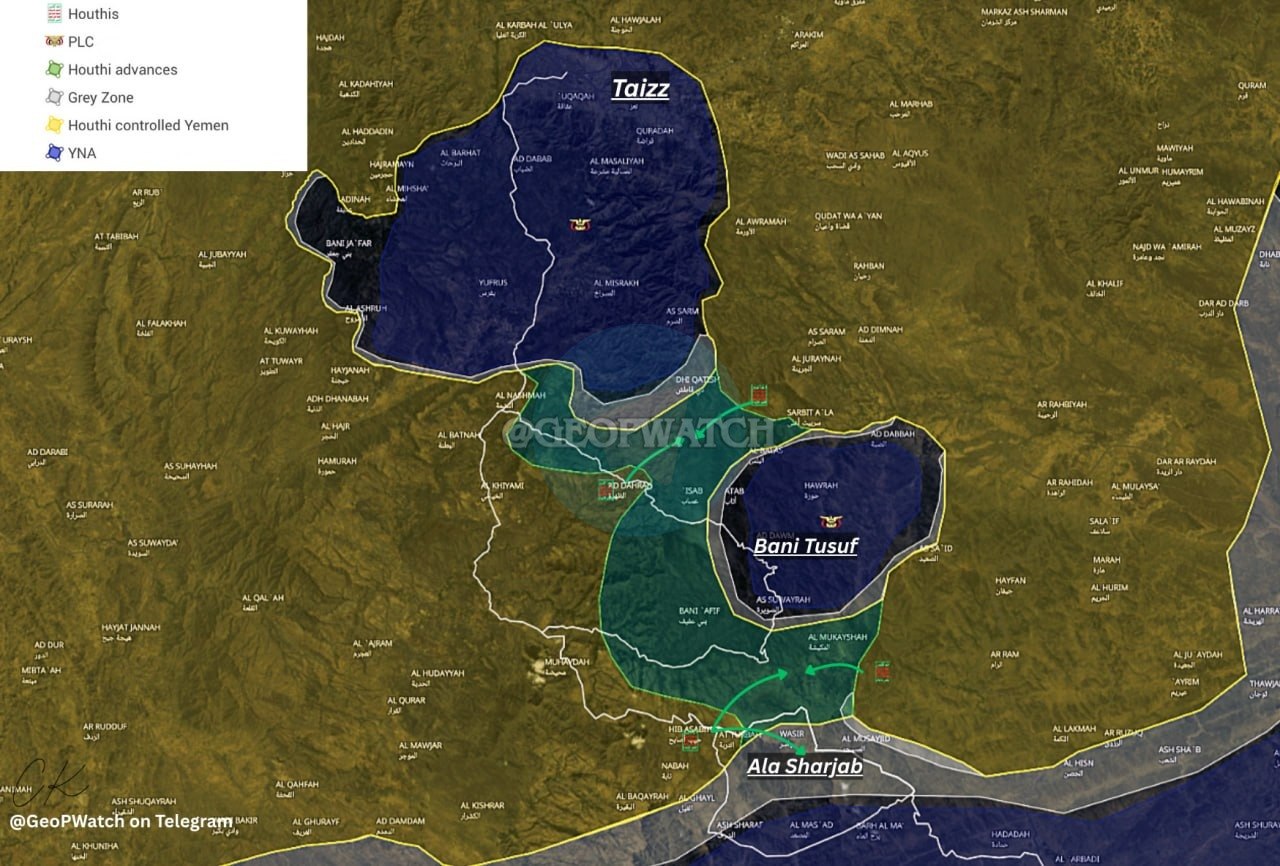
Earlier that morning, Ansarullah announced the complete encirclement of Taizz city and PLC formations near Bani Tusuf, positioning its forces for a potential southward thrust toward Aden. The encirclement, achieved without reported air support, underscores the effectiveness of ground maneuver tactics employed by the Houthi‑aligned factions.
Ansarullah has fully encircled Taizz and surrounding PLC forces near Bani Tusuf, setting the stage for a southward advance toward Aden. – CIG_telegram, https://t.me/CIG_telegram/85105
Government Gains on the Western Coast
Amid the intense kinetic activity elsewhere, Yemen’s internationally recognised government reported the recapture of territory along the western coast from Houthi control. While details on the scale of the territorial gain remain limited, the announcement, sourced from Al Jazeera, signals a modest but notable shift in the coastal front, potentially opening new supply lines for government forces.
Yemen's internationally recognised government recaptures territory from the Houthis on the country's western coast. – AlJazeera, https://www.aljazeera.com/news/2026/10/6/yemen-war-whats-the-latest-on-the-battlefield?traffic_source=rss
Overall, the events of 6 October 2026 illustrate a day of intensified kinetic engagements across Yemen, with high‑intensity artillery, missile, and air operations converging on multiple fronts. The coordination between Houthi and Ansarullah forces, combined with the coalition’s expansive air campaign, suggests a trajectory toward further escalation unless diplomatic channels intervene.