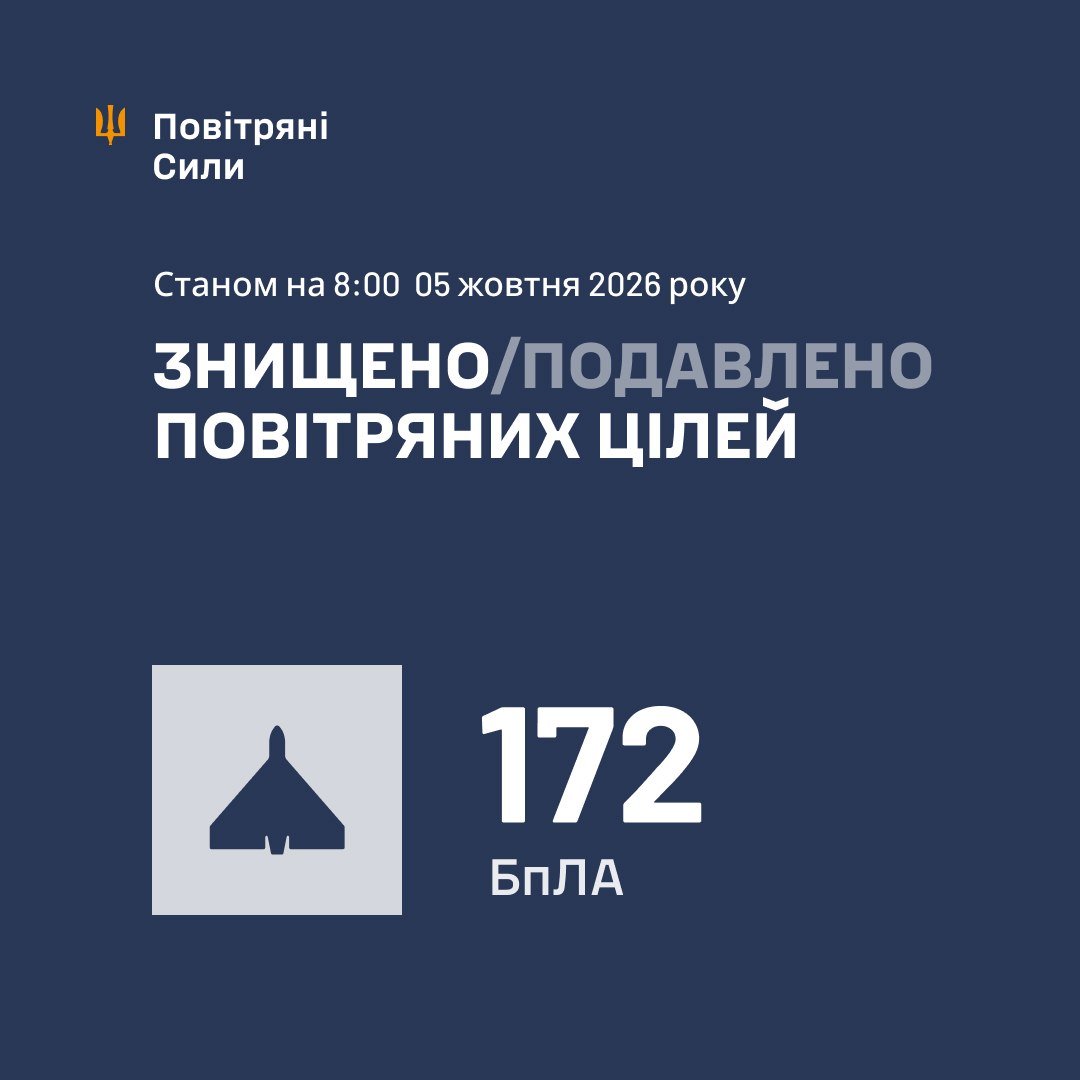
On 5 October 2026, a coordinated Russian aerial offensive marked one of the largest drone deployments of the year, with 205 unmanned aerial vehicles (UAVs) launched against Ukrainian targets. Ukrainian air defenses reported shooting down 172 drones and striking 13 impact sites, leaving roughly ten UAVs airborne into the early morning. The operation, detailed by monitor_the_situation, underscores a heightened reliance on swarming drone tactics in the Russia‑Ukraine conflict and raises concerns about air‑space saturation across the broader region.
Scale and Composition of the Russian Drone Swarm
The swarm comprised a mixture of Shahed loitering munitions and generic UAVs, reflecting Russia’s expanding inventory of inexpensive, expendable strike platforms. According to the report, 49 of the drones were identified as Shahed models, a type previously supplied by Iran and widely used in the conflict. Ukrainian Air Force statements indicated that the majority of the downed UAVs were intercepted by surface‑to‑air missile systems and short‑range anti‑aircraft artillery, while the remaining operational drones failed to reach high‑value targets.
"Ukrainian air defenses suppressed 172 UAVs; impacts at 13 locations, with ~10 still airborne by morning," the source noted.
The sheer volume of aircraft strained Ukraine’s integrated air‑defence network, prompting the activation of reserve missile batteries and the redeployment of mobile units to protect critical infrastructure in the east and south of the country.
Ukrainian Counter‑Measures and Casualties
Ukrainian officials did not disclose casualty figures directly linked to the drone barrage, but the rapid engagement of multiple air‑defence assets suggests a concerted effort to prevent civilian and military losses. The successful interception of the majority of the swarm demonstrates the resilience of Ukraine’s layered defence architecture, which now incorporates both legacy Soviet‑era systems and newer Western‑supplied platforms.
Parallel Aerial Incidents Across the Region
While Ukraine grappled with the Russian swarm, several other kinetic events involving UAVs and aircraft unfolded elsewhere, highlighting a broader trend of aerial weaponisation.
Russian Lancet Loitering Munition Caught in Ukrainian Anti‑Drone Corridor
At 17:50 UTC, a Russian Lancet loitering munition was intercepted within Ukraine’s designated anti‑drone corridor, as reported by intelslava. Video evidence shows the Lancet becoming immobilised by electronic counter‑measures, preventing it from reaching its intended target. No casualties were reported, but the incident illustrates Ukraine’s expanding electronic warfare capabilities.
"Lancet, stuck in the Ukrainian anti‑drone corridor," the source caption read.
Ukrainian UAV Downed Over Moscow
Earlier in the day, a Russian mobile air‑defence unit engaged a Ukrainian An‑196 Lyutyi long‑range strike UAV over Moscow, shooting it down with an Igla‑S MANPADS before it could strike an oil refinery. The footage, shared by intelslava, confirms the presence of Ukrainian long‑range UAVs operating deep within Russian airspace, a development that raises strategic implications for both sides.
"Footage shows a Russian mobile air defense unit engaging and shooting down a Ukrainian An‑196 Lyutyi long‑range strike UAV with an Igla‑S MANPADS, moments before it reached an oil refinery in Moscow," the source reported.
Russian 50th Separate Unmanned Systems Brigade Intercepts Ukrainian Drones
At 12:20 UTC, the 50th Separate Unmanned Systems Brigade “Varyag” shot down additional Ukrainian drones over Russian territory, as documented by intelslava. The engagement underscores the reciprocal nature of UAV operations across the front lines.
Polish Border Alert Following Russian Drone Attack on Ukraine
Following the large‑scale Russian drone attack on Ukraine, Poland issued a regional civil‑defence alert for Lublin Voivodeship, warning of potential debris fallout near the border. The alert, issued by Poland’s Regional Crisis Board (RCB), reflects concerns about cross‑border hazards stemming from high‑altitude UAV debris, as reported by monitor_the_situation.
"Poland Alerts Lublin as Russian Drones Strike Ukraine. Poland's RCB alert for Lublin Voivodeship follows a large‑scale Russian drone attack on Ukraine, with debris risk near the border prompting precautionary measures," the source noted.
Escalation in Yemen: Houthi Drone Strike and Coalition Air Campaign
In the Middle East, a Houthi‑operated drone struck a foreign military advisor in Yemen, reportedly a Pakistani national, according to GeoPWatch. The incident, occurring at 16:52 UTC, highlights the continued use of UAVs by the Ansarullah movement against foreign personnel.
"According to Yemeni Sources to Tasnim News, a Houthi Drone strike killed a Foreign Military Advisor deployed to Yemen. It is unclear the nationality of the advisor however reports indicate that the advisor was Pakistani," the source stated.
Simultaneously, the Saudi‑led coalition intensified its aerial campaign against Houthi positions. The coalition claimed that 100 fighter jets destroyed 324 high‑value targets, providing continuous air support to Yemeni government forces. The operation, reported by monitor_the_situation, involved a coordinated three‑pronged ground assault backed by the same air assets, as detailed by the JPost.
"Saudi‑led coalition reports that 100 fighter jets have destroyed 324 high‑value Houthi targets in Yemen, delivering continuous air support to Yemeni forces," the source noted.
Ground Operations and Armoured Engagements in Yemen
On the same day, the Saudi‑backed Giants Brigade engaged Ansarullah troops with armoured vehicles, a clash captured on video by GeoPWatch. The footage shows the brigade’s AVs delivering direct fire against Houthi positions, underscoring the multi‑domain nature of the Yemeni conflict.
Later, the Yemeni Armed Forces released footage of airstrikes targeting Houthi pickup trucks and personnel as part of Operation “Dawn of Yemen,” further illustrating the coalition’s reliance on combined‑arms tactics.
Non‑Combat Incident: Alleged Flydubai Hijack Attempt
Outside the primary kinetic theatres, an alleged hijack attempt on an Israel‑bound Flydubai flight was thwarted by passengers and crew. The co‑pilot, identified as Hammam al‑Hammami, had previously studied in Melbourne, Australia. The incident, reported by monitor_the_situation, did not involve weapons but highlights security vulnerabilities in civil aviation linked to broader geopolitical tensions.
"Passengers and crew prevented an alleged hijack attempt on an Israel‑bound Flydubai flight, involving a co‑pilot who previously studied in Melbourne," the source reported.
Implications and Outlook
The convergence of large‑scale UAV deployments, conventional air strikes, and ground engagements across multiple theatres on 5 October 2026 signals an intensifying reliance on aerial firepower as a decisive factor in modern conflicts. Ukraine’s ability to down the majority of a 205‑drone swarm demonstrates both the effectiveness and the limits of current air‑defence systems when faced with saturation attacks. In Yemen, the coordinated use of drones, fighter jets, and armoured units by opposing forces reflects a hybrid warfare environment where kinetic and non‑kinetic tools intersect.
Continued monitoring of UAV proliferation, electronic counter‑measure development, and cross‑border air‑space safety will be essential for assessing future escalation pathways in both the Eastern European and Middle Eastern theatres.