On 2 October 2026, the most consequential kinetic event in Yemen was a coordinated series of airstrikes carried out by the Saudi‑led coalition across six governorates, resulting in civilian casualties and a marked escalation of aerial warfare. The attacks, documented by the open‑source channel intelslava, involved F‑15 and Typhoon fighter jets launching from Khamis Mushait and Taif, as well as missile launches from Najran and Jizan. Over a 24‑hour period, coalition aircraft executed 94 sorties, targeting populated areas in Sana'a, Sa'ada, Taiz, Hajjah, Amran and Ibb.
Coalition Air Campaign: Scope and Impact
Weapons employed included precision‑guided missiles and conventional bombs delivered from F‑15 and Eurofighter Typhoon platforms. The intensity of the campaign—94 strikes in a single day—represents the highest sortie count recorded for the conflict in 2026. While exact casualty figures remain unverified, intelslava reported civilian deaths and injuries, underscoring the humanitarian toll of targeting densely populated districts.
"Over the past 24 hours, Saudi warplanes conducted 94 air raids and missile strikes targeting civilian areas in the governorates of Sana'a, Sa'ada, Taiz, Hajjah, Amran, and Ibb, resulting in civilian casualties." – intelslava, 17:16 UTC, https://t.me/intelslava/95597
The coalition’s choice of launch sites—Khamis Mushait and Taif for aircraft, Najran and Jizan for missiles—highlights the logistical depth of Saudi air power and its capacity to sustain high‑tempo operations from multiple bases. Analysts note that the simultaneous use of both fighter jets and ground‑based missile systems suggests a deliberate strategy to overwhelm local air‑defence capabilities and to impose psychological pressure on civilian populations.
Yemeni Government Air Operations in Taiz
Earlier that day, at 12:33 UTC, Yemeni government forces conducted airstrikes against Houthi positions in Taiz Governorate, as reported by OSINTdefender. Although the source did not specify the weapon systems used, the operation forms part of a broader government offensive aimed at reclaiming territory lost to the Houthis since 2024. The strikes were accompanied by a video release, indicating an intent to publicise the government’s operational reach.
#Yemen Yemeni government forces have been conducting airstrikes targeting Houthi positions in Taiz Governorate as part of their efforts to retake control of areas lost to the Houthis. – OSINTdefender, 12:33 UTC, https://t.me/OSINTdefender/20390
While casualty data for this specific sortie is unavailable, the timing of the government strikes—preceding the coalition’s massive campaign—suggests a possible coordination or at least a parallel escalation of kinetic activity in the same theater.
Ansarullah Ground Movement Near Ta’izz
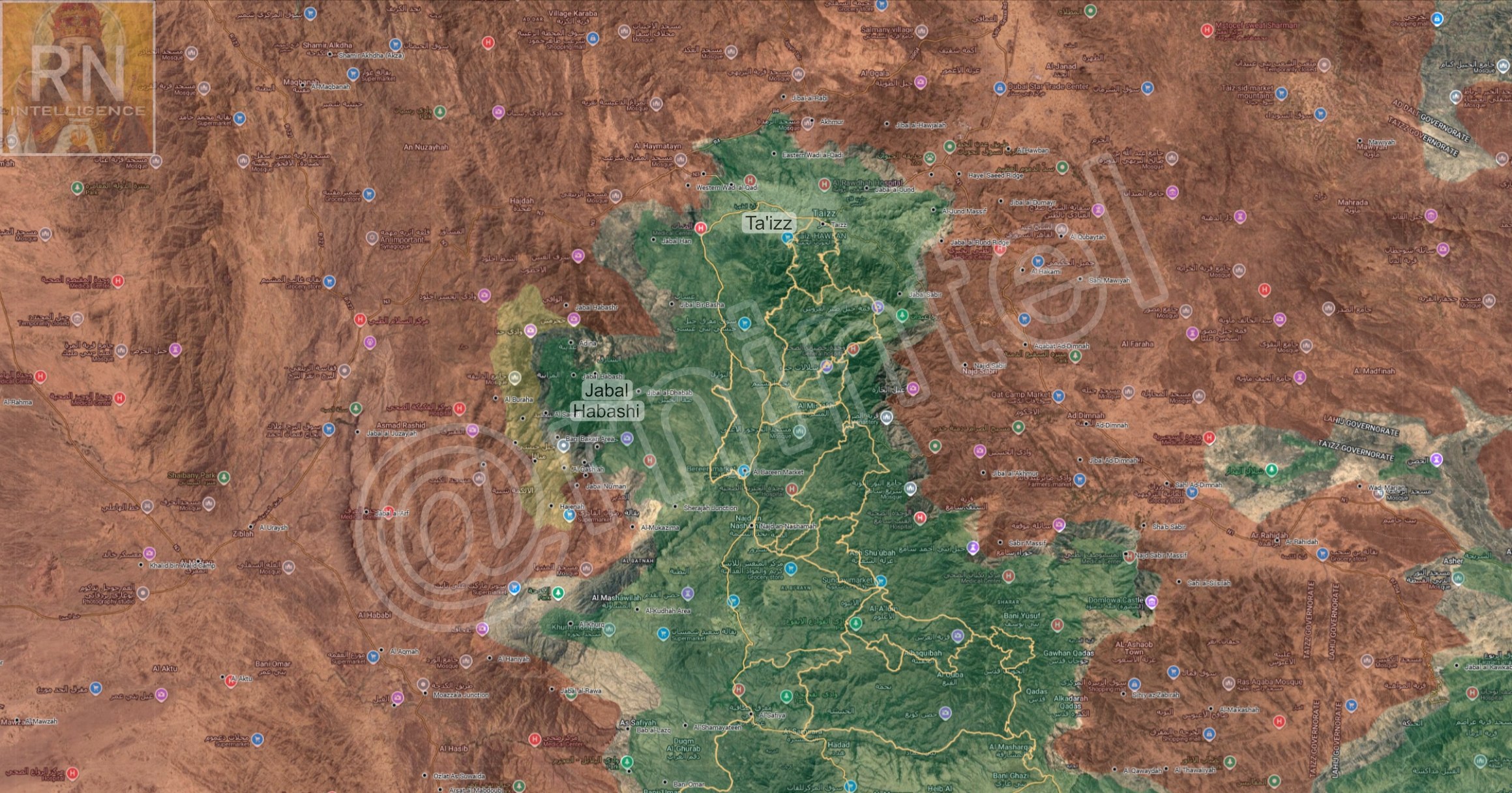
At 10:22 UTC, the militant group Ansarullah advanced west of Jabal Habashi, moving toward the northwest of Ta’izz. The movement, captured by rnintel, involved no reported use of heavy weapons, but the shift in front‑line positioning could influence subsequent engagements, especially given the proximity to areas already under aerial pressure.
Ansarullah have advanced along the west of Jabal Habashi, northwest Ta'izz direction, southern Yemen. – rnintel, 10:22 UTC, https://t.me/rnintel/67183
Strategically, the westward push places Ansarullah forces nearer to supply routes that have historically been contested by both government and coalition forces. Their presence may complicate air‑targeting decisions for both sides, as distinguishing combatants from civilians becomes increasingly difficult in densely populated zones.
Yemen Warplane Strikes on Houthi Targets
Between 04:40 and 07:40 UTC, Yemen’s own air force executed 20 strikes on Houthi targets in Taiz Province, according to monitor_the_situation. The operation, described as a three‑hour effort, focused on Houthi movements, personnel, vehicles and equipment. No specific aircraft type was disclosed, but the volume of sorties indicates a sustained offensive capability despite the nation’s limited air‑fleet.
Military spokesperson says 20 strikes in past three hours hit Houthi movements, personnel, vehicles and equipment in Taiz province. – monitor_the_situation, 07:40 UTC, https://t.me/monitor_the_situation/34185
This indigenous air campaign, while smaller in scale than the coalition’s 94‑strike sortie, demonstrates the Yemeni government’s reliance on air power to complement ground operations. The concentration of strikes in Taiz—a governorate already experiencing coalition bombardment—raises the risk of overlapping target zones and potential fratricide.
Analytical Overview
The events of 2 October illustrate a multi‑layered escalation in Yemen’s kinetic landscape. The Saudi‑led coalition’s extensive air campaign represents the most significant escalation in terms of sortie count and geographic spread. Its focus on civilian‑dense areas raises acute concerns under international humanitarian law, particularly the principles of distinction and proportionality.
Concurrently, Yemeni government forces are intensifying their own aerial operations against Houthi positions, suggesting a synchronized push to reclaim contested territories. The lack of disclosed weapon systems for the government strikes limits precise assessment of their precision, but the public release of video material indicates an effort to shape the narrative of a capable, offensive force.
On the ground, Ansarullah’s westward movement near Jabal Habashi adds a new variable to the operational calculus. Their advance could serve as a buffer against coalition strikes or, conversely, expose them to heightened aerial targeting if they become entangled in the coalition’s broader campaign against Houthi‑aligned forces.
Overall, the convergence of high‑intensity air operations by multiple actors and the fluidity of ground movements underscores a heightened risk of civilian harm and a potential escalation spiral. Monitoring of subsequent casualty reports, humanitarian access, and any diplomatic responses will be essential for assessing the conflict’s trajectory in the coming weeks.