On 1 October 2026 the Israeli Air Force conducted two precision strikes in the Gaza Strip, eliminating senior Hamas operatives Muhammad Abd al‑Aziz Muhammad Najar in the south and Ammar Mahmoud Hamed Sharafi in Gaza City. Within the same hour, Palestinian authorities announced preparations to bury 105 civilians whose bodies were recovered from a residential block razed by earlier Israeli bombardments. The juxtaposition of targeted killings and large‑scale civilian burials underscores the intensifying humanitarian and security dimensions of the conflict.
Targeted Killing of Hamas Operative Muhammad Abd al‑Aziz Muhammad Najar
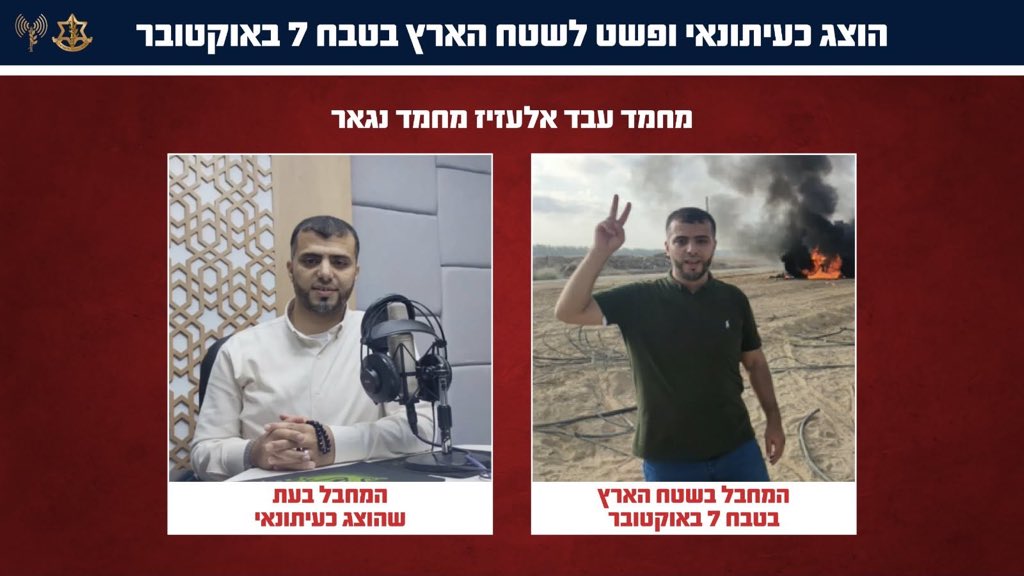
At 05:11 UTC, an Israeli Air Force strike hit a location in the southern Gaza Strip identified by monitor_the_situation as the residence of Muhammad Abd al‑Aziz Muhammad Najar. Najar, a member of Hamas’s military wing, participated in the October 7 2023 attack on Israel and later operated under the cover of a journalist. The strike employed guided munitions, though the specific weapon system was not disclosed. Israeli officials confirmed the elimination of the operative, describing it as a “necessary action to degrade Hamas’s command structure.” The operation resulted in no reported civilian casualties, according to the Israeli military spokesperson.
"The Israeli Air Force struck in the southern Gaza Strip, eliminating Muhammad Abd al‑Aziz Muhammad Najar, a Hamas military wing operative who participated in the October 7 attack and was later presented as a journalist." – monitor_the_situation, 05:11 UTC
Strategic significance lies in the removal of a figure linked to both combat operations and propaganda efforts. Analysts note that targeting individuals who blur the line between combatant and civilian roles complicates compliance assessments under international humanitarian law, while also serving Israel’s objective of disrupting Hamas’s operational planning.
Mass Burial of 105 Civilians from a Destroyed Residential Block
At 05:04 UTC, Al Jazeera reported that Gaza’s health and civil defense agencies were preparing to inter 105 Palestinians whose remains had been recovered from the rubble of a residential block destroyed by Israeli airstrikes in October 2023. The block, located in a densely populated neighbourhood of the Gaza Strip, collapsed after a series of high‑explosive bombs struck the area, killing men, women, and children. No new combatants were identified among the deceased. The burial process is being coordinated by local mosques and humanitarian NGOs, with families gathering for collective prayers and mourning.
"The bodies of 105 Palestinians have been recovered from the rubble of a residential block destroyed by Israel." – AlJazeera, 05:04 UTC
The scale of the burial highlights the enduring civilian toll of the conflict. Humanitarian organizations have repeatedly warned that repeated strikes on civilian infrastructure exacerbate displacement, trauma, and the risk of disease outbreaks. The preparation of mass graves also reflects the limited capacity of Gaza’s mortuary services, strained by years of blockade and resource scarcity.
Elimination of Hamas Platoon Commander Ammar Mahmoud Hamed Sharafi
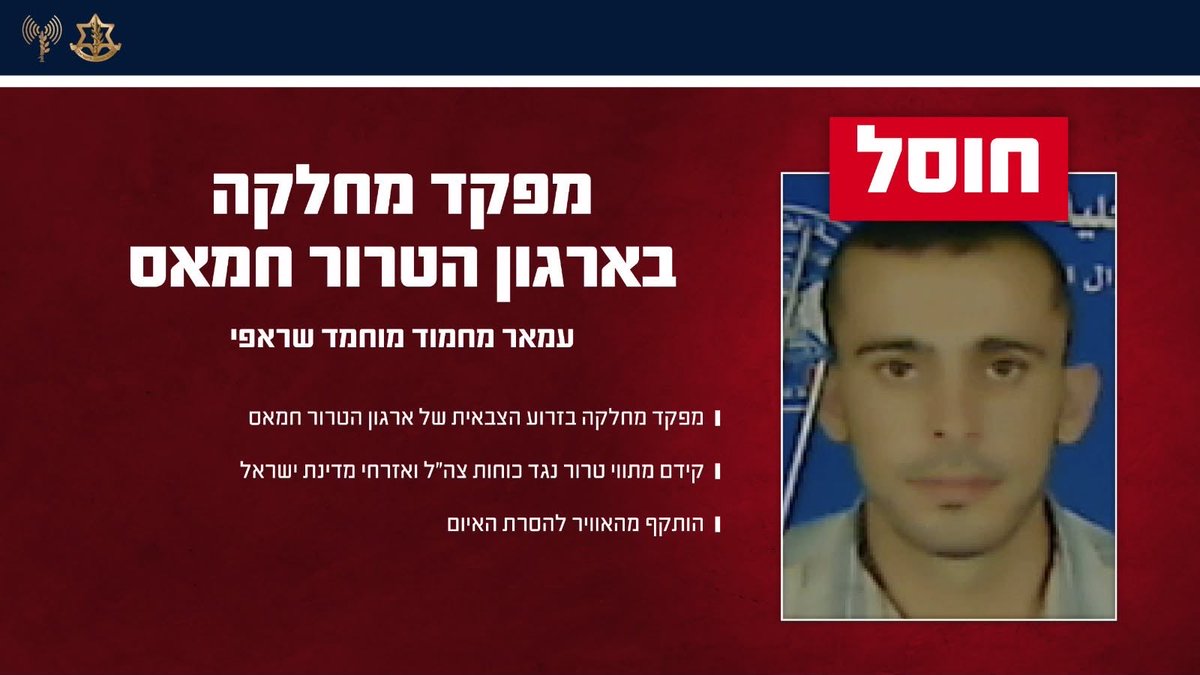
Earlier, at 04:41 UTC, the Israeli Air Force executed a strike in Gaza City that killed Ammar Mahmoud Hamed Sharafi, identified as a platoon commander within Hamas’s military wing. According to monitor_the_situation, Sharafi was involved in “advancing terror plots and rebuilding capabilities in violation of the ceasefire.” The strike was carried out with precision munitions, and the Israeli military reported no collateral damage. Sharafi’s death removes a mid‑level commander responsible for coordinating attacks on Israeli targets and for overseeing the procurement of weapons within the enclave.
"Israeli Air Force struck in Gaza City, eliminating Ammar Mahmoud Hamed Sharafi, a platoon commander in Hamas's military wing, who was reportedly advancing terror plots and rebuilding capabilities in violation of the ceasefire." – monitor_the_situation, 04:41 UTC
While the immediate tactical impact is the loss of a commander, the broader implication is a signal to Hamas’s leadership that Israeli intelligence continues to track and target individuals involved in operational planning, even within the densely populated urban environment of Gaza City.
Analytical Overview
The three events reported on 1 October illustrate a pattern of simultaneous kinetic and humanitarian developments. Israeli airpower is being applied to degrade Hamas’s command hierarchy, focusing on individuals who have both operational and propaganda roles. At the same time, the humanitarian sector is coping with the cumulative effect of past strikes, as evidenced by the preparation for mass burials. The proximity in timing of the strikes and the burial announcement suggests a coordinated information environment, where each side seeks to frame the narrative: Israel emphasizing precision targeting of militants, and Palestinian sources highlighting civilian suffering.
International observers have called for independent investigations into the legality of strikes conducted in densely populated areas, especially when civilian structures are involved. The absence of reported civilian casualties in the two targeted killings does not preclude scrutiny of the intelligence that led to the strikes, nor does it mitigate the broader humanitarian crisis reflected in the 105 civilian deaths.
In the coming days, the Gaza health ministry is expected to release updated casualty figures, while Israeli defense officials are likely to announce further operations aimed at dismantling Hamas’s logistical networks. The interplay between targeted assassinations and mass civilian losses will continue to shape diplomatic discourse, humanitarian aid allocations, and the strategic calculus of both parties.