On 26 September 2026, the Yemen‑based Houthi movement intensified its cross‑border campaign against Saudi Arabia, launching rockets at the southern city of Abha and the western city of Khamis Mushait within minutes of each other. The attacks, reported by the Telegram channel intelslava, represent the latest escalation in a pattern of long‑range strikes that have strained Saudi defensive postures.
Rocket attacks on Abha and Khamis Mushait
At 00:53:48 UTC, a Houthi‑launched rocket struck Khamis Mushait, a key logistical hub in the Asir region. The strike was documented by intelslava (source https://t.me/intelslava/95281) and described as a single rocket impact; no casualties or structural damage were confirmed in the initial reports.
Two minutes later, at 00:55:09 UTC, the Houthis targeted Abha, the capital of the Asir province, with an additional rocket attack. The event, also reported by intelslava (source https://t.me/intelslava/95282), similarly lacked confirmed injuries or material loss. Both attacks employed unguided rockets, a weapon class frequently used by the Houthis to exploit the range of their ballistic capabilities while minimizing the need for sophisticated guidance systems.
These coordinated strikes underscore the Houthis' intent to pressure Saudi urban centers beyond the immediate border zone, leveraging the psychological impact of attacks on civilian populations.
Saudi‑led coalition interceptions
In response to the heightened threat, the Saudi‑led coalition reported a series of successful interceptions. At 03:03:08 UTC, the coalition announced the downing of two Iran‑backed Houthi drones en route to Riyadh, as detailed by monitor_the_situation (source https://t.me/monitor_the_situation/33035). The statement emphasized the continued presence of Iranian support for Houthi aerial capabilities.
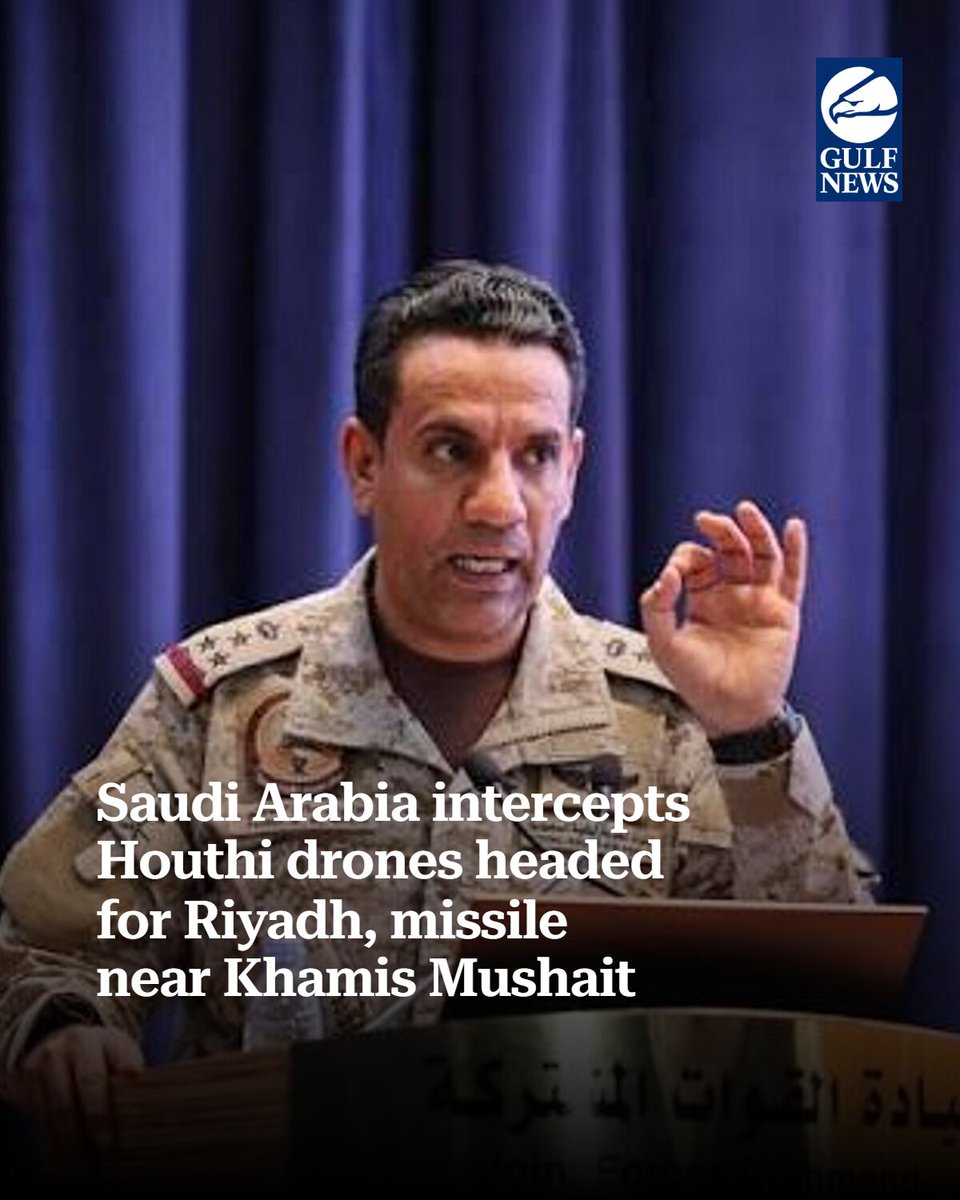
The Saudi‑led coalition intercepted two Houthi drones near Riyadh, preventing potential damage to critical infrastructure.
Later, at 05:06:11 UTC, JPost reported that Saudi forces intercepted additional missiles and drones aimed at both Khamis Mushait and Riyadh (source https://www.jpost.com/middle-east/article-909759). The coalition credited its integrated air‑defence network, which includes Patriot and Saudi‑manufactured systems, for neutralising the threats before they could reach populated areas.
The interceptions involved a mix of missile types and unmanned aerial vehicles (UAVs), reflecting the Houthis' diversified strike portfolio. The coalition’s ability to engage multiple threats simultaneously demonstrates a maturing defensive posture, though the persistence of attacks indicates that the threat environment remains fluid.
Explosion reports in Riyadh
At 00:03:52 UTC, GeoPWatch posted an unverified report of explosions in Riyadh (source https://t.me/GeoPWatch/40195). The brief lacked details on the cause, casualties, or damage, and no corroborating evidence has emerged. While the report cannot be conclusively linked to Houthi activity, it adds to the atmosphere of uncertainty surrounding the capital’s security on the day in question.
Saudi airstrike in Yemen
Separately, Saudi Air Force aircraft conducted a precision strike on a bridge in the Mudhaykhirah district of Ibb Governorate, Yemen, at 05:14:19 UTC. The operation, reported by intelslava (source https://t.me/intelslava/95291), aimed to disrupt Houthi logistics and supply routes. No civilian casualties were reported, and the strike was presented by Saudi officials as a lawful act of self‑defence under international law.
Somali maritime security action
In a distinct but regionally relevant development, Somali Puntland maritime police forces recaptured the Eritrean‑flagged oil tanker Sibu 1 on 26 September at 00:16:54 UTC. The vessel, seized by Somali pirates on 20 August, was retaken after a coordinated operation that resulted in one pirate killed, four injured, and 42 pirates captured (source https://t.me/CIG_telegram/84541). The successful recapture highlights ongoing maritime security challenges off the Horn of Africa and the effectiveness of regional law‑enforcement collaboration.
Analysis and implications
The clustering of Houthi rocket attacks on Saudi cities, coupled with a series of coalition interceptions, illustrates a deliberate escalation strategy. By targeting both southern and central Saudi locations, the Houthis aim to stretch defensive resources and maintain a narrative of sustained pressure.
From a strategic perspective, the use of unguided rockets against urban centers serves multiple purposes: it bypasses the need for advanced targeting data, exploits the element of surprise, and generates media attention disproportionate to the material damage inflicted. The coalition’s rapid interception of drones and missiles, however, signals an adaptive defence that leverages layered radar, early‑warning systems, and kinetic engagement assets.
Iran’s alleged backing of the drone component adds a geopolitical dimension, linking the Yemeni conflict to broader regional rivalries. The Saudi‑led coalition’s public attribution of Iranian involvement seeks to frame the hostilities within a wider narrative of counter‑Iranian operations, potentially influencing diplomatic calculations.
In Yemen, the Saudi airstrike on critical infrastructure underscores the continuation of kinetic operations aimed at degrading Houthi logistical capabilities. While the strike reportedly avoided civilian harm, the broader pattern of air campaigns raises concerns about cumulative humanitarian impacts.
Finally, the Somali maritime incident, though unrelated to the Saudi‑Yemeni theater, reflects the interconnected nature of security challenges across the Red Sea and Gulf of Aden. The recapture of Sibu 1 demonstrates the capacity of regional actors to counter piracy, a threat that can indirectly affect supply lines for both Saudi and Houthi forces.
Conclusion
On 26 September 2026, the Houthis executed coordinated rocket attacks on Abha and Khamis Mushait, prompting a robust defensive response from the Saudi‑led coalition that successfully intercepted multiple aerial threats. Concurrently, Saudi air power continued its campaign in Yemen, while Somali maritime forces achieved a notable anti‑piracy victory. The events collectively highlight a volatile security environment where conventional and asymmetric tactics intersect, and where regional actors must balance offensive operations with defensive resilience.