The most consequential development on 24 September 2026 was the rapid seizure of Yemen's Red Sea coastline by Houthi rebels, achieved with direct assistance from Iranian Revolutionary Guard advisers, according to reports from the monitoring channel monitor_the_situation. The operation, completed within 48 hours, marks a strategic shift, granting the Houthis control over key maritime access points and threatening commercial shipping lanes that traverse the Red Sea.
"Houthis Seize Yemen's Red Sea Coast With Iranian Help" – monitor_the_situation, 10:14 UTC.
The capture involved no reported use of heavy weaponry; instead, the advance relied on coordinated ground movements and the presence of Iranian advisers who provided tactical guidance. No casualty figures were released for this operation, and the pro‑government forces have not confirmed the loss of personnel or equipment.
Drone Strikes by National Resistance Forces in Taiz
At 15:54 UTC, the National Resistance Forces (NRF) deployed unmanned aerial vehicles (UAVs) against Houthi positions in Dar Qashimiyah, Al‑Wazi'iyah District, Taiz Governorate. The drones targeted Houthi personnel and pickup vehicles, delivering munitions that reportedly destroyed several vehicles. The source monitor_the_situation confirmed the use of drone‑dropped ordnance but did not disclose casualty numbers or the exact type of munitions employed.
Popular Resistance Secures Mountainous Terrain Near Banī ‘Umar
In the early afternoon, at 15:53 UTC, forces aligned with the Presidential Leadership Council (PLC) – identified as Popular Resistance fighters – seized high ground surrounding Al‑Ajram village in the Banī ‘Umar district. The operation, reported by monitor_the_situation, involved no overt weaponry, suggesting a largely unopposed occupation or a negotiated withdrawal by opposing forces. Control of the terrain enhances the PLC’s ability to monitor movement along adjacent supply routes.
Government Defensive Actions Across Multiple Fronts
Yemeni government forces demonstrated resilience in several engagements:
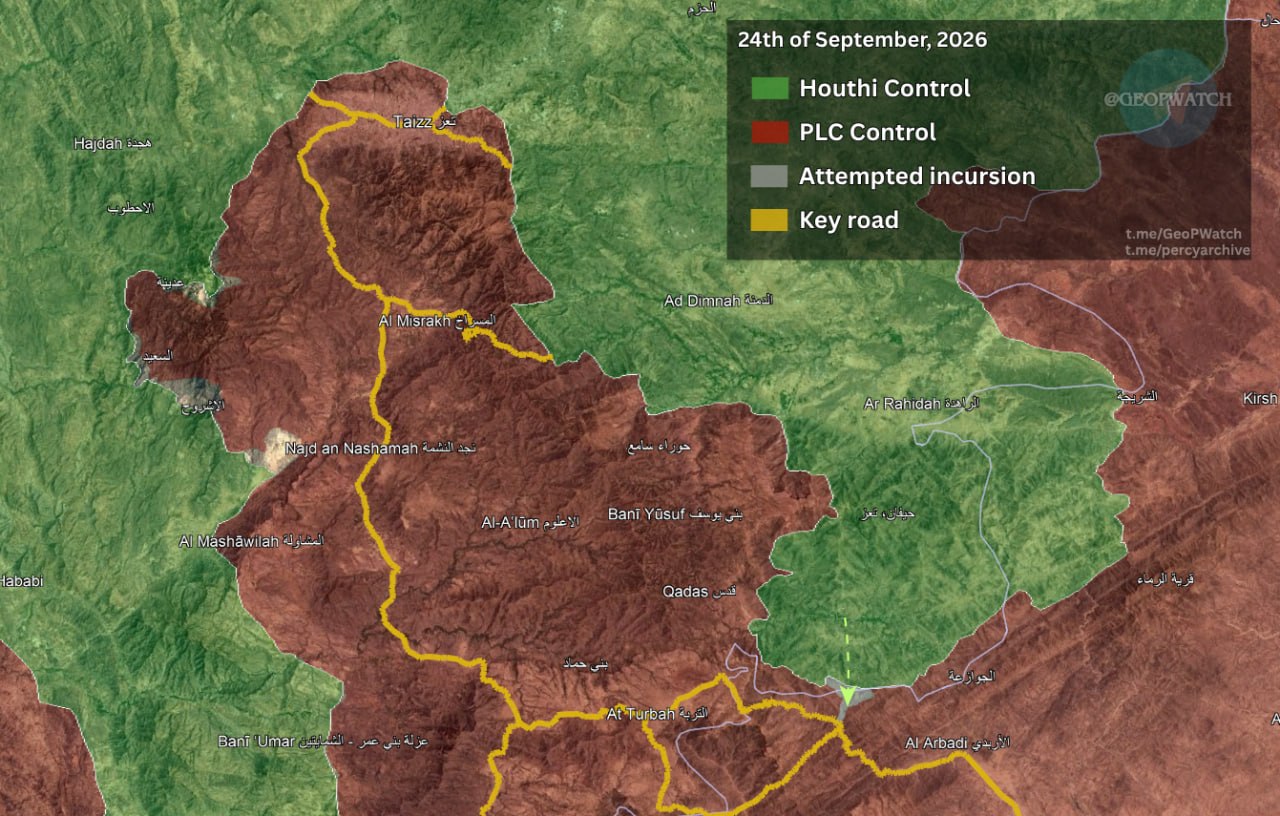
- Hejat al‑Abd, Taiz Governorate (11:26 UTC) – According to JPost, government troops repelled an overnight Houthi assault on the critical Hejat al‑Abd supply corridor, preventing the rebels from gaining a foothold on the Taiz‑Aden road. No casualties were reported, and the route remained open for logistical traffic.
- Southern Yemen (09:32 UTC) – monitor_the_situation documented a successful defense by government forces against a Houthi attack, maintaining established front‑line positions. Video evidence accompanying the report showed entrenched troops holding defensive lines; casualty figures were not disclosed.
- Taiz City (09:26 UTC) – AlJazeera reported that Yemeni forces claimed to have repelled Houthi attacks, killing dozens of rebel fighters in the highlands surrounding the city. While the exact number of fatalities was not specified, the term “dozens” suggests a minimum of 24 combatants.
Ansarullah Assault on Al Ashbut Highway
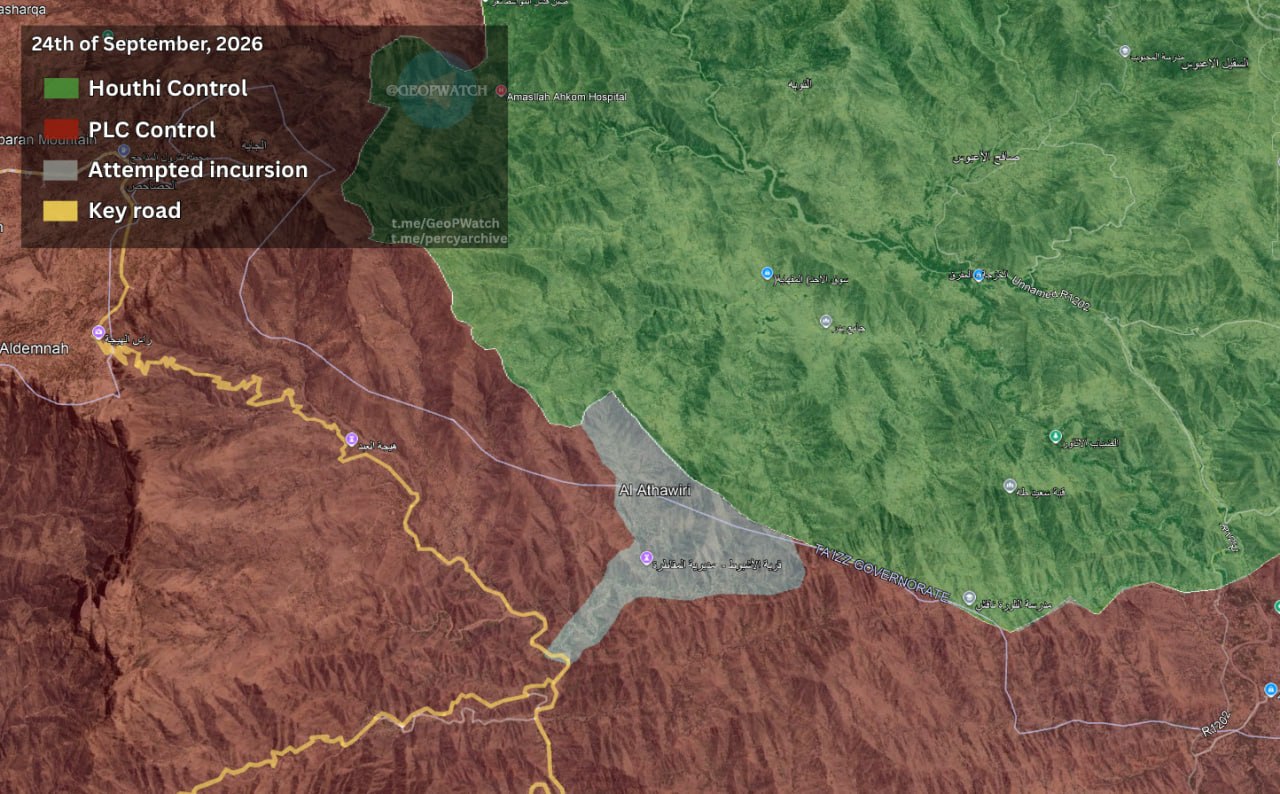
At 09:22 UTC, the Ansarullah militia launched an artillery‑supported offensive toward Al Ashbut in Ta'izz Governorate, aiming to seize the Hayjat Al‑Abd highway – a vital supply artery for the PLC. The attack was met by a combined response from the PLC’s 4th Mountain Infantry Brigade, the Yemeni Air Force (YAF), and the Royal Saudi Air Force (RSAF). Airstrikes from YAF and RSAF, coupled with artillery fire, forced the militia to retreat after briefly disrupting the highway for a few hours. Photographic evidence posted by GeoPWatch confirmed the temporary closure and subsequent reopening of the route.
"The highway was disrupted for a few short hours, and shortly reopened. The attack failed." – GeoPWatch, 09:22 UTC.
Across these engagements, the pattern of intensified kinetic activity underscores a broader escalation in Yemen’s multi‑faction conflict. The Red Sea coast capture provides the Houthis with a strategic maritime foothold, potentially altering regional shipping dynamics and complicating coalition naval operations. Simultaneously, the NRF’s drone campaign and the PLC’s defensive successes illustrate a fragmented battlefield where localized offensives are balanced by rapid counter‑measures.
While casualty reporting remains limited for several incidents, the documented deaths of “dozens” of Houthi fighters in Taiz and the absence of reported government losses in multiple repelled attacks suggest a temporary tactical advantage for pro‑government forces on the ground. However, the strategic significance of the Red Sea coastline may offset these gains, granting the Houthis leverage in future negotiations or maritime interdiction efforts.