On 23 September 2026 Iran conducted a series of kinetic operations that intensified maritime risk in the Strait of Hormuz and produced the deadliest single‑day casualty count in the region this year. The most consequential incident was the Iranian attack on the Emirati‑owned bulk carrier MV Cape Dao, which resulted in one crew member killed, another injured, and the vessel forced to abandon ship.
Strait of Hormuz: Bulk Carrier MV Cape Dao Attacked
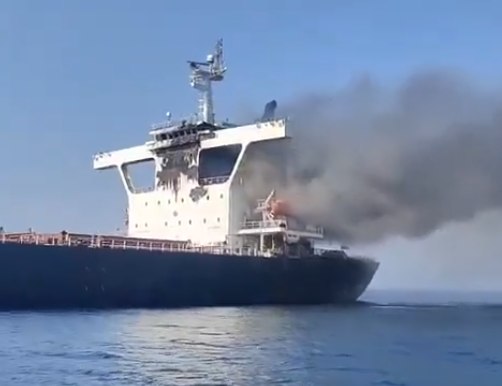
At 15:06 UTC Iranian forces struck the MV Cape Dao with at least two projectiles, igniting a fire that rapidly spread across the deck. The attack forced the crew to evacuate; one seafarer was confirmed dead and a second sustained injuries requiring medical evacuation. The incident was documented by the monitoring channel monitor_the_situation, which posted a photograph of the burning hull and cited the presence of “projectiles” as the weapon system used. A second source, GeoPWatch, released video footage confirming the strike and the casualties, stating:
"Footage from the vessel targeted by Iran earlier today has emerged. It's the 'MV CAPE DAO', an Emirati‑owned cargo vessel. At least one crewmember died and another was injured during the attack."Both sources locate the event in international waters of the Strait of Hormuz, a chokepoint that sees roughly 20 % of global oil shipments.
Additional Projectile and Missile Incidents
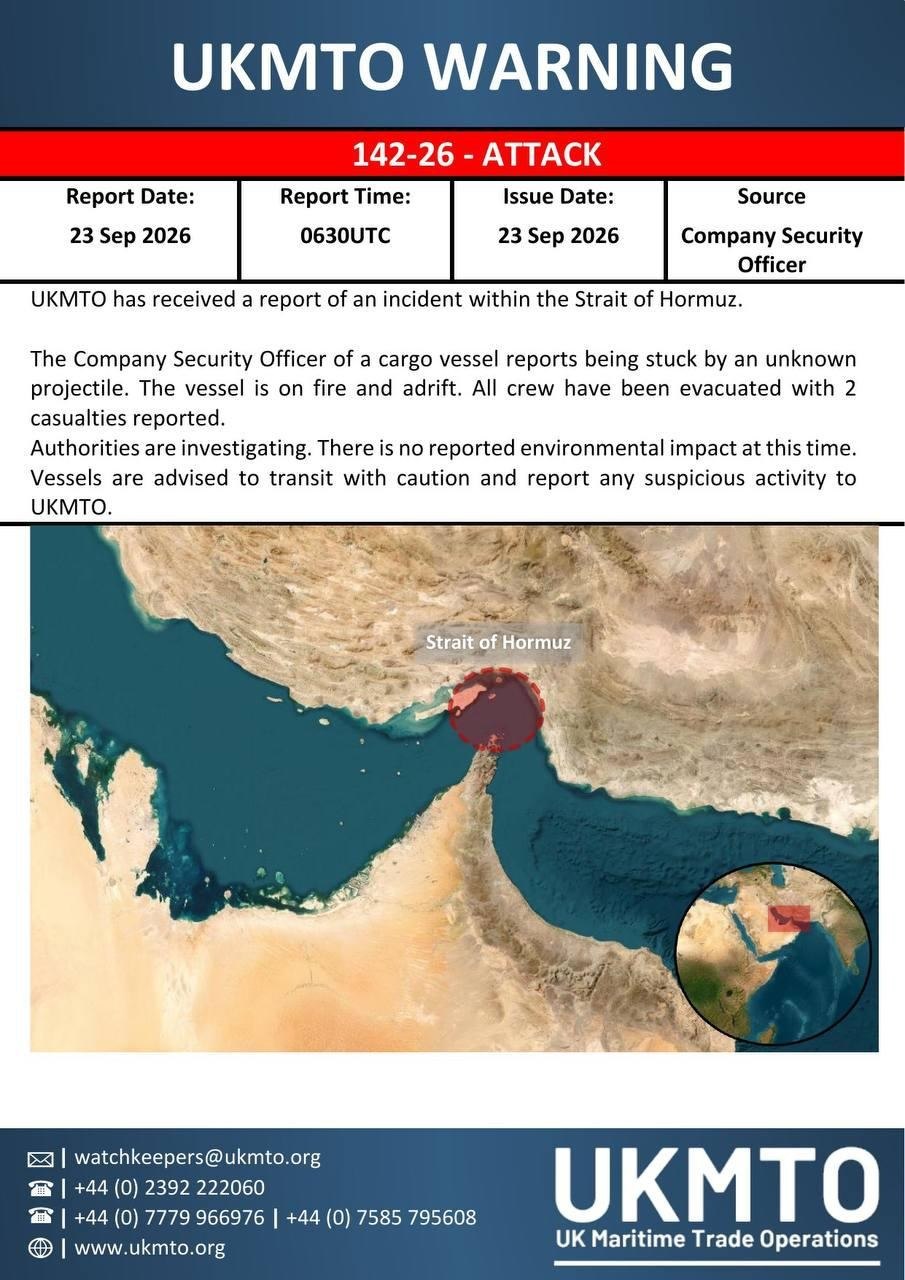
Earlier in the day, at 12:08 UTC, an unidentified projectile struck a cargo vessel in the same strait, killing two crew members, according to a report from monitor_the_situation that referenced United Kingdom Maritime Trade Operations (UKMTO) data. The weapon type was not identified, but the incident underscores a pattern of unannounced kinetic engagements.
At 11:57 UTC a container ship was hit by a likely anti‑ship cruise missile, igniting a fire and leaving the vessel adrift. UKMTO confirmed the missile strike, describing the weapon as an “anti‑ship cruise missile” and noting the vessel’s loss of propulsion. The same day, at 08:04 UTC, the Islamic Revolutionary Guard Corps Navy (IRGCN) announced the launch of anti‑ship cruise missiles toward the Strait, a claim reported by intelslava. While the IRGCN did not specify a target, the timing aligns with the subsequent missile impact on the container ship.
Other Naval Disruptions
Mid‑day reports from rnintel indicated that Iran disabled another cargo vessel, leaving it “on fire and adrift” with the crew evacuated. The source attributed the incident to Iranian action but did not specify the weapon employed. Additionally, at 10:53 UTC, GeoPWatch reported explosions in the Strait, though no further details on damage or casualties were provided.
Land‑Based Kinetic Event: IRGC General Killed
In a separate high‑profile kinetic event, IRGC Brigadier General Hossein Zarefi, commander of the Sajjad Operational Base, was killed during a clash with anti‑regime forces in Sistan and Baluchestan Province at 18:00 UTC. The incident, reported by monitor_the_situation, did not involve firearms or explosives according to the source, but the death of a senior IRGC officer signals an escalation of internal security confrontations.
Explosion in Tehran’s Chitgar District
Satellite imagery released by monitor_the_situation showed explosions and fire at warehouses in Tehran’s Chitgar area on 21 September 2026. While the cause remains unverified, the imagery confirms significant damage to civilian infrastructure. No casualty figures were released.
Analysis of the Kinetic Pattern
The concentration of naval attacks within a six‑hour window, combined with the use of both projectile and missile weapons, indicates a coordinated effort to assert control over the Strait of Hormuz. The attacks targeted commercial vessels of varying nationalities—Emirati, possibly British‑flagged, and unidentified merchant ships—demonstrating a willingness to engage non‑Iranian assets. The simultaneous internal security incident in Sistan and Baluchestan suggests that Tehran is confronting pressure on multiple fronts, employing kinetic force both abroad and domestically.
From a strategic perspective, the use of anti‑ship cruise missiles aligns with Iran’s stated doctrine of “area denial” in the Persian Gulf. The lack of explicit claims of responsibility for the maritime strikes, however, reflects a pattern of plausible deniability that complicates attribution and response by affected states.
Overall, the events of 23 September 2026 represent the most intense day of kinetic activity in Iran’s maritime domain in the current conflict cycle, raising the risk of broader escalation and prompting heightened alerts from international shipping agencies.