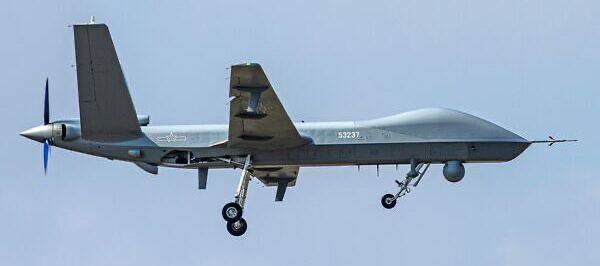
On 23 September 2026, Houthi forces in Yemen announced the downing of a Saudi‑operated Wing Loong 2 unmanned aerial vehicle (UAV) over the coastal town of Al‑Mukha in Taizz Governorate. The incident marks the latest high‑profile engagement in a series of cross‑border confrontations that also involve Israeli security operations along the Syrian border. No casualties were reported in the drone interception, but the event underscores the growing reliance on armed drones and the heightened risk of escalation across the region.
Saudi Drone Intercepted Over Al‑Mukha
The Houthi‑controlled Ansarullah movement released a statement on the Telegram channel monitor_the_situation at 02:20 UTC, asserting that its air‑defence batteries successfully engaged a Saudi Wing Loong 2 drone operating over Al‑Mukha, a strategic port city on the Red Sea. The Wing Loong 2 is a medium‑altitude, long‑endurance UAV equipped with precision‑guided munitions, commonly used by Saudi Arabia for reconnaissance and strike missions in Yemen.
"We shot down a Saudi Wing Loong 2 drone over Al‑Mukha," the Houthi statement read.The claim was accompanied by a photograph of the downed aircraft’s wreckage, though independent verification remains pending. Saudi officials have not publicly responded, and no injuries or damage to civilian infrastructure were reported.
Saudi Armed UAV Patrol Over Taiz
Earlier, at 02:56 UTC, the Houthi‑aligned Telegram channel idkunim_il reported that a Saudi‑armed UAV conducted a patrol over Taiz Governorate. The message, titled “hostile_uav,” described the patrol as an armed operation, implying the presence of weaponized drones capable of striking ground targets. While the specific UAV model was not identified, the report aligns with Saudi Arabia’s broader use of armed drones in its campaign against Houthi positions. No casualties were reported from this patrol, and the Houthi narrative frames the operation as a provocative act of aggression.
Israeli Detention of Pioneers of Bashan in Golan Heights
At 03:06 UTC, the Israeli Defense Forces (IDF) announced the detention of fourteen members of the extremist group known as the Pioneers of Bashan (HaBashan). According to a report by JPost, the individuals attempted to cross the Israeli‑controlled Golan Heights into Syrian territory, allegedly to establish settlements and conduct hostile activities. The IDF intercepted the group before they could enter Syria, and all detainees were taken into custody without incident. No weapons were recovered, and there were no reported injuries on either side.
Implications for Regional Security
The three incidents, though distinct in geography and actors, illustrate a pattern of increasing cross‑border tension facilitated by drone technology. The Houthi claim of downing a Saudi Wing Loong 2 demonstrates the growing capability of non‑state actors to challenge sophisticated aerial platforms. Saudi Arabia’s deployment of armed UAV patrols over Taiz reflects a strategy of persistent aerial pressure, which the Houthis perceive as hostile and retaliatory. Meanwhile, Israel’s rapid response to the Pioneers of Bashan infiltration underscores its vigilance along the volatile Golan frontier, a region already marked by frequent skirmishes between Israeli and Syrian forces.
Key observations include the absence of reported casualties in all three events, suggesting that while the engagements are militarily significant, they have not yet translated into large‑scale loss of life. However, the use of armed drones by state actors and the demonstrated ability of insurgent groups to counter them raise the risk of unintended escalation. The incidents also highlight the importance of real‑time intelligence sharing among regional powers, as each side monitors the other's movements across porous borders.
In the coming weeks, monitoring the frequency and intensity of UAV operations in Yemen and the Golan Heights will be essential for assessing whether these isolated incidents are precursors to broader confrontations or remain contained tactical exchanges.