On 18 September 2026, United Nations human‑rights experts released a preliminary assessment that the United States’ two airstrikes on Minab, a port city in Iran’s Hormozgan Province, may constitute violations of international humanitarian law. The finding, reported by Al Jazeera, marks the first formal allegation of war‑crime liability against the United States in the context of the broader Middle‑East conflict landscape.
US Airstrike in Minab Raises International Legal Concerns
The strikes, carried out at 01:58 UTC, targeted facilities that the United States described as “terror‑related infrastructure.” UN investigators, citing satellite imagery and eyewitness testimony, concluded that the attacks caused civilian casualties and damage to non‑military structures. Potential war‑crime status hinges on whether the principle of distinction and proportionality was respected. The UN panel, operating under the Office of the High Commissioner for Human Rights, warned that “the evidence, if substantiated, could meet the threshold for war‑crime allegations.”
“UN findings show US strikes on Minab could be war crimes,” Al Jazeera, 18 Sept 2026.
The United States has not yet responded publicly to the UN report, and diplomatic channels between Washington and Tehran remain strained, with both sides exchanging accusations of aggression.
Ground Offensive in Yemen’s Taizz Governorate
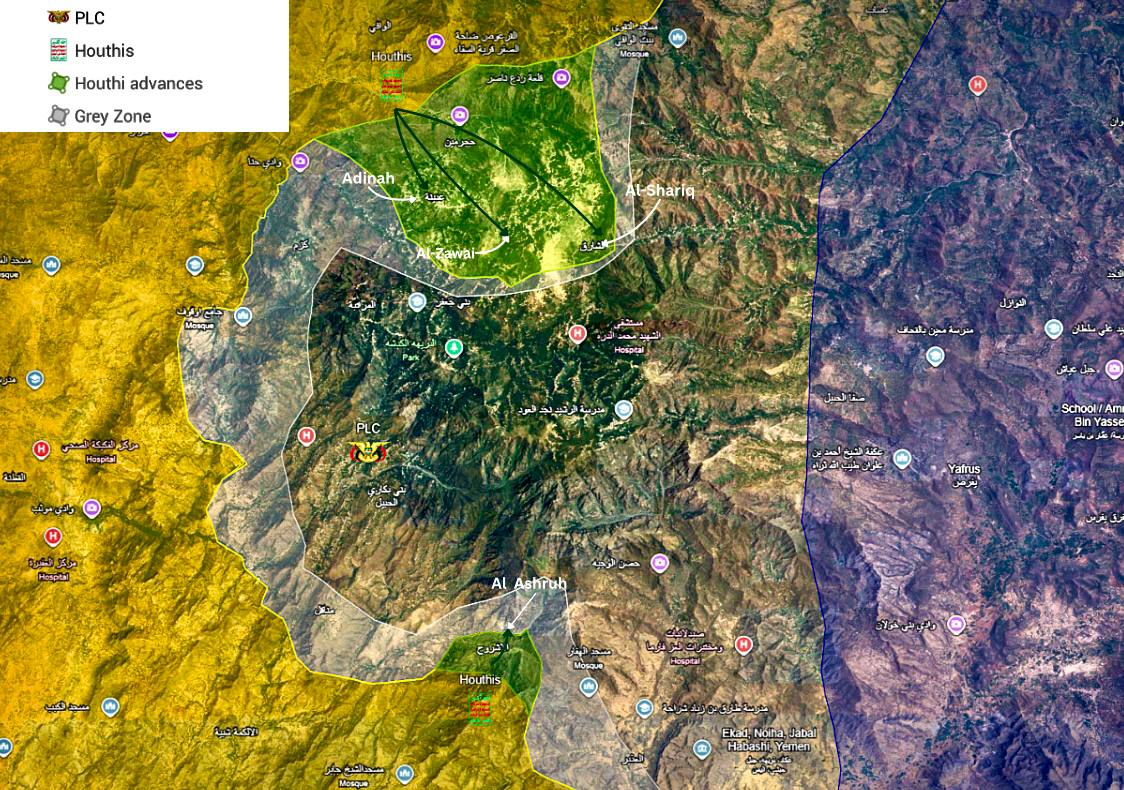
At 05:28 UTC, the Houthi‑aligned Ansarullah movement launched a coordinated pincer offensive southwest of Taizz, capturing the villages of Adinad, Al‑Zawai, Al‑Shariq (North) and Al Ashruh (South). GeoPWatch documented the advance with photographs of newly erected checkpoints. The operation aims to encircle areas held by the Presidential Leadership Council (PLC), intensifying the civil war’s western front. No casualty figures were released, but local reports indicate several PLC fighters were killed or wounded during the village seizures.
Analysts note that the offensive reflects a strategic shift toward consolidating territorial control around Taizz, a historic stronghold for the PLC, potentially altering the balance of power in southern Yemen.
Shooting and Security Clampdown in Zahedan, Iran
In the early morning hours (03:06 UTC), a gun‑fire incident erupted in Zahedan, the capital of Sistan‑and‑Baluchestan Province. The Jerusalem Post relayed that Iranian authorities responded with a large‑scale security operation, deploying ambulances, establishing checkpoints, and temporarily shutting down the city’s main thoroughfares. While the shooter’s identity and motive remain unconfirmed, the rapid mobilization underscores Tehran’s heightened sensitivity to internal security threats, particularly in a province bordering Pakistan and Afghanistan.
Regional security experts warn that the incident could exacerbate existing ethnic and sectarian tensions, prompting further militarization of the border region.
Targeted Killing of Hamas Commander Near Khan Yunis
At 02:53 UTC, an Israeli Air Force (IAF) strike near Khan Yunis in the Gaza Strip eliminated Nael Attiya Abu Obeid, a senior commander of Hamas’s Al‑Qassam Brigades Rafah Brigade and a member of its General Military Council. The operation, reported by the monitoring channel “monitor_the_situation,” was accompanied by a photo of the blast site. Israeli officials confirmed the strike as part of ongoing operations aimed at degrading Hamas’s command structure.
The death of a high‑ranking commander may impact Hamas’s operational capacity in the southern Gaza corridor, though the group has historically demonstrated resilience in leadership succession.
Italian Naval Deployment to Bab al‑Mandeb Strait
In response to escalating threats to commercial shipping, Italy announced the deployment of warships to the Bab al‑Mandeb Strait, a chokepoint linking the Red Sea to the Gulf of Aden. Al Jazeera reported that the Italian Ministry of Defence emphasized the strategic importance of keeping the strait open, warning that any blockage could trigger severe economic repercussions for Europe.
The Italian Navy’s presence aims to deter piracy, Houthi missile attacks, and other disruptions, complementing multinational efforts to secure one of the world’s busiest maritime arteries.
Collectively, these incidents illustrate a multi‑front environment where state and non‑state actors engage across air, land, and sea, heightening the risk of broader regional escalation.