The most consequential kinetic event recorded on 17 September 2026 was a coordinated airstrike by the Yemeni Air Force targeting Houthi supply lines and positions in the cities of Taiz and Mokha. The operation, reported by the Telegram channel monitor_the_situation at 15:47:52, underscores a renewed emphasis by the internationally recognised government on disrupting the logistical backbone of the Iran‑backed Ansarullah movement. While the strike’s official communique did not disclose casualty figures, satellite imagery and on‑the‑ground reports confirm the destruction of multiple ammunition depots and transport convoys, potentially degrading Houthi operational capacity in the western highlands.
Air Campaigns Across Multiple Fronts
In addition to the Taiz‑Mokha strike, two further high‑severity air operations were documented on the same day. At 14:22:43, a joint Saudi‑Yemeni airstrike hit a compound in Sana’a, the capital under Ansarullah control, as reported by rnintel. The target, described as a command and control hub, was struck without reported civilian casualties, suggesting precise targeting capabilities. Earlier, at 07:05:54, the Saudi‑led coalition conducted an airstrike in Hajjah Governorate that resulted in one fatality and one injury, according to Al Jazeera coverage relayed by monitor_the_situation. The incident illustrates the coalition’s continued focus on the north‑western corridor, a region of strategic importance for supply routes to the Red Sea.
"🟠 **Saudi‑Led Coalition Airstrike Kills One in Yemen's Hajjah**" – monitor_the_situation, 07:05:54 UTC
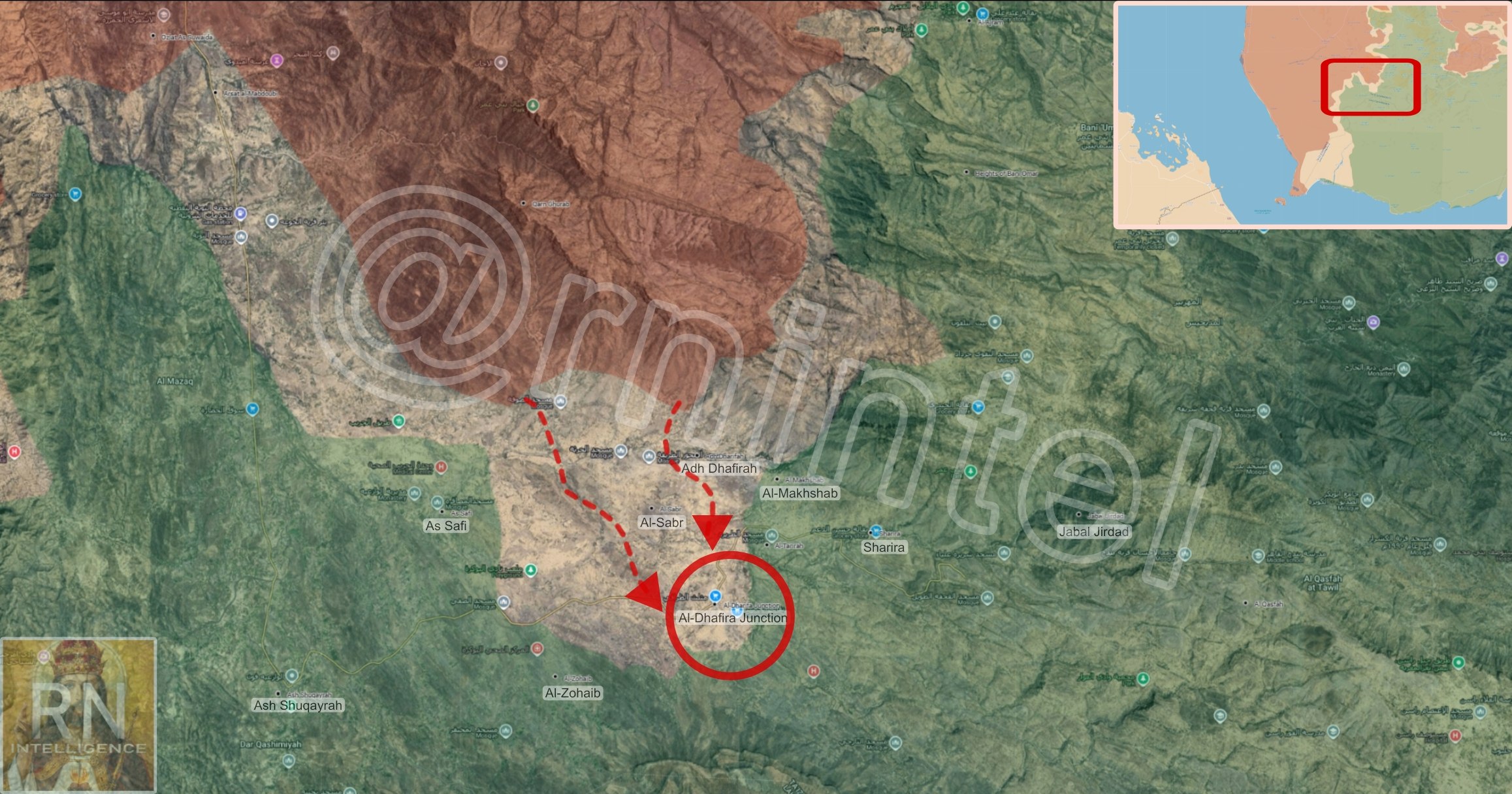
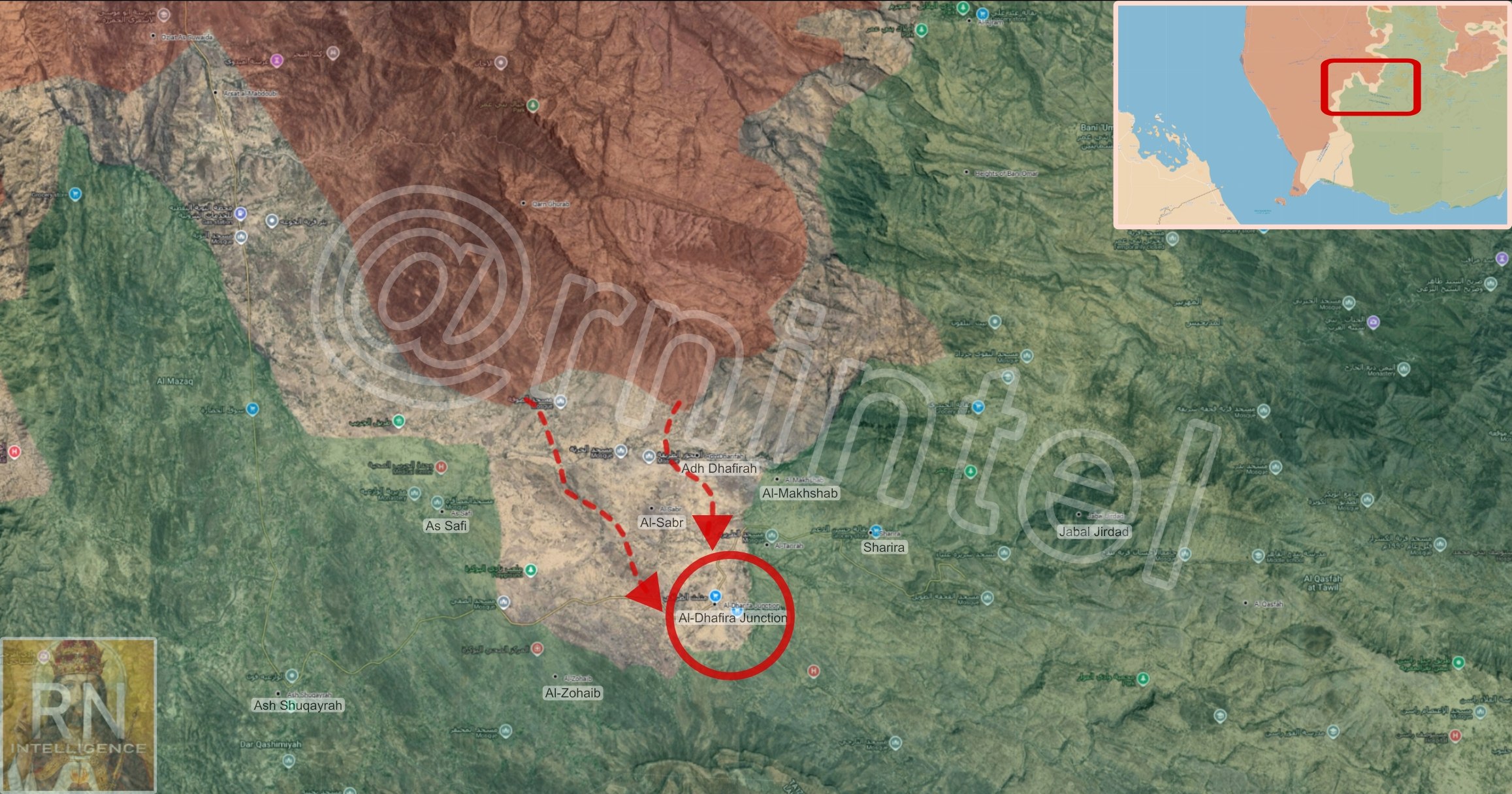
Later in the afternoon, at 13:34:36, Saudi and Yemeni aircraft engaged the al‑Dhafira junction (13.1467109, 43.8535303), a critical node on the Jabal Jirdad axis. Both CIG_telegram and rnintel reported that the strikes confirmed Houthi advances that had captured the towns of Adh Dhafirah and al‑Sabr. The repeated targeting of this junction indicates a concerted effort to blunt the momentum of the Ansarullah offensive along the central highland corridor.
Ground Movements and Clashes
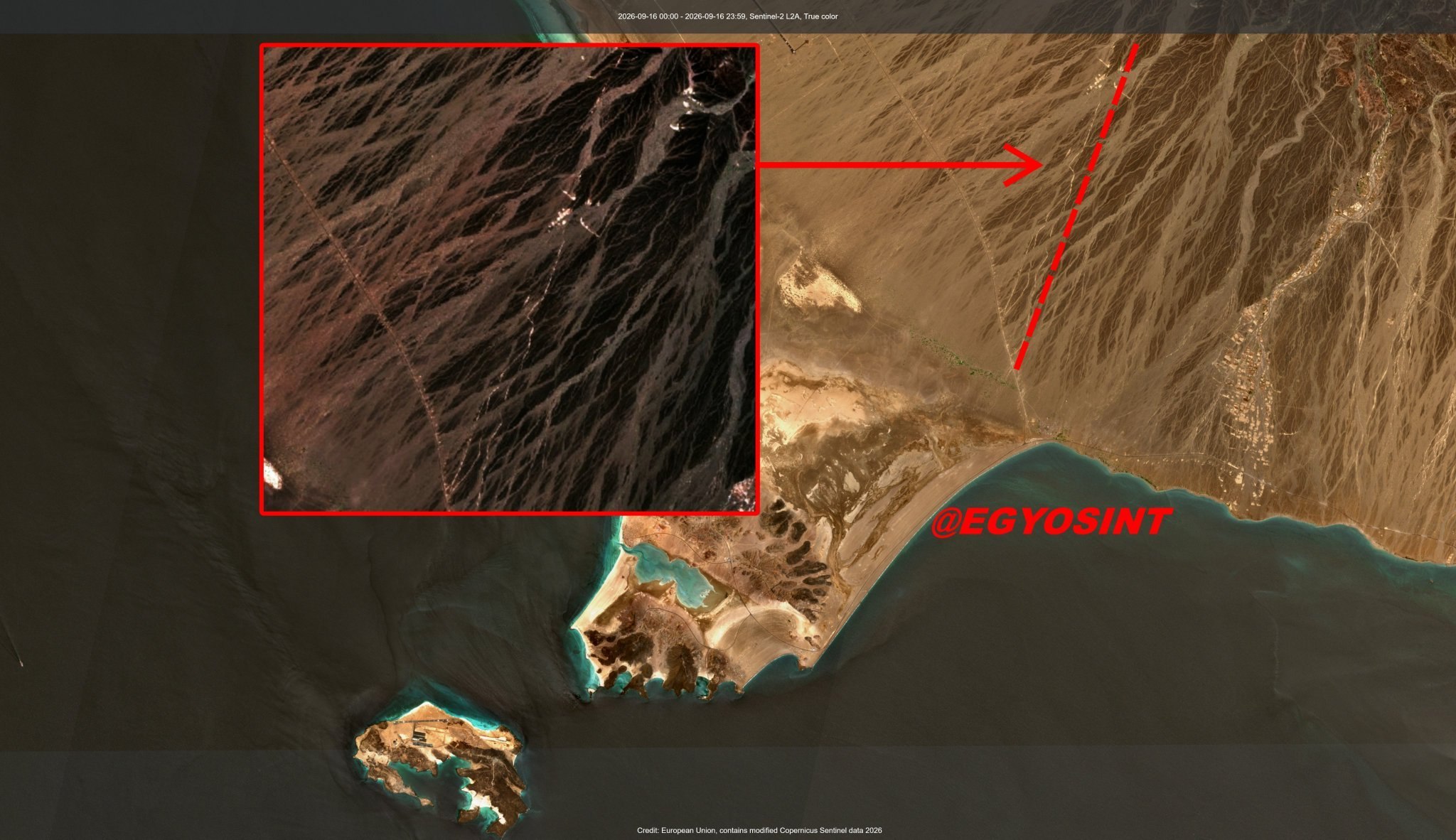
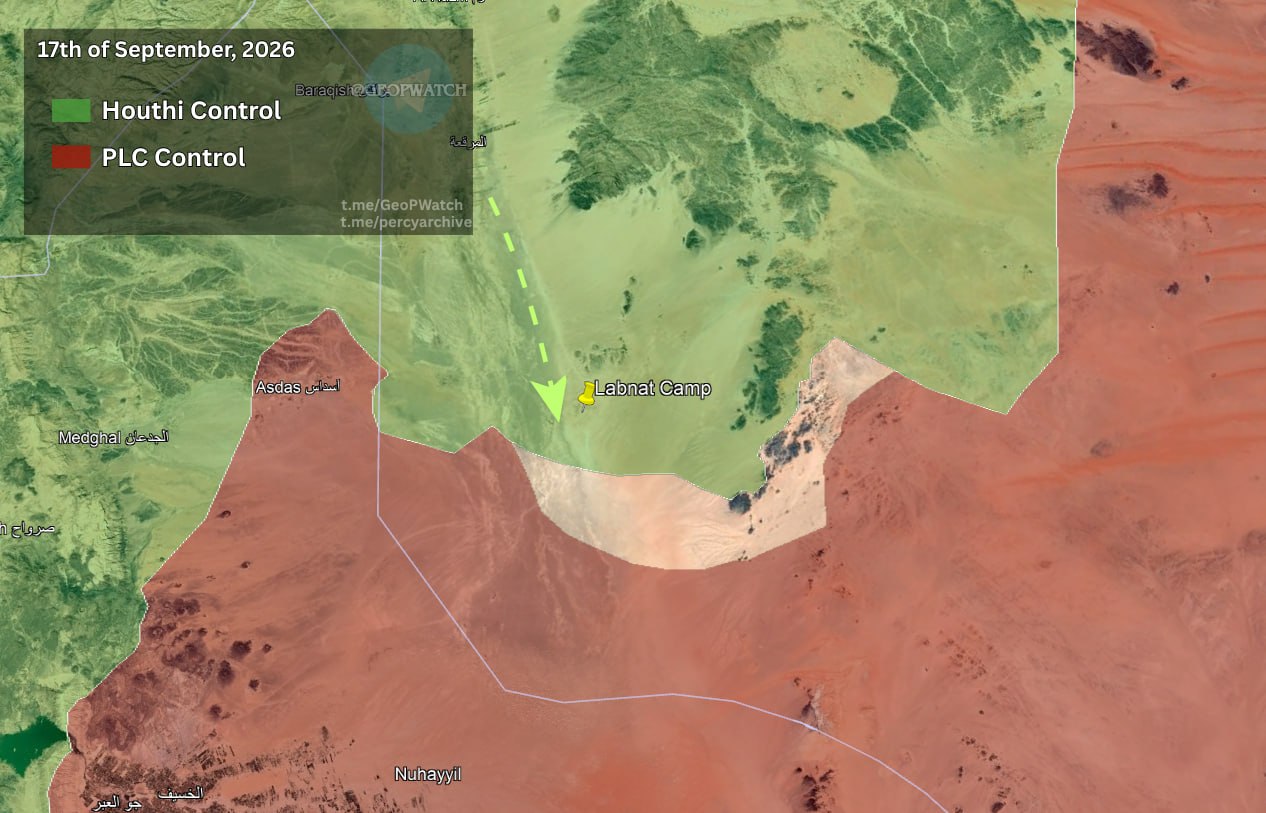
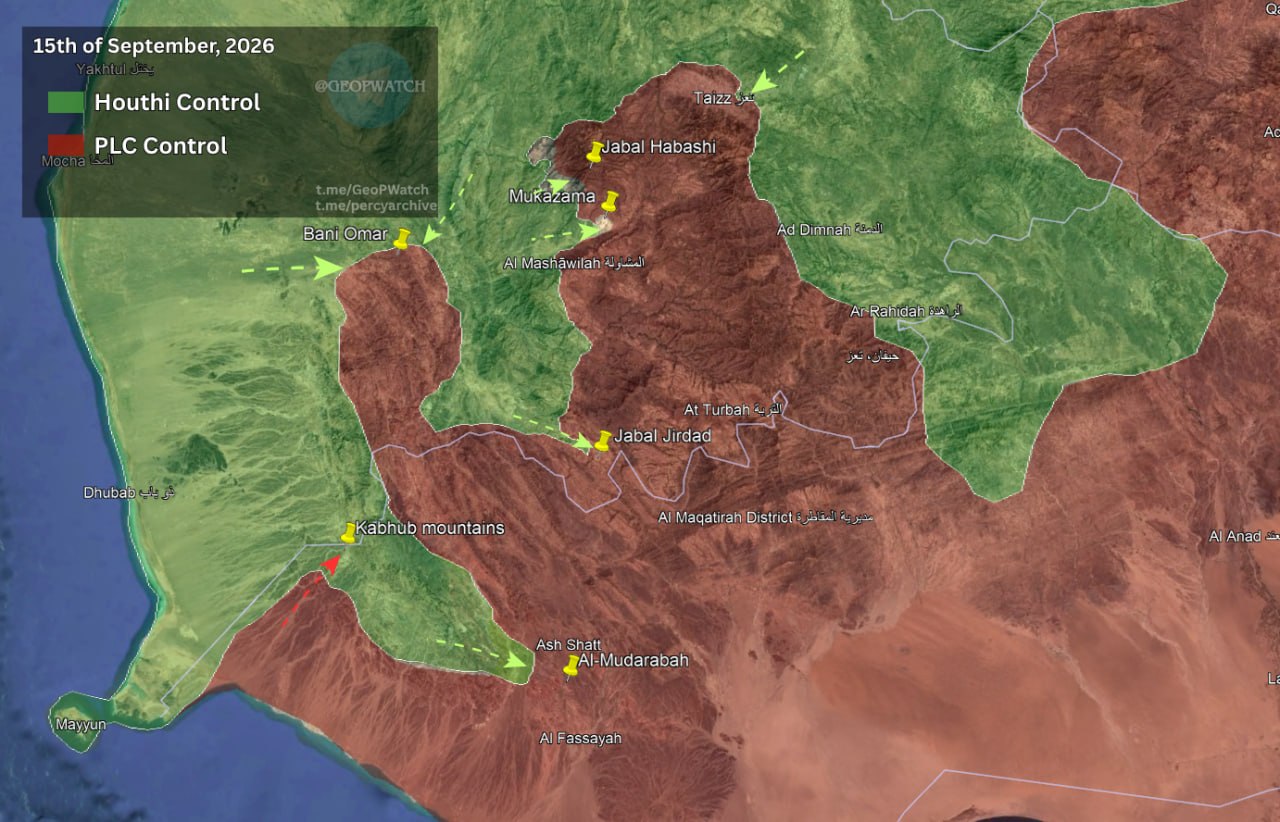
Ground operations intensified alongside the aerial campaign. At 17:10:25, the Houthis completed approximately 20 km of trench construction around the Bab al‑Mandeb Strait, as detailed by CIG_telegram. The fortifications are likely intended to counter a prospective offensive by Saudi‑backed Yemeni government forces seeking to regain control of the strategic maritime chokepoint. Concurrently, at 13:22:25, the Southern Giants Brigade announced the recapture of the Kahbub mountains and surrounding areas, while Houthi forces reclaimed the AlLabnat military camp in the north, according to GeoPWatch. These movements reflect a fluid front line where both sides are attempting to secure high‑ground positions that dominate key supply routes.
"The fighting continues at full scale in Yemen. In the north, Ansarullah (AlHouthis) recapture the 'AlLabnat' military camp..." – GeoPWatch, 13:22:25 UTC
In the Kahbub mountains near the Bab al‑Mandeb, Yemeni government forces engaged Houthi fighters at 09:31:06, a clash captured on video by monitor_the_situation. The engagement underscores the strategic importance of the mountain range, which overlooks the strait and provides artillery advantage over maritime traffic. Further south, at 09:17:57, Yemen’s Fourth Military Region launched an offensive against IRGC‑backed Houthi positions in the Al‑Kadha area of western Taiz, highlighting the continued involvement of Iranian proxies in the conflict.
Naval and Maritime Incidents
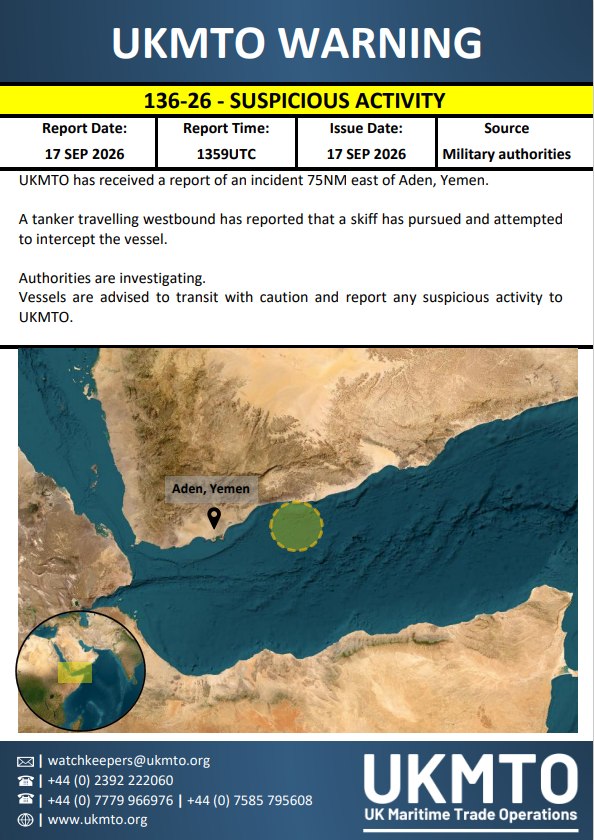
While the majority of kinetic events were aerial or ground‑based, a notable maritime incident occurred at 16:10:07 in the Gulf of Aden, 75 nautical miles east of Aden. A commercial tanker reported being pursued and intercepted by a small skiff, an event logged by monitor_the_situation and investigated by the United Kingdom Maritime Trade Operations (UKMTO). Although no weapons were employed, the incident reflects the persistent threat to commercial shipping in the Red Sea corridor, a region already strained by Houthi missile and drone attacks.
Strategic Implications and Humanitarian Impact
The concentration of airstrikes on supply nodes in Taiz, Mokha, and the al‑Dhafira junction suggests a strategic shift toward interdiction of Houthi logistics rather than purely territorial targeting. By degrading ammunition depots and transport routes, the Yemeni Air Force and its Saudi allies aim to limit the capacity of Ansarullah to sustain offensives in the highlands and along the Red Sea coast. Simultaneously, the extensive trench network around Bab al‑Mandeb indicates preparation for a protracted defensive posture, potentially complicating any future coalition attempts to reopen the strait for unimpeded commercial traffic.
Casualty figures remain limited in the publicly available reports, with the only confirmed fatalities being the single death in Hajjah and an unspecified number of combatants killed during the various ground engagements. Nonetheless, the cumulative effect of repeated airstrikes, artillery exchanges, and forced displacements contributes to an escalating humanitarian crisis. The United Nations Office for the Coordination of Humanitarian Affairs (OCHA) has warned that renewed kinetic activity in densely populated governorates such as Taiz and Hajjah could exacerbate food insecurity and impede aid delivery.
Overall, the events of 17 September 2026 illustrate a multi‑dimensional escalation in Yemen, characterized by synchronized air operations, fortified ground positions, and heightened maritime insecurity. The coordination between Yemeni national forces, the Saudi‑led coalition, and proxy actors underscores the complexity of achieving a durable ceasefire, while the expanding trench systems and contested chokepoints signal a potential shift toward a more entrenched, attritional phase of the conflict.