On 17 September 2026, Ukrainian forces carried out a series of kinetic operations inside Russian territory, marking the most intensive cross‑border activity recorded this year. The highest‑severity event involved simultaneous rocket strikes on the Yaroslavl oil refinery and the Rostov‑on‑Don airfield, resulting in the destruction of multiple aircraft and significant material loss. Subsequent attacks targeted air‑defence installations in Bryansk Oblast, a Russian airfield in Rostov Oblast, and an FPV drone overflight of Belgorod city.
SBU‑Led Rocket Strikes on Yaroslavl Refinery and Rostov Airfield
At 09:18 UTC, the Security Service of Ukraine (SBU) coordinated a rocket barrage that hit two strategic sites in Russia. The Yaroslavl refinery, a key node in the nation’s fuel processing network, sustained structural damage, while the Rostov‑on‑Don airfield suffered the loss of an Antonov An‑12 transport, two An‑26 tactical aircraft, and three helicopters. Ukrainian President Volodymyr Zelensky confirmed the operation, describing the outcomes as “good results” in the Black Sea theatre.
"Zelensky confirms SBU‑led strikes on Yaroslavl refinery and Rostov airfield, destroying An‑12, two An‑26s, and three helicopters. Reports 'good results' in Black Sea." – monitor_the_situation, 17 Sep 2026The strike was documented in a video released by the Telegram channel monitor_the_situation (https://t.me/monitor_the_situation/31213). No conventional weapons were listed in the source, suggesting the rockets were likely supplied by Ukrainian forces or sourced from captured stockpiles. Casualty figures were not disclosed, but the loss of aircraft represents a measurable degradation of Russian logistical and reconnaissance capabilities.
Ukrainian Drone Attack on Rostov Oblast Airfield
Earlier in the day, at 06:13 UTC, Ukrainian‑operated drones penetrated a Russian airfield in Rostov Oblast, igniting large fires and triggering secondary explosions. The explosions were interpreted by observers as indicative of ammunition depots or air‑defence systems being struck. While the exact number of assets destroyed remains unverified, the incident underscores a growing reliance on unmanned aerial systems (UAS) to target high‑value, hardened installations. The report originated from the same Telegram channel, monitor_the_situation (https://t.me/monitor_the_situation/31197).
Strike on Russian S‑400 Systems in Bryansk Oblast
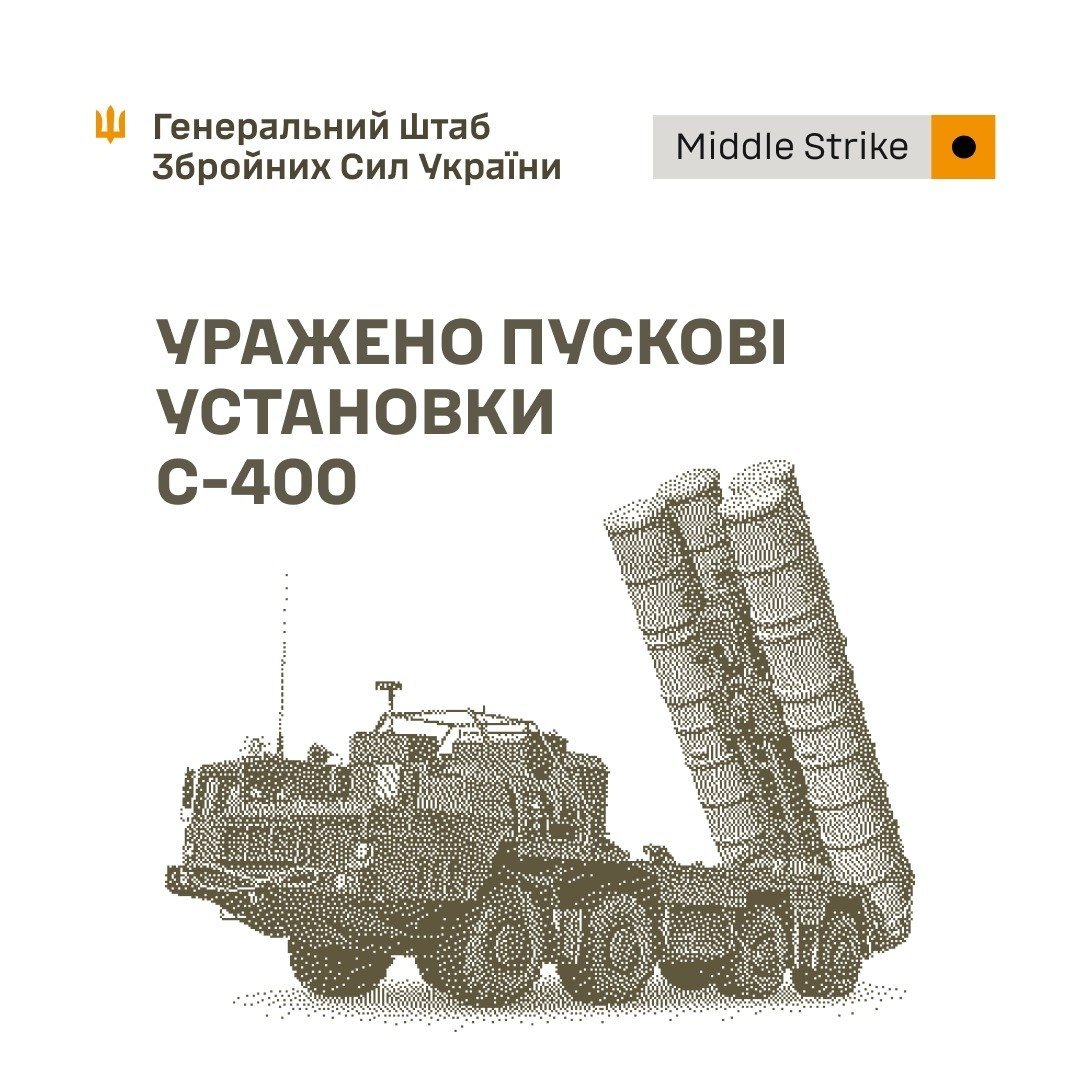
At 09:25 UTC, the Ukrainian General Staff announced successful strikes on Russian S‑400 surface‑to‑air missile batteries near the village of Vygonichi in Bryansk Oblast. The operation also targeted drone launch sites and logistics depots across the Donetsk and Luhansk regions, including facilities in Kurakhivka, Nova Marivka, and Luhansk city, as well as personnel concentrations in Strilkove and Druzhne. Photographic evidence was posted on the monitor_the_situation channel (https://t.me/monitor_the_situation/31217). The S‑400 system is a cornerstone of Russia’s integrated air‑defence architecture; its degradation could create exploitable gaps for subsequent aerial operations.
FPV Drone Overflight of Belgorod
At 15:50 UTC, an FPV (first‑person view) drone equipped with fiber‑optic transmission capabilities was observed flying over Belgorod, a Russian city bordering Ukraine. The drone passed over several high‑visibility locations, including the central thoroughfare, the "Salut" stadium, the "Rio" shopping centre, and the local airport. The sighting was reported by the Telegram channel intelslava (https://t.me/intelslava/94796). While no weapons were attached to the UAV, the operation demonstrates a psychological‑operations dimension, projecting Ukrainian presence deep within Russian urban areas and potentially gathering real‑time visual intelligence.
Collectively, these events illustrate a multi‑layered Ukrainian approach that combines high‑impact kinetic strikes with persistent low‑observable UAV activity. The coordination between intelligence services (SBU), conventional forces, and emerging drone units reflects an integrated strategy aimed at degrading Russian air‑defence, logistics, and morale. The use of rockets against fixed infrastructure, drones against airfields, and FPV platforms over populated areas indicates a calibrated escalation designed to impose operational costs on Russian forces while avoiding direct large‑scale ground engagements.