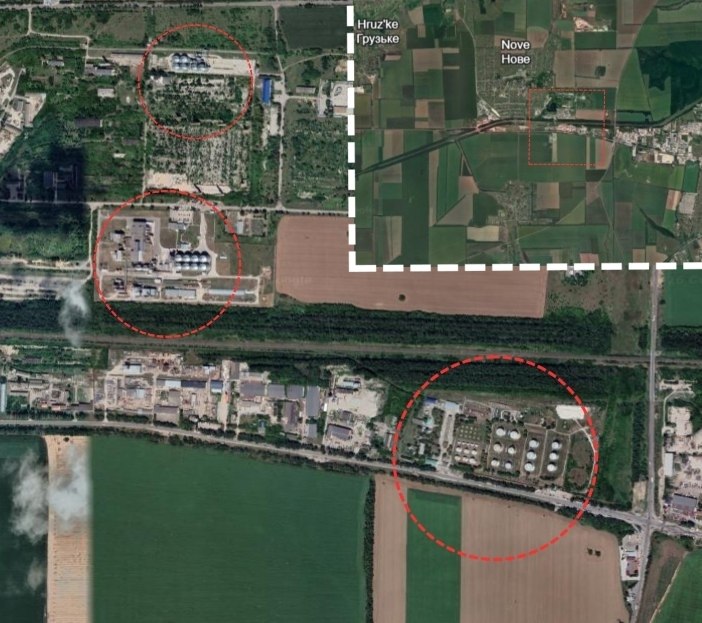
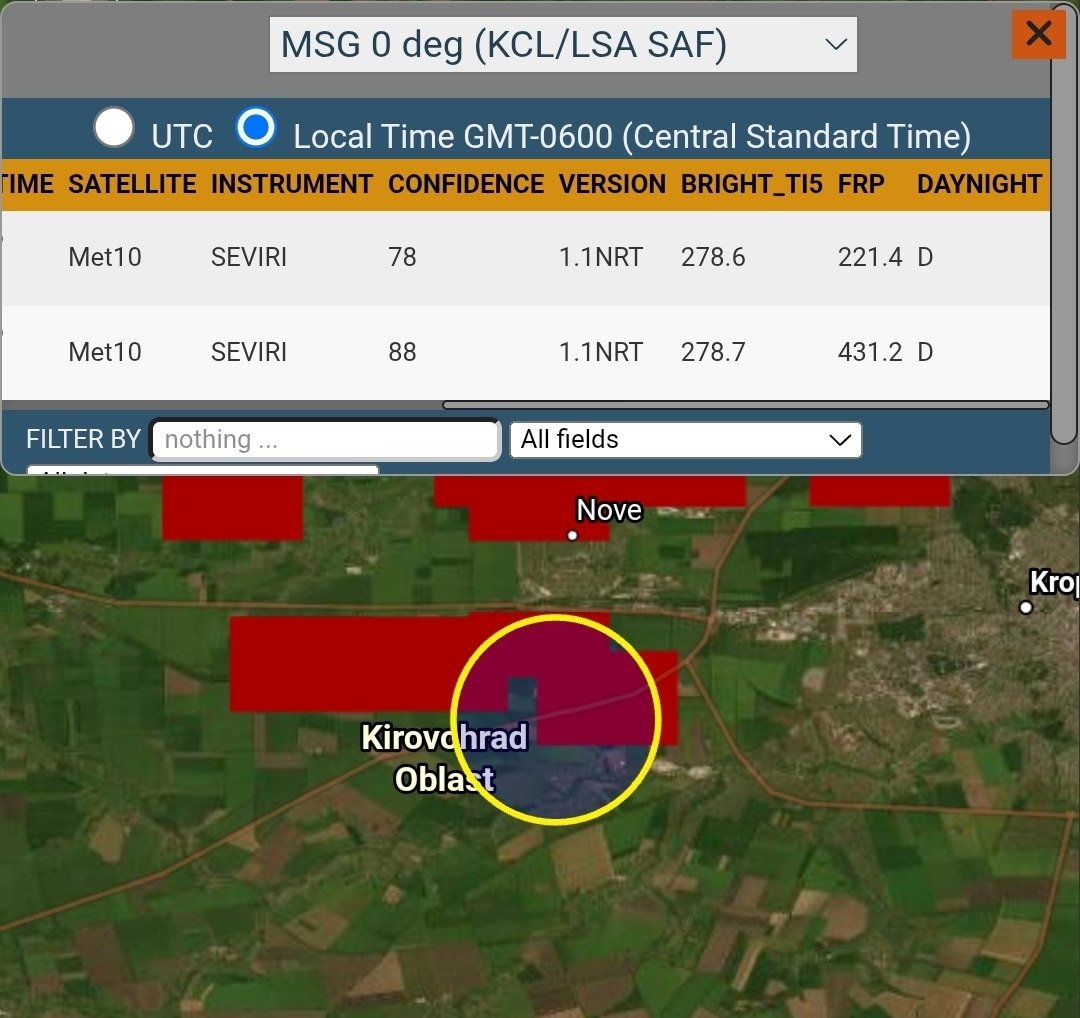
On 17 September 2026, Ukraine faced its most concentrated missile assault of the year as Russian forces launched at least eighteen missiles west of Kropyvnytskyi in Kirovohrad Oblast, igniting a massive fire at fuel depots operated by Agro Special Service in the nearby settlement of Nove. The strike, reported by GeoPWatch, produced an energy release exceeding 430 megawatts, engulfing two grain storage facilities and multiple large fuel tanks. The scale of the fire underscores the strategic targeting of Ukraine's agricultural and energy infrastructure.
Russia launched at least 18 missiles against Ukraine, igniting a massive fire near Kropyvnytskyi and at fuel depots in Nove.
GeoPWatch’s satellite imagery confirmed the conflagration, noting that the blaze spread rapidly across the depot complex, threatening nearby civilian areas. While casualty figures remain unconfirmed, the incident highlights a renewed emphasis by Russian forces on disrupting Ukraine’s logistical supply chains.
Drone and Missile Strike on Kyiv
Earlier that morning, at 00:53 UTC, a combined missile and drone attack struck the Ukrainian capital, Kyiv, injuring four civilians and damaging an educational facility. The incident was documented by the Telegram channel monitor_the_situation, which cited official statements confirming the injuries and structural damage. No fatalities were reported, but the attack demonstrates the continued vulnerability of urban centers to mixed‑weapon assaults.
Overnight Russian strike on Kyiv injured at least four people and damaged an education facility, officials reported.
The weapons employed included a cruise missile followed by a low‑altitude drone, a tactic that complicates air‑defence interception. Kyiv’s air‑defence systems engaged the incoming threats, but the coordinated nature of the strike allowed at least one munition to reach its target.
Ukrainian Counteroffensive in Kharkiv Oblast
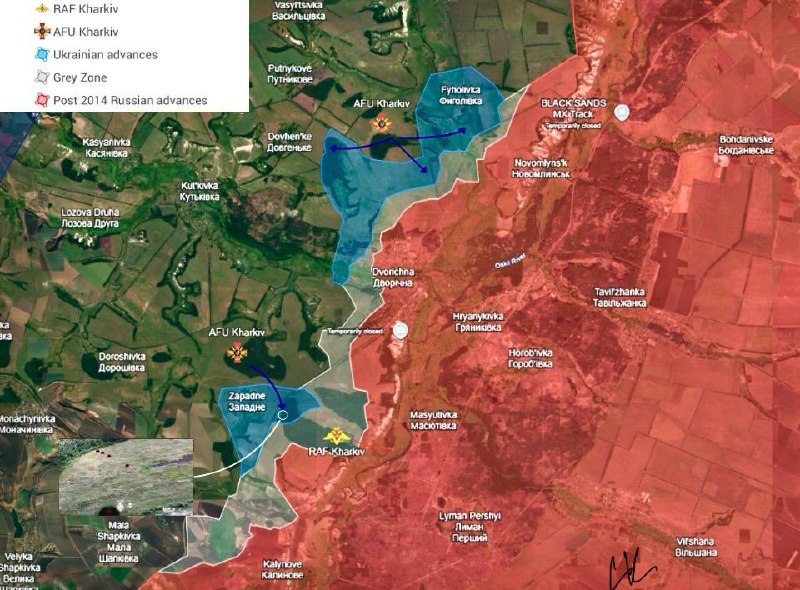
In the north‑eastern theater, Ukrainian forces continued their offensive along the western bank of the Oskil River. According to GeoPWatch, the 23rd Assault Regiment recaptured the villages of Fyholivka and Zapadne in Kharkiv Oblast at 00:04 UTC and subsequently advanced east of Zapadne. Photographic evidence released by the channel showed Ukrainian infantry consolidating positions within the forested area east of Zapadne, indicating a methodical push to secure a broader riverfront corridor.
The recapture of these villages marks a strategic gain, restoring Ukrainian control over key crossing points and facilitating further advances toward the river’s eastern bank. No casualties were reported in the immediate aftermath, but the operation reflects sustained momentum in Ukraine’s broader counter‑offensive strategy.
Cross‑Border Drone Activity
At 04:06 UTC, monitor_the_situation reported a drone strike on the Yaroslavl oil refinery in Russia, an incident that, if verified, would contravene President Zelensky’s public pledge to refrain from attacks on Russian soil. The source provided a single photograph of smoke rising from the refinery, but independent verification remains pending. While the claim remains uncorroborated, it illustrates the fluid nature of cross‑border drone operations and the challenges of attribution in modern conflict.
Ukrainian Deep‑Strike Operations in Russia
Later, at 01:56 UTC, the same Telegram channel reported that Ukrainian forces struck a Russian oil refinery and a military airfield in a deep‑strike campaign. The announcement did not specify the exact locations or the weapons employed, but it emphasized the targeting of energy and aviation infrastructure deep within Russian territory. No casualty figures were released, and the lack of detailed evidence precludes independent confirmation.
These actions, combined with the ongoing missile barrage in central Ukraine, suggest a multi‑dimensional approach by Ukrainian forces to degrade Russian logistical capabilities while simultaneously reclaiming territory on the front lines.
Analytical Assessment
The coordinated missile launch near Kropyvnytskyi represents a significant escalation in Russia’s targeting of Ukraine’s critical infrastructure. The fire at Agro Special Service’s fuel depots threatens both civilian energy supplies and agricultural export capacity, potentially affecting regional food security. Simultaneously, the Kyiv strike underscores the persistent threat to urban centers, where mixed‑weapon attacks can bypass conventional air‑defence layers.
Ukraine’s advances in Kharkiv Oblast demonstrate effective use of combined arms and infantry maneuver to secure riverine objectives. The recapture of Fyholivka and Zapadne not only restores territorial integrity but also provides staging grounds for further operations east of the Oskil River.
Cross‑border drone activity, whether confirmed or not, reflects an emerging pattern of asymmetric retaliation that complicates diplomatic narratives. While Ukrainian leadership has publicly pledged restraint, the reported strikes on Russian infrastructure indicate a potential shift toward more aggressive tactics, contingent on operational success and political calculus.
Overall, the events of 17 September 2026 illustrate a heightened intensity of kinetic engagements across multiple domains—air, land, and cyber‑enabled drone warfare—while highlighting the strategic importance of infrastructure targeting in the broader conflict dynamics.