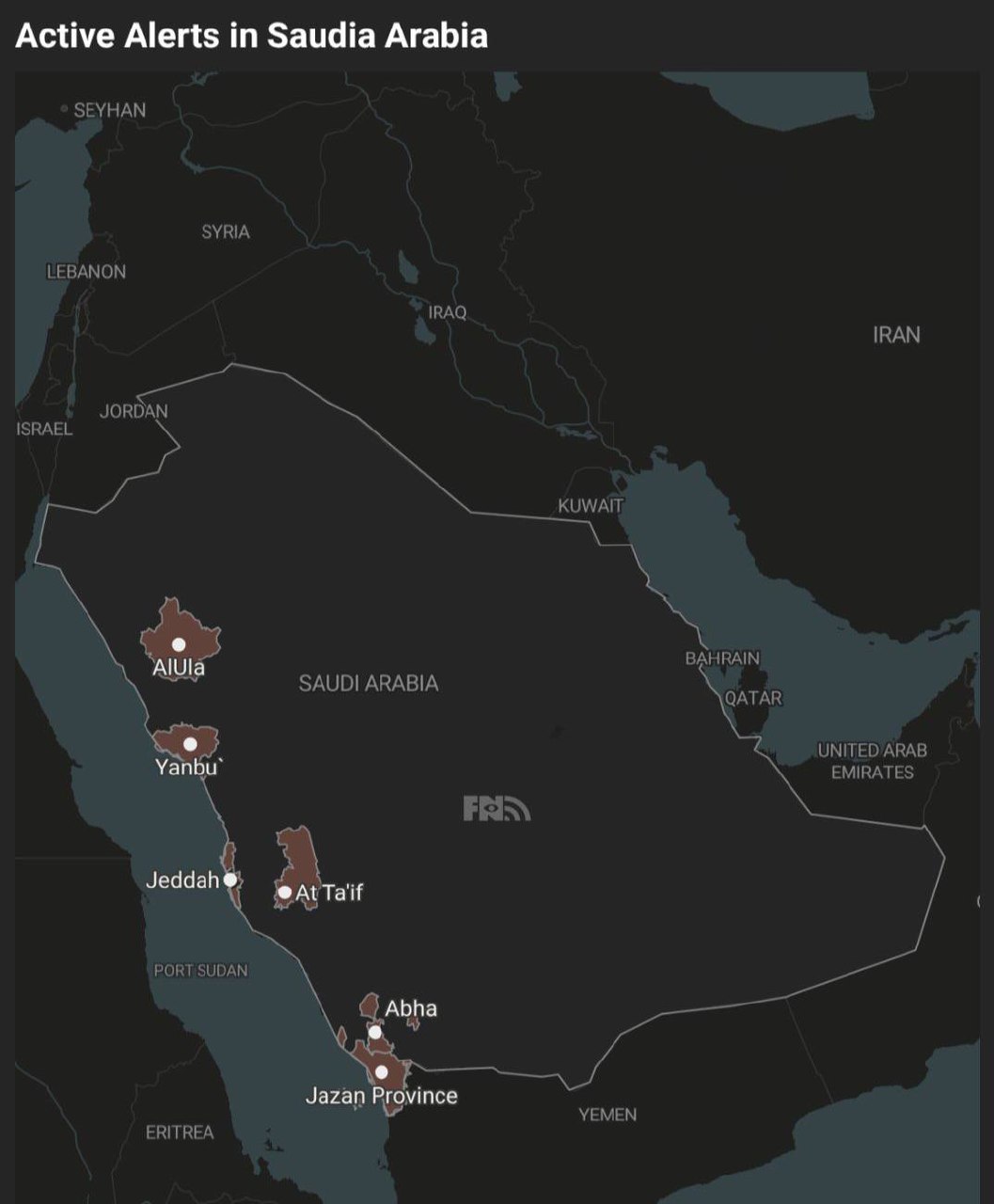
At 02:33 GMT on 15 September 2026, a ballistic missile launched by Yemen's Ansar Allah (Houthi) movement struck Saudi Aramco's oil refinery in Yanbu, Saudi Arabia, marking the most consequential single incident of the day and underscoring a rapid widening of hostilities across the region.
Event details: The missile, identified as a ballistic type, impacted the refinery’s processing units, causing temporary shutdown of several crude‑oil distillation columns. No immediate casualty figures were released, but the strike disrupted a critical node of global energy supply. The attack was reported by the Telegram channel intelslava, which posted video footage of the explosion and confirmed the responsible party.
"Ansar Allah ballistic missile struck Aramco's oil refinery in Yanbu, Saudi Arabia." – intelslava, https://t.me/intelslava/94623
Saudi Arabia and Yemen: Escalating Air and Missile Campaigns
Within the same hour, the Royal Saudi Air Force (RSAF) conducted coordinated airstrikes against Houthi positions in Sanaa and Taiz, Yemen, at 02:17 GMT. The strikes targeted command‑and‑control sites and ammunition depots, according to the same source channel. While the Saudi Ministry of Defense did not disclose casualty numbers, local reports indicated several Houthi combatants were killed and dozens injured.
Later, at 04:28 GMT, the Saudi Arabian Air Force released video of an AH‑64 Apache helicopter engaging four Houthi militants near the Bab‑el‑Mandeb Strait, firing its M230 30 mm cannon. The footage, also shared by intelslava, demonstrated the Kingdom’s use of heavy rotary‑wing assets to interdict Houthi maritime and coastal operations that threaten the strategic chokepoint linking the Red Sea to the Gulf of Aden.
Concurrently, multiple missile alerts were activated across Saudi territory. At 02:01 GMT, the Telegram channel GeoPWatch reported alerts in Yanbu, Jazan, Abha, and Khamis Mushait following Houthi missile launches. A separate alert, posted by CIG_telegram at 02:27 GMT, noted nationwide missile warning sirens, confirming a broad pattern of missile activity aimed at Saudi air‑defence systems.
Israel‑Gaza: Drone Strike Amid Ongoing Conflict
In the Gaza Strip, an Israeli unmanned aerial vehicle (UAV) conducted a strike at 05:31 GMT that killed at least one Palestinian civilian and injured another. The incident was documented by the monitoring channel monitor_the_situation and corroborated by Al Jazeera video footage. No military target was identified in the released material, and the strike adds to a series of UAV operations that have intensified since the latest escalation of the Israeli‑Palestinian conflict.
Iranian Drone Operations in Iraqi Kurdistan
At 00:59 GMT, Iran launched drone strikes against Kurdish separatist positions in Erbil, Iraqi Kurdistan. The operation, reported by intelslava, targeted training camps and weapons caches associated with the Kurdish separatist group. While casualty figures were not disclosed, the strikes represent a direct Iranian intervention in Iraq’s autonomous region, raising concerns about Tehran’s willingness to project power beyond its borders.
Implications for Regional Stability
The coordinated nature of these events suggests a multi‑front escalation that could strain diplomatic channels and complicate conflict‑resolution efforts. The Yanbu refinery strike directly threatens global oil markets; Saudi Arabia’s retaliatory air operations demonstrate a willingness to employ high‑precision assets against Houthi forces, while the Houthi missile alerts indicate a sustained capability to threaten Saudi air‑defence zones.
Simultaneously, Israel’s UAV use in Gaza and Iran’s drone campaign in Iraqi Kurdistan illustrate how state and non‑state actors are leveraging aerial platforms to achieve tactical objectives with limited ground engagement. The convergence of missile, drone, and air‑strike activities across Saudi Arabia, Yemen, Israel, Palestine, Iran, and Iraq reflects a broader pattern of proxy engagements and direct confrontations that could expand if diplomatic de‑escalation mechanisms are not activated promptly.
Regional observers note that the timing of these incidents—occurring within a narrow six‑hour window—points to a possible synchronization of operations, whether coincidental or orchestrated. The lack of public claims of responsibility beyond the Houthi acknowledgment for the Yanbu strike leaves open questions about command‑and‑control structures and the potential for miscalculation.
International actors, including the United Nations and major powers, have called for restraint, emphasizing the risk of a cascading conflict that could engulf additional states. Monitoring agencies continue to track the flow of weapons, the deployment of advanced platforms such as the AH‑64 Apache, and the evolving tactics of non‑state militias that are increasingly capable of striking high‑value targets.