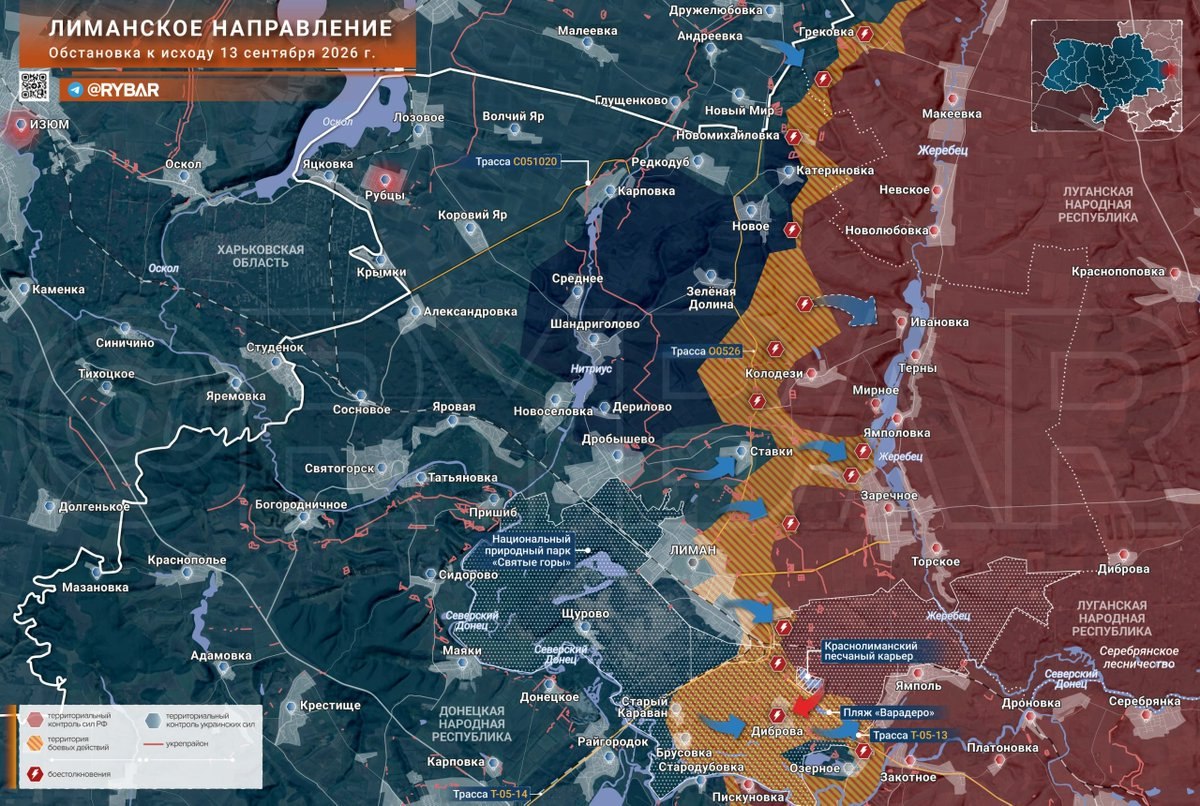
Ukrainian forces announced the recapture of a Russian‑held salient north of Lyman in Donetsk Oblast early on 14 September 2026, marking the latest territorial gain in a series of offensives that have pushed Russian positions back toward the front line established after the spring counter‑offensive.
Ground Advance in Donetsk
The operation, reported by the Telegram channel monitor_the_situation at 05:30 UTC, involved units of the Ukrainian Armed Forces conducting coordinated assaults on a protruding Russian defensive pocket that had threatened supply routes to the city of Lyman. According to the channel, the salient was fully cleared of Russian troops and equipment by 05:20, with no reported Ukrainian casualties. Russian military channel Rybar confirmed that its forces had withdrawn from the area, citing “tactical repositioning” in response to “intensified Ukrainian pressure.”
“Ukraine Clears Russian Salient North of Lyman” – monitor_the_situation, 14 Sep 2026
The reclaimed ground includes a network of minor roadways and a small logistics depot that had been used to stage artillery fire on Ukrainian positions south of Lyman. Control of the area restores a more contiguous defensive line for Ukrainian units and reduces the risk of Russian artillery enfilade fire on the city’s northern approaches. Analysts note that while the salient was not a major strategic stronghold, its loss deprives Russian forces of a forward observation point and complicates their ability to launch raids into the surrounding countryside.
Key implications of the Lyman advance include: a measurable shift in the local balance of force, the potential for Ukrainian forces to redirect assets toward the ongoing push in the southern sector of Donetsk, and a psychological boost for troops operating in a region that has seen frequent back‑and‑forth fighting since the conflict’s escalation in 2022.
Russian Drone Strikes on Kryvyi Rih
At 04:50 UTC, the same Telegram channel reported a coordinated strike by Russian Geran‑2 loitering munitions against industrial targets in Kryvyi Rih, Dnipropetrovsk Oblast. Video footage accompanying the report showed multiple drones descending on the outskirts of the city, with at least one impact near a metallurgical plant that processes steel for both civilian and military applications. No civilian casualties were confirmed in the immediate aftermath, and local authorities have not released an official damage assessment.
“Russia Strikes Kryvyi Rih With Geran‑2 Drones” – monitor_the_situation, 14 Sep 2026
The Geran‑2, a Russian‑produced variant of the Iranian Shahed‑136, is designed for precision strikes against fixed infrastructure. Its deployment in Kryvyi Rih aligns with a broader Russian tactic of targeting Ukraine’s industrial base to disrupt production capacity and erode economic resilience. The strike follows a pattern of similar attacks on energy facilities and transport hubs observed throughout September, suggesting a concerted effort to apply pressure on multiple fronts.
While the exact number of drones used in the Kryvyi Rih attack has not been disclosed, the video evidence indicates at least three separate munitions were launched. Ukrainian air defense systems reportedly engaged one of the drones, but the remaining two reached their targets. The lack of reported casualties may reflect the timing of the attack, which occurred during a shift change at the plant, reducing the presence of personnel on the ground.
Cross‑Border Train Attack Near Poland
At 03:37 UTC, Al Jazeera broadcast footage of a Russian drone striking a freight train near the Ukraine‑Poland border, shortly after former UK Prime Minister Boris Johnson departed the station. The train, part of a logistics corridor that transports agricultural products and military supplies, was halted on a siding when the unmanned aerial vehicle impacted the locomotive’s roof, causing a fire that damaged the engine and several cargo containers.
“Russia hits Ukrainian train shortly after Boris Johnson leaves station” – AlJazeera, 14 Sep 2026
The incident, captured by on‑site cameras, did not result in injuries to railway personnel, as the crew had evacuated the train following standard safety protocols after the drone was detected. Polish authorities, whose border security forces monitor the adjacent rail network, issued a statement condemning the attack and reaffirming their commitment to safeguard cross‑border transport routes.
Russia’s use of a generic drone, rather than a specialized loitering munition, suggests a degree of improvisation or the employment of readily available commercial‑grade UAVs adapted for kinetic strikes. The choice of a high‑value logistics target underscores the strategic intent to disrupt supply lines that support both civilian markets and the Ukrainian defense effort.
Overall Assessment
The events of 14 September illustrate the dual‑track nature of the current conflict: Ukrainian ground forces are achieving incremental territorial gains, while Russian forces continue to leverage aerial assets to inflict material damage and maintain pressure on Ukraine’s infrastructure. The recapture of the Lyman salient demonstrates effective coordination among Ukrainian infantry, artillery, and reconnaissance units, and it may serve as a springboard for further advances in the Donetsk sector.
Conversely, the Geran‑2 strikes on Kryvyi Rih and the drone‑induced train derailment highlight Russia’s reliance on unmanned systems to offset conventional battlefield setbacks. By targeting industrial facilities and logistics corridors, Moscow seeks to erode Ukraine’s war‑fighting capacity indirectly, even as it concedes ground on the front lines.
Monitoring agencies should note the following trends: (1) increased frequency of drone deployments against non‑military targets, (2) continued Russian willingness to conduct cross‑border operations that risk escalation with NATO members, and (3) Ukrainian forces’ ability to consolidate gains without sustaining significant casualties, suggesting improved operational security and battlefield awareness.
Future reporting will focus on the durability of the Lyman gains, the extent of damage to Kryvyi Rih’s metallurgical output, and any diplomatic responses from Poland or NATO regarding the border train incident.