On 13 September 2026, Houthi forces announced the seizure of the Bab al-Mandeb Strait, the narrow waterway linking the Red Sea to the Gulf of Aden. The move, reported by Al Jazeera, threatens the flow of commercial traffic through the Suez Canal corridor and raises the risk of refugee displacement from Yemen toward Djibouti and other Red Sea littoral states.
"Houthi control of Bab al-Mandeb chokes Suez Canal revenues, triggers refugee flows, and exposes regional security gaps," Al Jazeera reported.
The capture was achieved without reported use of naval weapons; the Houthis simply established control points on both sides of the strait, effectively halting civilian and military vessels. No casualty figures were released for the naval operation.
Strategic Implications of the Strait Seizure
The Bab al-Mandeb Strait handles roughly 10 percent of global oil shipments. Its closure or disruption can increase freight rates and force rerouting around the Cape of Good Hope, adding days to transit times. Regional actors, including Saudi Arabia, the United Arab Emirates, and the United States, have issued statements urging the Houthis to restore freedom of navigation. The seizure also provides the Houthis with a bargaining chip in ongoing negotiations over the broader Yemeni conflict.
PLC Counteroffensive Along the Murad‑Dhubab Axis
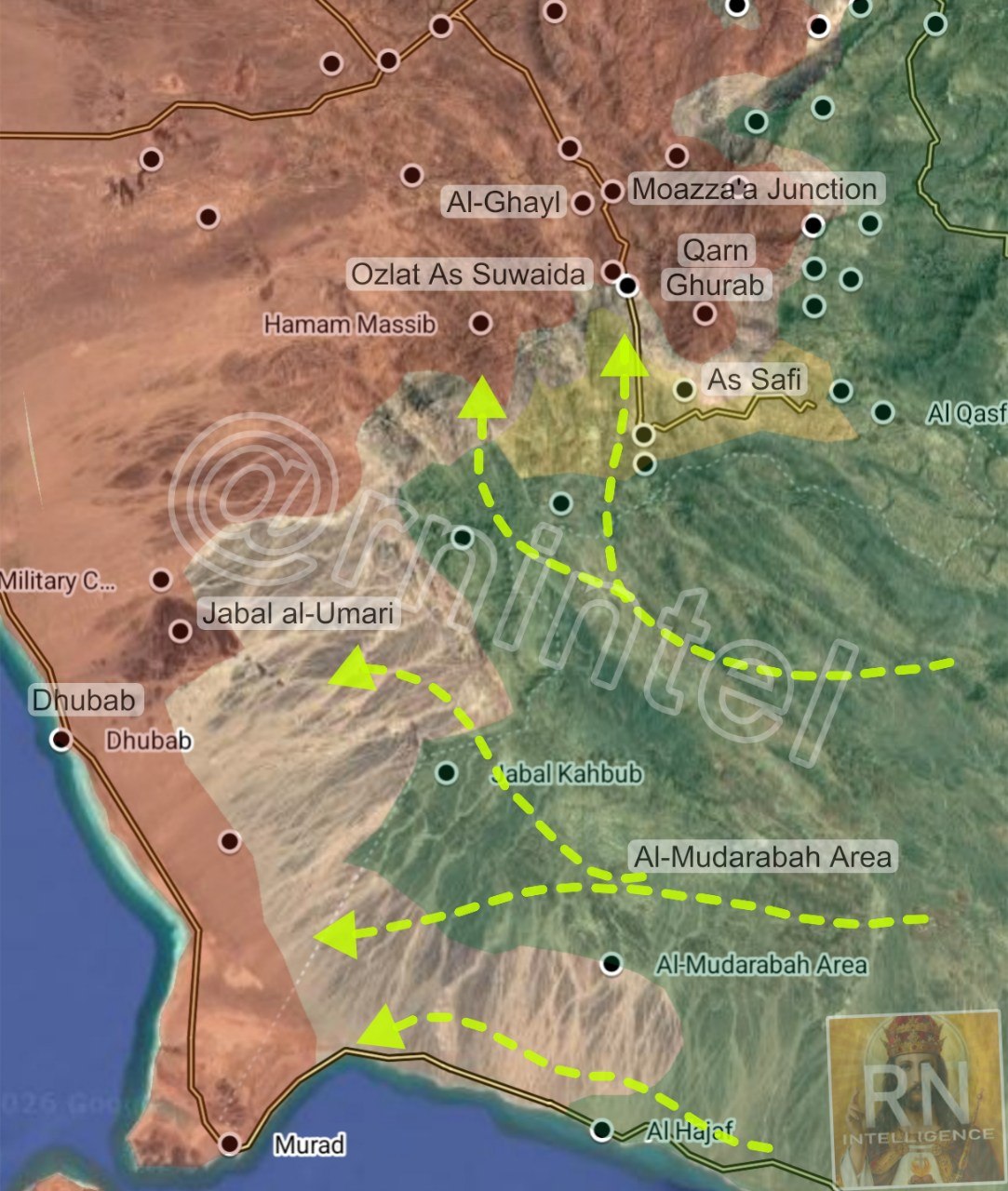
Concurrently, forces loyal to Yemen’s Presidential Leadership Council (PLC) launched a series of counterattacks along the Murad‑Dhubab axis and the Ta’izz front. According to the Telegram channel rnintel, the PLC’s Giant Brigades and Homeland Shield Forces engaged Ansarullah units near al‑Ghayl, with the aim of recapturing Moazza’a Junction and reopening the Ta’izz‑Mocha road.
The report noted that Ansarullah appeared to be withdrawing from al‑Ghayl, creating a tactical window for PLC forces. No artillery or air support was explicitly mentioned, and casualty numbers were not disclosed.
Yemeni Air Force Strikes Target IRGC‑Backed Houthi Assets
At 15:16 UTC, the Yemeni Air Force conducted airstrikes on Houthi positions in Dhubab and Mokha, as documented by the channel monitor_the_situation. The strikes targeted equipment supplied by Iran’s Islamic Revolutionary Guard Corps (IRGC) and concentrated troop formations along the coastal corridor of Taiz Governorate.
While the official statement did not provide casualty figures, the operation demonstrated the Yemeni government’s capacity to project air power against Houthi logistics hubs in the Red Sea littoral.
Unidentified Airstrike in Al‑Mudarabah, Lahij Governorate
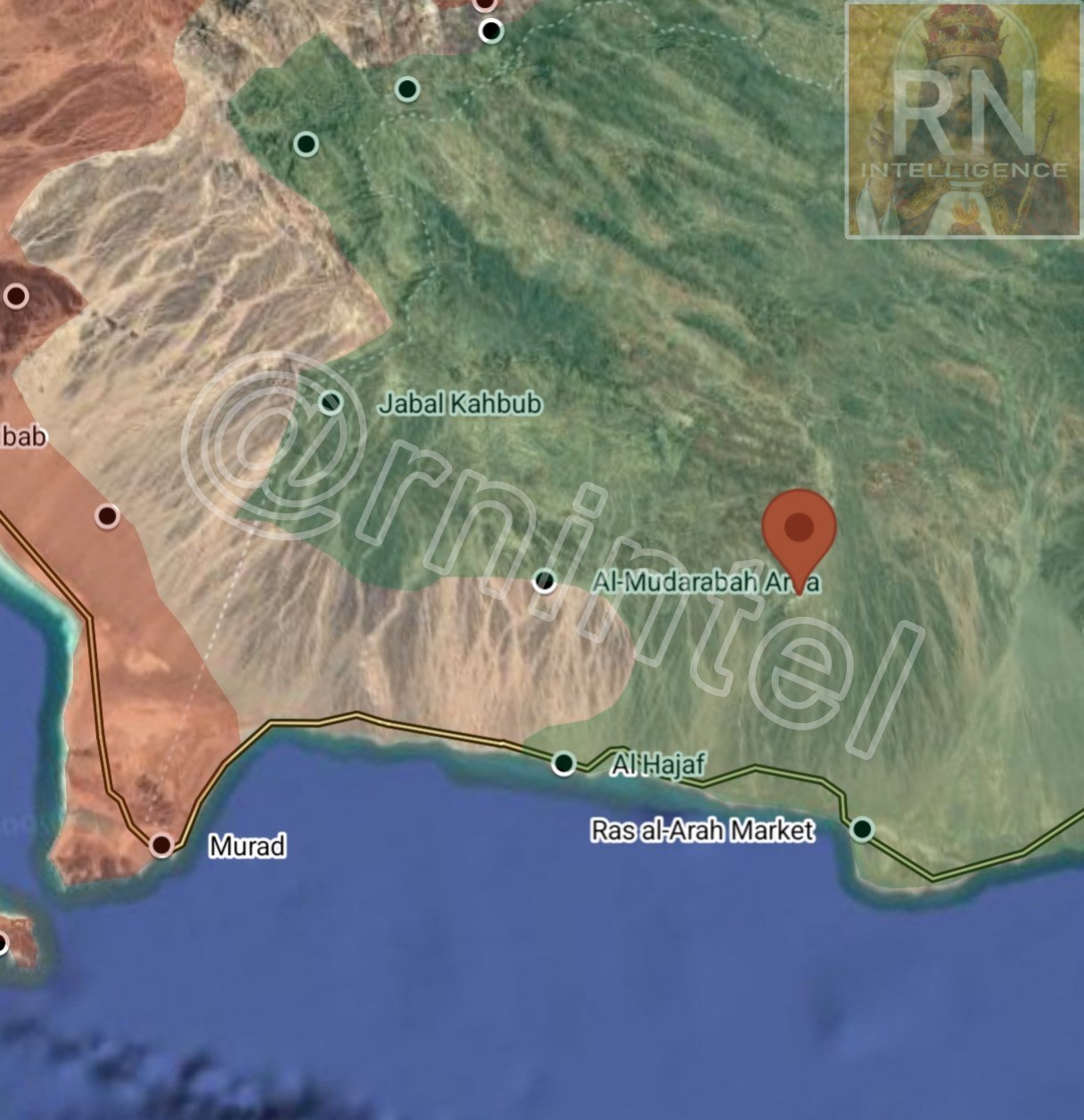
Earlier, at 14:21 UTC, an unidentified party carried out airstrikes on positions in al‑Mudarabah, Lahij Governorate. The same rnintel source described ongoing clashes between pro‑PLC forces (Giant Brigades and Homeland Shield Forces) and Ansarullah, with Southern Transitional Council (STC) units also present.
The lack of attribution complicates the attribution of responsibility, but the presence of multiple armed factions in the area underscores the fragmented nature of the conflict. No weapon type beyond “airstrike” was specified, and casualty data were absent.
Ansarullah Advances in Western Ta’izz
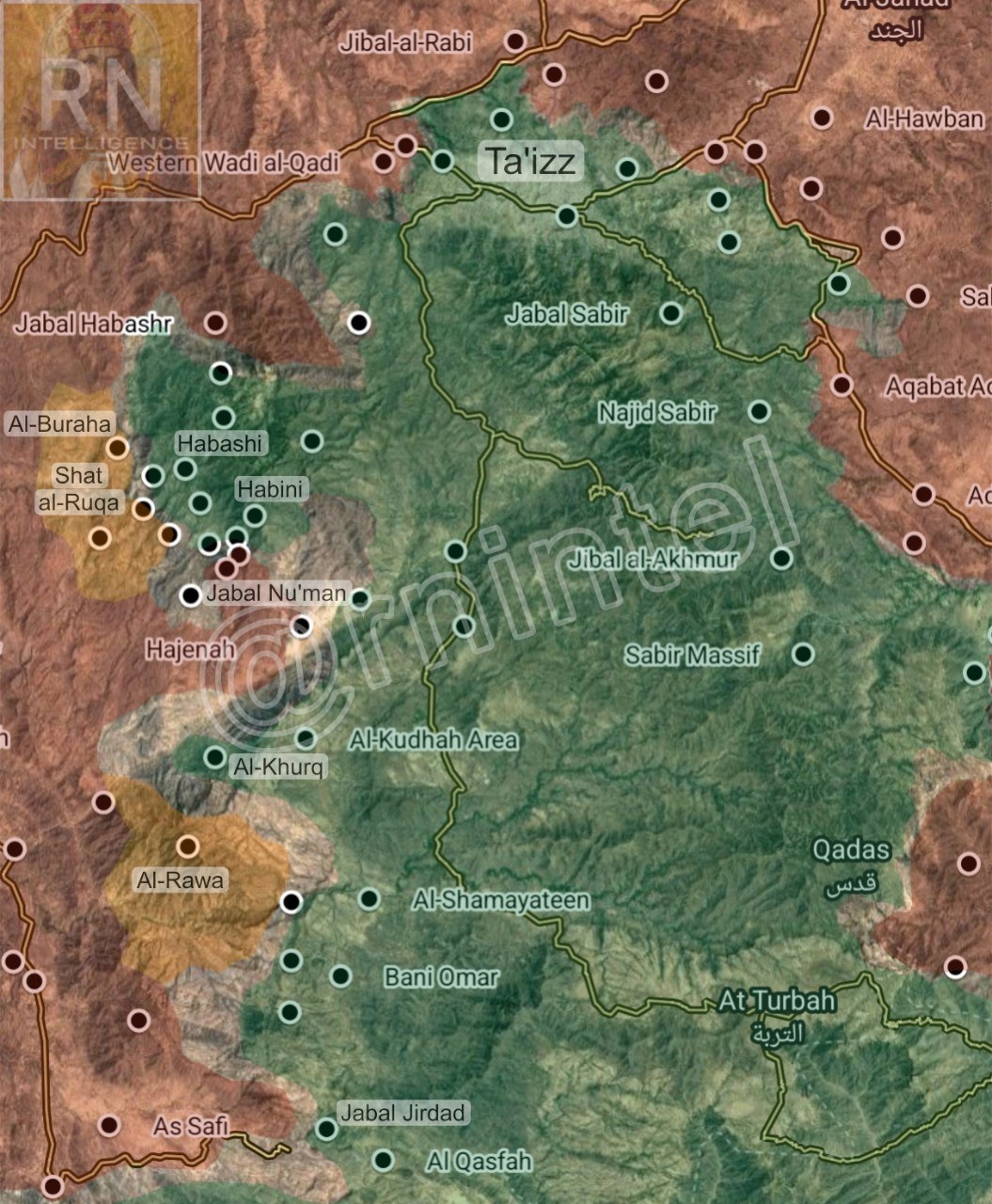
At 12:05 UTC, Ansarullah and Houthi forces captured key terrain along the Jabal Habashi axis, including the strategic height of Jabal al‑Rawa in the Bani Omar area. The advance, reported by rnintel, represents a significant gain for the Houthi‑aligned coalition in western Ta’izz, potentially threatening supply routes to the city of Ta’izz itself.
Again, the report did not list casualties or specific weapons, but the capture of high ground typically confers artillery observation advantages.
Intense Fighting Around Sanaa
Mid‑day reports from monitor_the_situation indicated fierce battles between advancing Houthi forces and Yemeni government troops in the capital’s outskirts. Video footage showed small‑arms engagements and the use of technical vehicles, but no heavy weapons were observed. The conflict zone remains fluid, and casualty figures have not been released.
Houthi‑Aligned Tribal Mobilization Near Marib
At 11:30 UTC, the CIG Telegram channel highlighted the mobilization of the Bani Hashish tribes, aligned with the Houthis, displaying armed Toyota pickups equipped with mounted guns. The tribes announced readiness to advance on Marib, the last major government stronghold in northern Yemen.
The use of Toyota technicals continues to dominate ground combat in Yemen, providing mobility and firepower in desert terrain. No specific casualty data were reported.
Houthis Push on Jabal Jardad and Western Taiz Front
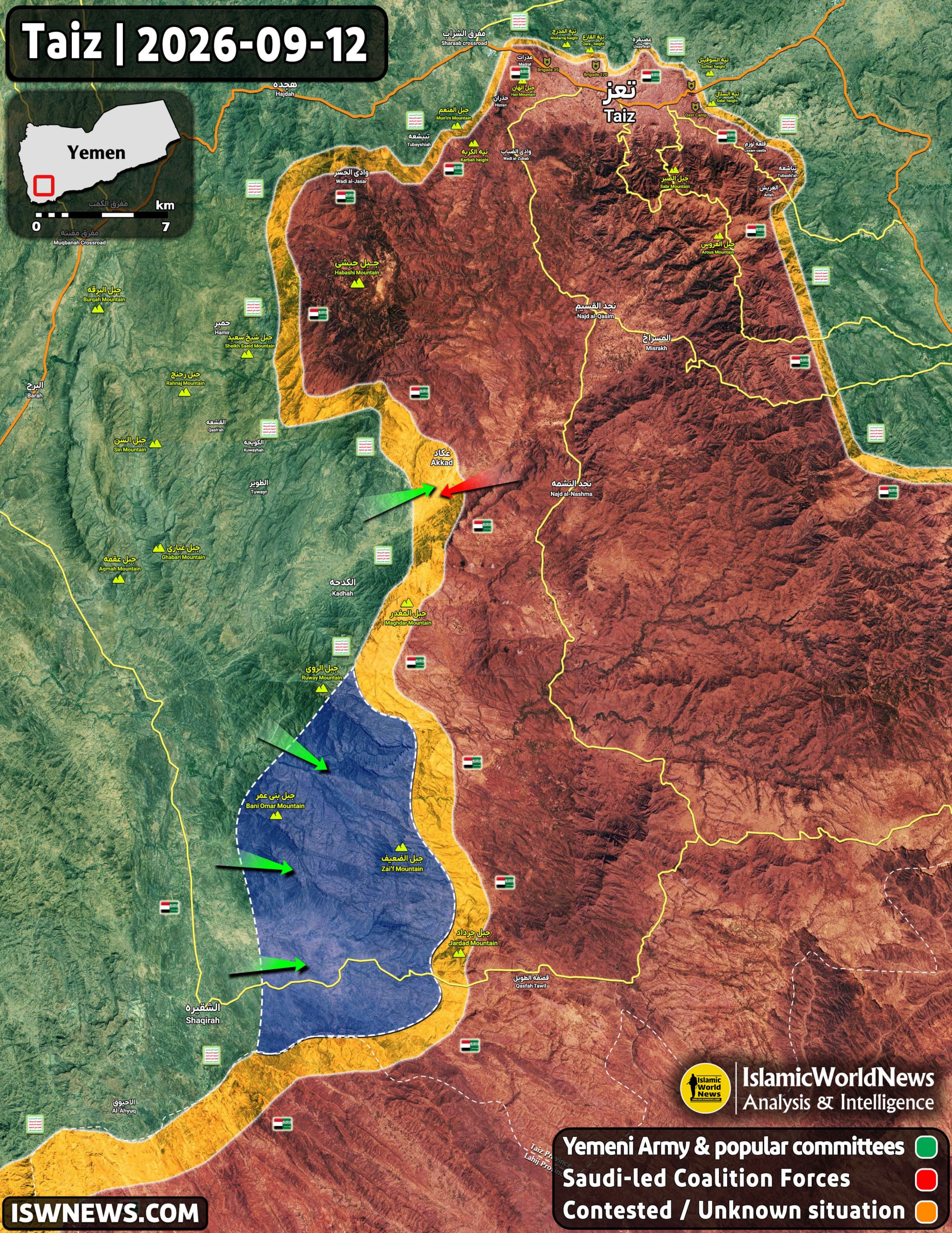
Earlier in the morning, at 10:37 UTC, Houthis and popular committees seized Jabal Jardad, Jabal Habashi, and surrounding villages on Taiz’s western front, according to CIG_telegram. The offensive aimed to cut the western road linking Taiz to Al‑Turbah and Aden, effectively placing Taiz under siege.
The operation involved coordinated infantry assaults without reported air or artillery support. The strategic objective was to isolate Taiz, a key commercial and logistical hub.
Overall Assessment
The events of 13 September illustrate a multi‑theater escalation in Yemen. The Houthis’ naval seizure of Bab al‑Mandeb represents a rare strategic move that extends their influence beyond land‑based operations, while ground battles continue to shift control of critical highways and high‑ground positions. PLC forces are attempting to exploit perceived Ansarullah withdrawals, yet Houthi‑aligned tribal and popular committee units maintain offensive momentum in the south and west.
Without clear casualty reporting, the human cost of today’s kinetic actions remains uncertain. However, the convergence of naval, aerial, and ground operations suggests a heightened intensity that could affect regional trade routes and humanitarian access.