In the most lethal single incident recorded today, Russian unmanned aerial vehicles (UAVs) conducted coordinated attacks across Kyiv, Kharkiv and Donetsk, killing 18 civilians and wounding 148 within a 24‑hour period. The assaults, reported by the monitoring channel monitor_the_situation, targeted residential districts, public transport hubs and critical infrastructure, underscoring a sharp escalation in kinetic operations against non‑military targets.
🔴 **Russian Strikes on Civilian Infrastructure Kill 18 in Ukraine**
The attacks employed a mix of loitering munitions and reconnaissance‑grade drones, striking densely populated neighborhoods in Kyiv and extending to industrial zones in Kharkiv and Donetsk. No armed groups claimed responsibility, and Russian official statements have not addressed the civilian toll.
Odesa and Southern Ukraine Under Massive Drone‑Missile Barrage
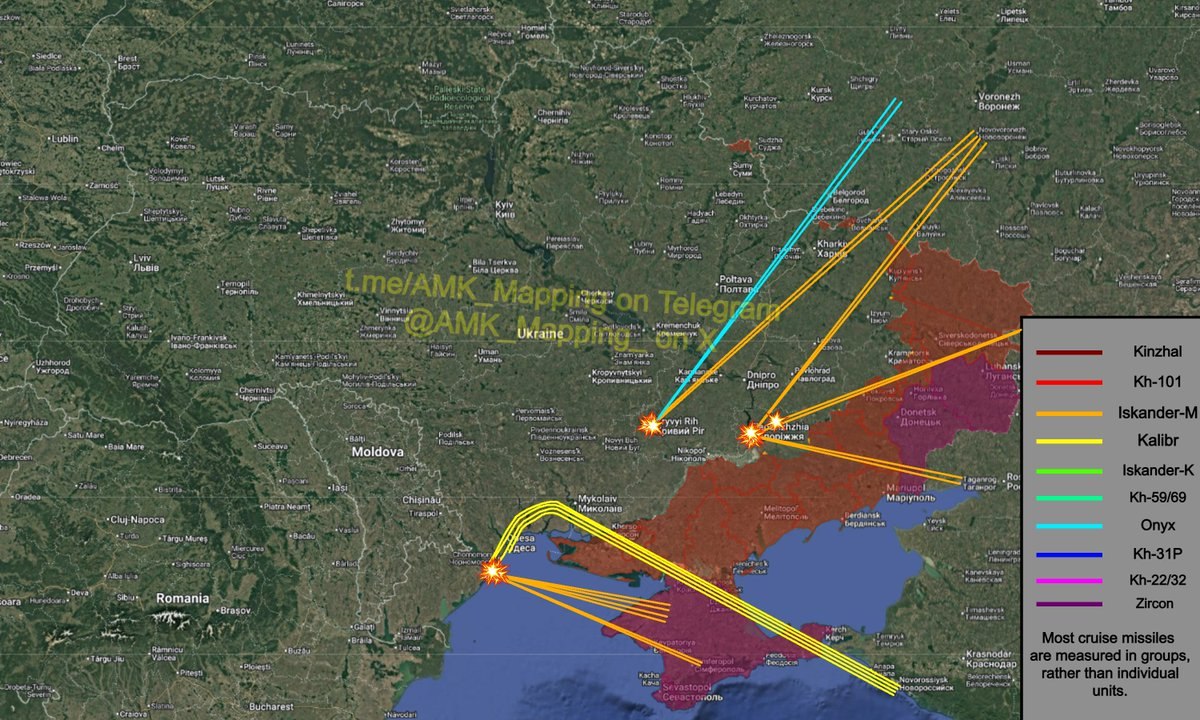
Earlier in the day, Russian forces launched a large‑scale operation against Odesa, deploying 129 drones, eight Kalibr cruise missiles, six Kh‑59/69 missiles and a salvo of Iskander‑M and KN‑23 ballistic missiles. The assault resulted in 11 deaths and 96 injuries, with the Zatoka Bridge and local metallurgical plants suffering extensive damage. The attack was documented by monitor_the_situation and corroborated by satellite imagery showing cratered bridge spans and smoke plumes over the port facilities.
Ukrainian Counter‑Strikes on Russian Industrial Targets
Ukrainian forces reported a series of high‑value strikes on Russian chemical and energy infrastructure. According to a statement from President Volodymyr Zelensky, missiles hit chemical plants in Perm and Samara, as well as a drone‑launch site in Taganrog. The operations also downed a Russian Su‑33 carrier‑based fighter and two Mi‑8 transport helicopters, indicating a coordinated effort to degrade Russian air‑defence and logistics capabilities. The source monitor_the_situation cited the use of Pantsir‑S2 air‑defence systems and confirmed the loss of the aircraft.
First Western Ukraine Gas‑Station Attack
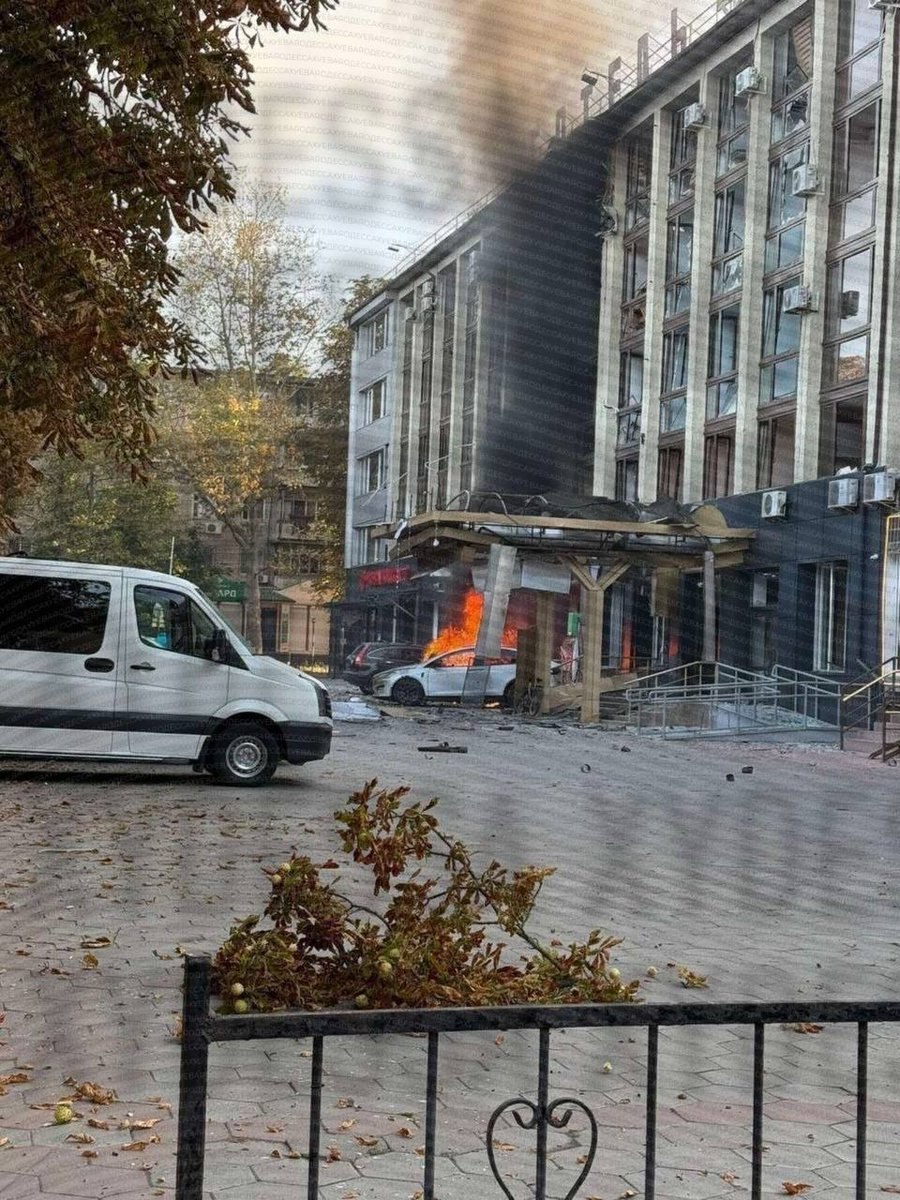
In a notable shift of tactics, Russian forces struck a civilian gas station in western Ukraine, marking the first recorded attack on such infrastructure outside the traditional frontlines. The missile strike, reported by monitor_the_situation, caused a fire and temporary fuel supply disruption but resulted in no fatalities. Analysts note the symbolic significance of targeting civilian energy assets in a region previously spared from direct kinetic action.
Industrial and Naval Targets Across the Russian Federation
Ukrainian missiles ignited a fire at the Togliattikauchuk chemical plant in Tolyatti, Samara Oblast, a facility that produces synthetic rubber for solid‑rocket fuel. The blaze was captured on video by monitor_the_situation and prompted an emergency response from local fire services.
Simultaneously, Russian forces hit two cargo vessels at the Black Sea port of Chornomorsk, as well as steel plants across Ukraine, according to the Russian Defence Ministry. The attacks aimed to disrupt maritime logistics supporting Ukrainian defence procurement.
In the Kerch Strait, Ukrainian unmanned systems forces claimed to have struck 285 vessels belonging to Russia’s “shadow fleet” over a ten‑week period, part of Operation MoLoChKa designed to curtail oil‑revenue streams financing the war.
Precision Engagements: HIMARS, Drones and Naval USVs
A Ukrainian HIMARS battery destroyed a Russian Buk launcher‑loader in Pokrovsk, Donetsk Oblast, detonating stored ammunition and temporarily degrading the Russian air‑defence network. The strike, reported by monitor_the_situation, involved coordination between the 45th Separate Artillery Brigade, the 3rd Army Corps and the 20th Unmanned Systems Brigade K‑2.
In a maritime first, a Ukrainian Navy Sargan 3000 unmanned surface vessel (USV) equipped with a 12.7 mm Protector remote‑weapon station engaged and destroyed a Russian naval drone in the Black Sea. The encounter, documented by NOELreports and EndGameWW3, demonstrates the growing role of autonomous platforms in naval warfare.
Ground Movements and Ongoing Frontline Dynamics
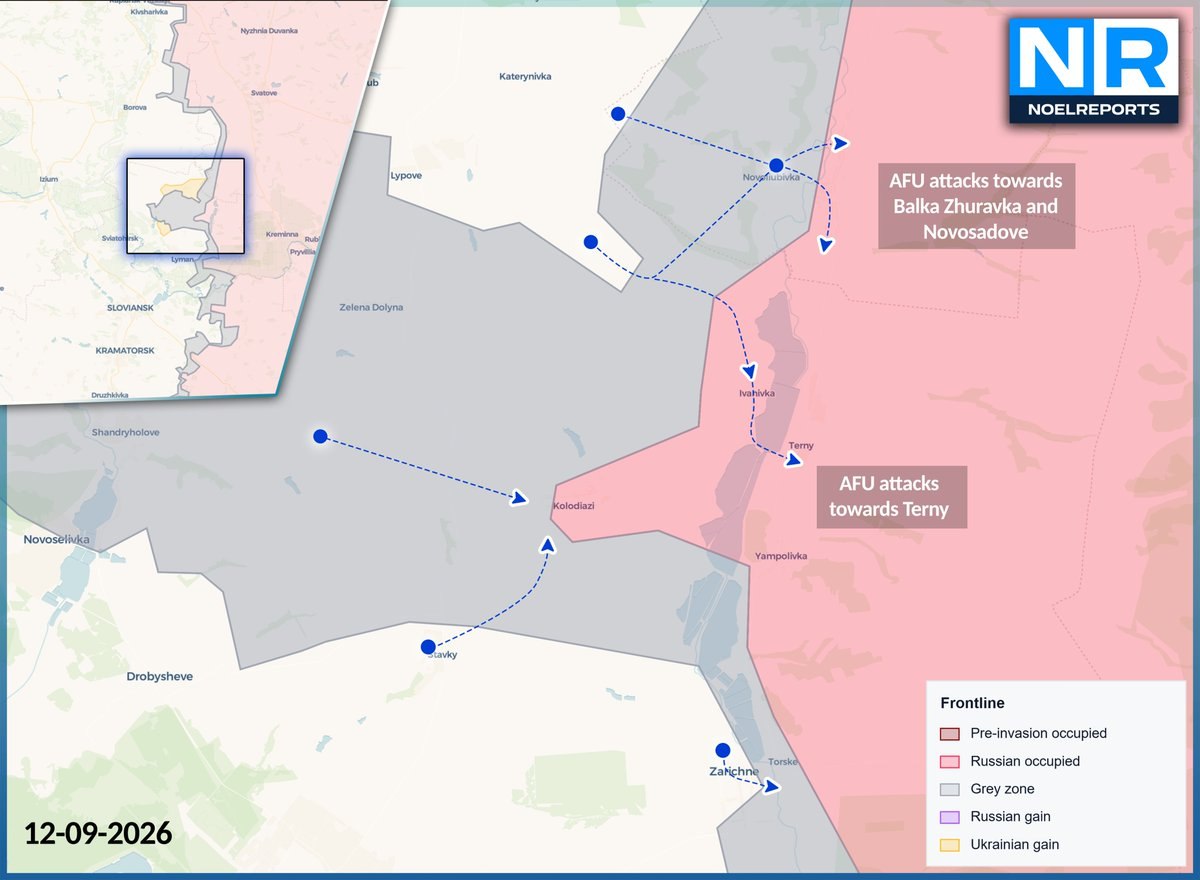
Ukrainian troops advanced through the Lyman salient toward the Zherebets River, employing extensive drone reconnaissance while encountering stiff Russian resistance. Photographs released by monitor_the_situation show Ukrainian infantry supported by UAVs establishing forward positions, indicating a gradual but steady push in the Donetsk sector.
In the Donetsk airport area, the Ukrainian SBU Alpha unit used an FPV drone to destroy a Russian Geran OWA drone mounted on a pickup truck, neutralising a mobile surveillance asset.
Analytical Overview
The pattern of kinetic events on 12 September 2026 reflects a dual‑track strategy: Russia intensifies indiscriminate UAV attacks on civilian populations to erode morale, while Ukraine expands its long‑range strike capability against Russian industrial and military assets deep within the Russian heartland. The escalation of missile and drone usage on both sides raises the risk of collateral damage and complicates attribution, especially where commercial satellite imagery and open‑source monitoring are the primary verification tools.
Casualty figures for today alone exceed 30 civilian deaths and more than 240 injuries across Ukraine, while Russian military losses remain unverified but are likely significant given the reported downing of aircraft and destruction of air‑defence systems. The continued targeting of energy and chemical facilities suggests an intent to impair Russia’s war‑fighting sustainment, whereas the attacks on Ukrainian civilian infrastructure aim to pressure the government and population.
Overall, the kinetic tempo in Ukraine remains high, with both conventional and unmanned systems playing central roles in shaping the conflict’s trajectory.